

Luxembourg (Helvilux) – In Luxembourg, ordinary citizens are subject to strict environmental and construction regulations. Yet serious questions are now being raised about whether the same standards are applied equally to large industrial corporations, particularly steel giant ArcelorMittal.
When a common individual in Luxembourg wishes to renovate or demolish a house, strict rules apply regarding waste disposal, environmental protection, and construction site management. Even disposing of old furniture requires purchasing an official disposal sticker. These regulations are necessary and widely supported to protect the environment and maintain public order.
However, critics are questioning whether the same level of responsibility applies to multinational corporations generating industrial-scale waste.
Resident’s Concerns in Dommeldange
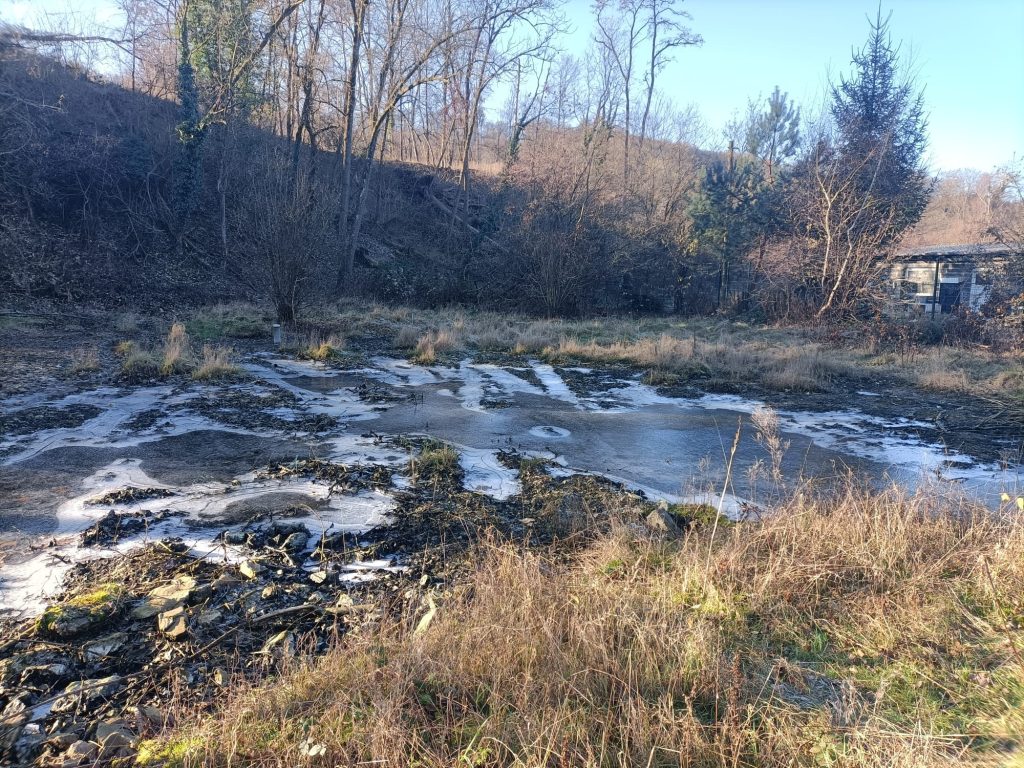
Helvilux’s investigative team recently received a call from a resident in Dommeldange, where several former industrial sites linked to ArcelorMittal are located.
During a visit to the area, our reporter observed what appeared to be an abandoned brownfield site. According to a senior citizen who requested anonymity, wastewater accumulates on the site and, during periods of heavy rainfall, overflows onto the street. Residents allege that this runoff eventually flows toward a nearby river under a bridge opposite the site.
Locals describe the water as discolored and potentially contaminated. They report that during heavy rain, the overflow spreads across roads and pedestrian pathways, creating unpleasant conditions and raising environmental concerns.
Some homeowners living near the site claim that the area now appears neglected and that property values may have been negatively affected.
Helvilux has contacted the relevant municipal authorities in Dommeldange, as well as the national environmental regulatory bodies, to inquire about the measures taken regarding these long-standing concerns. We have also reached out to ArcelorMittal for clarification regarding the status and management of the brownfield site.
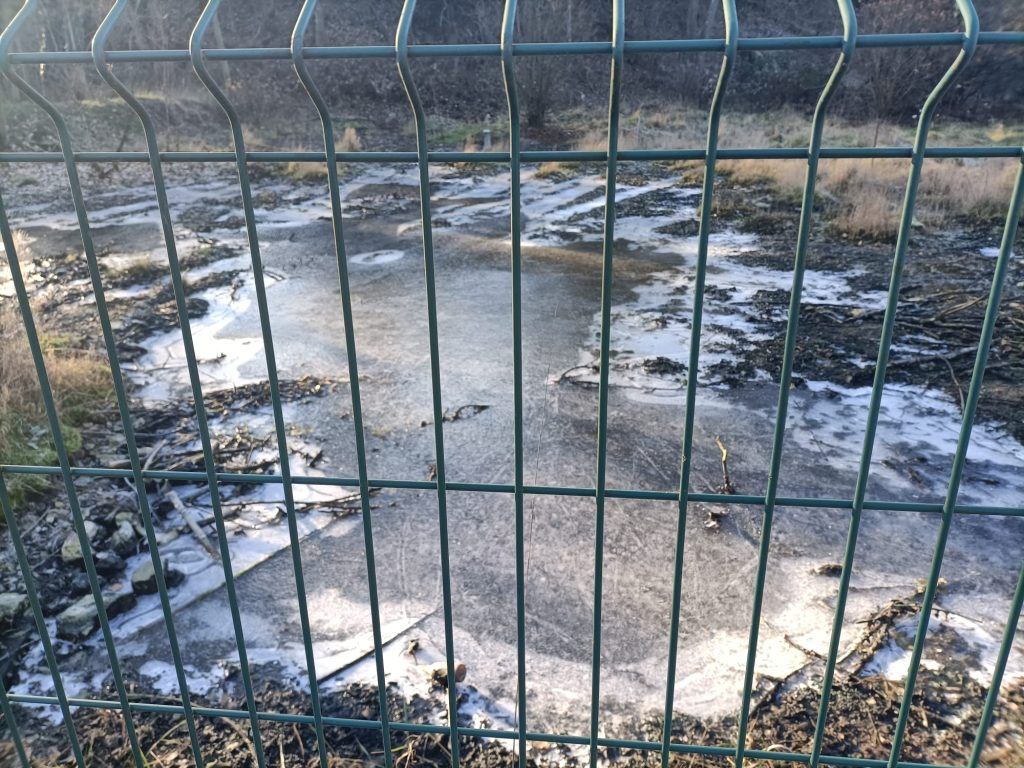
Before publication, Helvilux received an official statement from an ArcelorMittal media spokesperson. The company stated that it is fully aware of the situation and has hired a consultant to address the issue. According to ArcelorMittal, studies are currently underway to determine and calibrate an appropriate drainage system aimed at preventing water accumulation on the site. The company indicated that the objective is to have the drainage system operational by May. The spokesperson also noted that the area presents particular challenges due to its complex hydrogeological conditions, including the presence of natural springs.
While the company says it is “fully aware” of the situation, residents note that the water accumulation has been visible for years.
The AGORA Partnership: Public–Private Responsibility
In 2000, a public–private partnership called AGORA was established as a 50–50 joint venture between the Luxembourg government and ArcelorMittal. The purpose of AGORA was to redevelop former industrial sites.
Recently, the mayor of Sanem informed the media that the demolition of large industrial chimneys is expected to cost several million euros. These structures reportedly contain asbestos, making their dismantling significantly more complex and expensive.
This announcement has reignited public debate. Critics argue that when AGORA was established, was there a proper long-term financial assessment of the environmental and demolition costs? If these chimneys were not to be preserved as historical monuments, why were they not demolished earlier—before the creation of the public–private partnership?
Some residents question whether such costs should now be borne partly by taxpayers. Large industrial groups capable of spending tens of millions on private events could arguably have funded the demolition of aging industrial structures from their own corporate budgets. Why, they ask, should the financial burden fall on Luxembourg’s taxpayers?
Helvilux is seeking answers from the responsible authorities.
Luxembourg enforces strict environmental compliance for private citizens. An individual who unknowingly pollutes a river can face fines and even criminal charges for repeat offenses.
This raises a critical question: Are the same standards consistently applied to major industrial operators?
For decades, concerns have been raised about industrial pollution affecting rivers and soil quality near former steel production sites. What penalties were imposed? How much in fines was collected? What remediation measures were required? The public has the right to know.
Luxembourg is internationally known for its high living standards and strong regulatory framework. However, these recent concerns have led some residents to question whether environmental regulations are enforced equally when powerful industrial actors are involved.
If strict compliance is expected from every private citizen, many argue that multinational corporations should be held to at least the same standard if not a higher one given the scale of their environmental impact.
Helvilux will continue to investigate and seek transparency on this matter in the public interest.
Online Petition for Transparency and Accountability
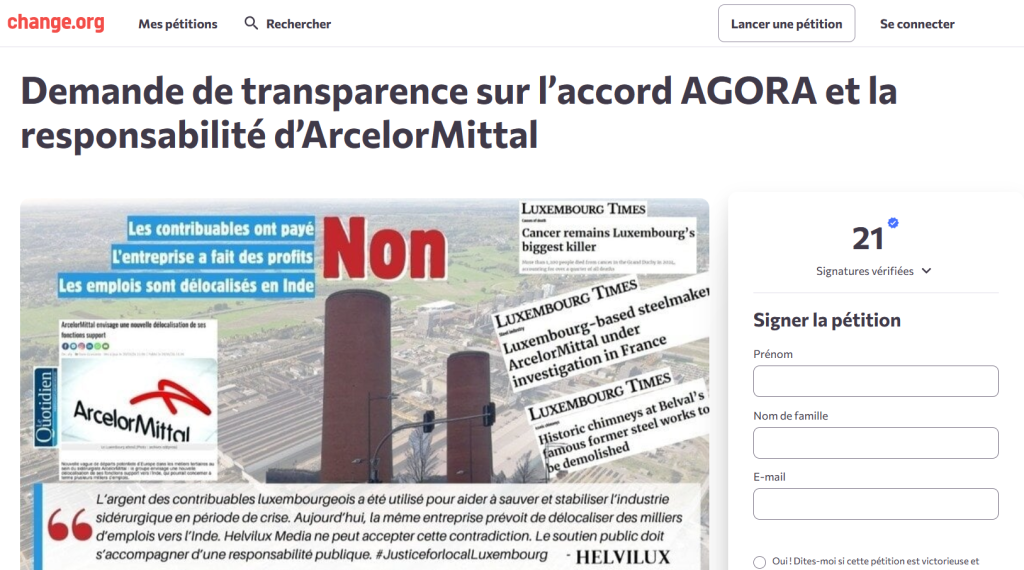
Helvilux media recently started an online petition demanding full transparency regarding the AGORA agreement and a clear clarification of ArcelorMittal’s long-term responsibilities toward Luxembourg. Citizens are asking for the publication of all contractual obligations, a breakdown of public funds invested and guarantees that public support is tied to employment protection and environmental accountability. Luxembourg taxpayers helped stabilize the steel industry during difficult times. The company returned to profitability. Yet jobs are now being considered for relocation to India. Public support must come with public responsibility. Residents who believe in transparency, fairness, and accountability can sign the petition online and make their voices heard. Click here to sign
Helvilux does not receive any subsidies or financial assistance from the governments of Luxembourg or Switzerland to support its journalism work. HELVILUX Media is an independent media outlet run by the non-profit organization Helvilux asbl in Luxembourg. To support our work with a donation, click here.