
Russia, Sochi (Helvilux) – Recently, a video published by a Member of the European Parliament Kartheiser Fernand (Independent, formerly ADR) has drawn unexpected attention. During his second tour to Russia BRICS EUROPE Conference in Sochi, the MEP met an Indian representative who introduced himself as Ram Madhav, founder of the India Foundation, a New Delhi–based political think-tank with close links to the ruling Bharatiya Janata Party (BJP).
In the ten-minute conversation uploaded on the MEP’s social media platforms, Madhav was offered generous space to present India’s global position, technological ambitions, and political philosophy. However, after reviewing the video, many of his statements appear in sharp contradiction with the current reality of India. For this reason, HELVILUX Media is publishing this detailed report to help readers in Luxembourg and Europe understand the real India behind the rhetoric.
Inside the Conversation: What Madhav Claimed and How the MEP Responded
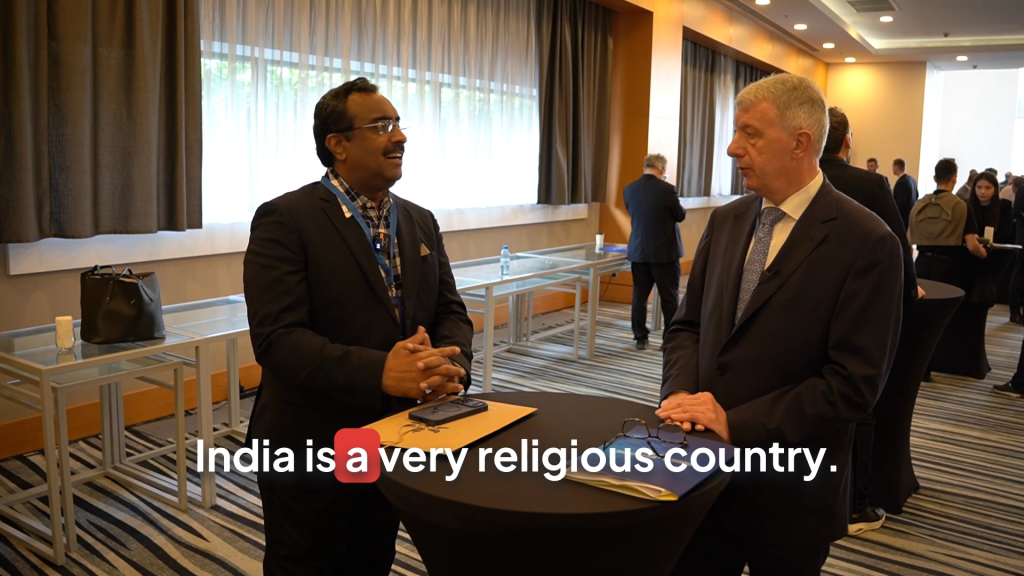
Before presenting any critique, lets reviews what was actually said in the interview. It offers a clear summary of the Member of the European Parliament’s questions and Ram Madhav’s responses, including his claims about India’s economic rise, deep-technology leadership, rejection of Western sanctions, commitment to “strategic autonomy,” and India’s role in shaping a future multipolar world order. This overview ensures that readers understand the interview’s content before examining the accuracy of those claims.
- (Q) Fernand Kartheiser – My name is Fernand Kartheiser. I’m a member of the European Parliament. I’m currently here in Russia in Sochi at the BRICS Europe Conference. We also have the immense pleasure to have people from India, from china and many other places. And this morning a gentleman from India, Mr Madhav, I hope i pronounce it correctly, made a fantastic speech presenting India’s perspective on what happens in the world on geopolitics and on Russia and generally, also on economic relations. So, it is an opportunity, I think for us to hear also India’s point of view now here on our social media. Mr. Madhav, you just came here from india, you told me. You are the president of the India Foundation. What is the India foundation doing in general?
- (A) Ram Madhav –The India foundation is a New Delhi based think tank focus on largely India’s foreign policy, strategic relations and security issues. These three areas are our main focus. things We host a number of different conferences. We have a large number of partners with whom we have bilateral engagement. Largely focusing on these three areas. We see that the newly evolving world, India, has a very important role to play. India has the potential and we have the leadership which is very strong and very visionary leadership. We would like to support the government and its initiatives in taking this vision forward.
- (Q) Fernand Kartheiser – You say that india is becoming an emerging super power. I mean We are very impressed ofcourse, in the west to see the economic success, to see also scientific success, india is on the moon. We know that you expanded your military and you are buying not buying but constructing yourself the aircraft carrier and so on and becoming very powerful country. Is India now an emerging super power ? And how you see india’s role in the Indo Pacific in the future ?
- (A) Ram Madhav – India is a very religious country. So We are not very comfortable with terms like superpower and all that. But definitely India is rising as an important economic and deep tech power. Economically India is doing extremely well. In the last 10 years we have doubled our GDP. We are $ 4.3 trillion economy today, aspiring to became a $ 10 dollar trillion economy in the next 15 years. The trajectory suggests that it is not impossible for India. At the same time india has been for last many decades and IT strong power. A strong power in IT. Based on that strength we are now making major strides in deep tech areas. In artificial intelligence in robotic in quantum. In all these areas India is growing . We are also investing heavily together with support from other countries In defence tech area also we are developing in that sense, India will be definitely a very important power in the world in the coming days. We will be definitely the third largest economy in the world. But more importantly when india rises it’s not just economy but or its military or anything. It’s value system. It comes with a particular vision of the world. That is what we feel will be more important, to offer to the world for us.
- (Q) Fernand Kartheiser – I think we should also on the focus on respect among nations mutual respect and understanding. I think this word must be at the forefront of our approach to international politics. Now we in the European union and the United States have developed something that we call secondary sanctions. And I imagine that India is of course targeted because India is still an important trade partner also for Russia. And so the secondary sanctions are really a means to put pressure on you political pressure economic pressure how do you perceive that in India? Is that something that you feel offending and is illegitimate or how is your attitude towards our approach in that matter?
- (A) Ram Madhav – We always oppose the sanctions of any kind against any country. It’s true that today we have been subject to certain sanctions by america essentially but then before us for last many years and in couple of decades to many other countries have been subjected to different kinds of sanctions. We always said that sanctions really affect not just the government of those countries but also peoples the man on the street is suffering weather it is iran weather it is russia wheather it is other countries. I was in minsk a few days ago. We have subjected minsk to very harsh sanctions. The only fault of minsk being to be seen as close to Russia. I mean, this is a very unjust system. You cannot use multilateral institutions unilaterally to punish the countries in the name of sanctions. But coming to India’s case India follows what is called strategic autonomy. It’s a very strong conviction for us that what is in India’s interest will be decided by India only. No other country has the right to come and tell us, you do this you don’t do that. So sovereignty the right of the country should be respected by everybody. India is a big country. Nobody can coerce us. Countries try to put pressure on us, use sanctions on us and other things. But India strictly adheres to its principles of sovereign, you know the strategic autonomy.. We have friendship with many countries in the world. Those friendships are guided by our domestic interest but also what we see as the interest of the world. We don’t want to be guided in those matters by some big powers just because they are big and powerful.
- (Q) Fernand Kartheiser – This also relates to the subject that I think is very close to your heart. That is the understanding of the concept of multipolarity. So, you are insisting on this how do you see now the world is changing from maybe western hegemony to multipolarity. And how do you see the role of India? In this new multipolar framework?
- (Q) Fernand Kartheiser – Well, that is very challenging… (just before he completes his sentence Madhav interrupt him)
- (A) Ram Madhav –I want to add here, since you said its challenging May I remind you that when the League of Nations was created in 1919, Woodrow Wilson had great plans for it. Within two decades time the world realised that the League of Nations was not working. But there were two statesmen at that time, Winston Churchill and Franklin D. Roosevelt (FDR). FDR and Churchill together decided the League of Nations is not working. Let us build a new mechanism. Why are we today short of such statesmen?
- (Q) Fernand Kartheiser – I think you have already plenty of ideas, atleast it seems so to me. But maybe the last question is, since you are putting in doubt a little bit also the functioning of the Union Nations, then my question is, is it a reform that you want, perhaps of the Security Council, or is it a whole new set of arrangements in order to have a family of nations?
- (A) Ram Madhav –May I ask.. The whole argument about reform. Did it begin now? This reform demand has been going on for not less than 20 years. Why are we not able to reform it? Because that institution has become beyond reform. You have to have the courage to think afresh. Having said it, yes, if a reform is possible, you can bring in genuine multilateralism. Most welcome is UN representing real multilateralism. May i tell you, in the UN, in the last 70 years, Russia Soviet Union and current Russia used veto 160 times. UAE has used it 115 times. Some countries used it 90 times. You can’t take any decisions. So you have a mechanism which is not delivering, not functioning. Do you still want to reform it? YES. You need that determination to reform it. Otherwise think of a new institutional framework.
- (Q) Fernand Kartheiser – Well, I’m really impressed and I’m happy also to hear, and I think that many people will hear with interest these views because its like a wake up call, I think for us in the west, lets try to reform and if not, well, we have to face new realities in the world.
Why Madhav’s Claims Are Misleading or Contradict Reality
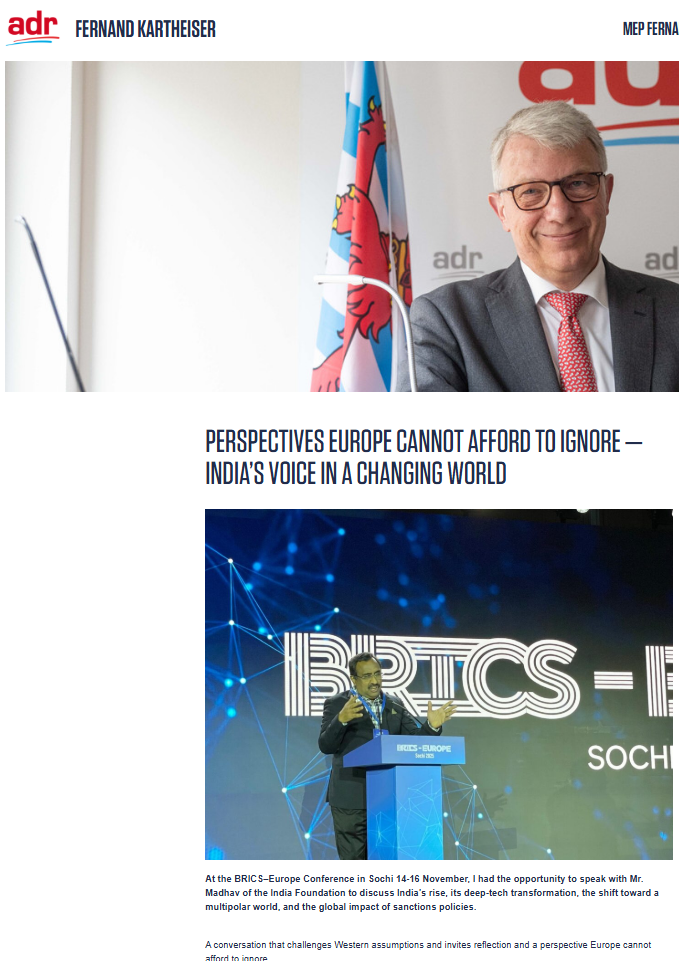
Madhav’s statements, when examined closely, reveal significant gaps between political rhetoric and independently verified data. His claim that India “doubled its GDP” is technically based on headline numbers but ignores the structural weaknesses beneath the surface, including persistent unemployment, one of the world’s lowest per-capita incomes among major economies, and widening inequality that leaves millions untouched by macroeconomic growth. Likewise, his portrayal of India as an emerging “deep tech power” omits the country’s overwhelming dependence on imported critical technologies from semiconductor fabrication to advanced manufacturing equipment and major defense systems, exposing a vulnerability that contradicts the image of technological self-sufficiency. Madhav’s moral criticism of Western sanctions further appears selective, as India itself has used economic pressure and political leverage against neighboring states when strategically useful, demonstrating that its opposition to sanctions is not a universal principle but a context-dependent stance. His invocation of “strategic autonomy” also fails to acknowledge the extent to which India relies on Western markets, foreign investment, global supply chains, and technology transfers, making its autonomy more aspirational than real. Finally, the projection of India as a global beacon of moral leadership stands in stark contrast to widespread international reports documenting democratic backsliding, shrinking civil liberties, rising religious tensions, and an environment increasingly hostile to dissent. Taken together, Madhav’s narrative reflects not an objective account of India’s current condition but a carefully curated political message aimed at shaping external perception rather than presenting an honest assessment grounded in factual reality.
Madhav opened by calling India a deeply religious nation yet omitted the widespread reality that minorities, including Muslims, Christians, Jains and others—face rising hostility, discrimination, and attacks in the name of religion. While he spoke of India’s global role, at home the Prime Minister Narendra Modi has not held a single open press conference since 2014, often campaigning on military nationalism and anti-Pakistan rhetoric rather than policy and employment topics.
India’s celebrated IT reputation also contrasts sharply with its heavy dependence on imported Chinese hardware that is later reassembled and marketed as “Make in India.” Beyond that, global reports continue to highlight the rise of tech-support scams operating from India, targeting people in the U.S., Canada, the U.K., Australia, and other English-speaking countries through fake call centres. Recently, an Indian “AI startup” was exposed for deceiving investors and customers by using hidden human workers to generate responses instead of actual artificial intelligence. The scandal not only embarrassed India’s tech sector but also exposed how fragile and overstated the country’s claims of leadership in IT and AI truly are.
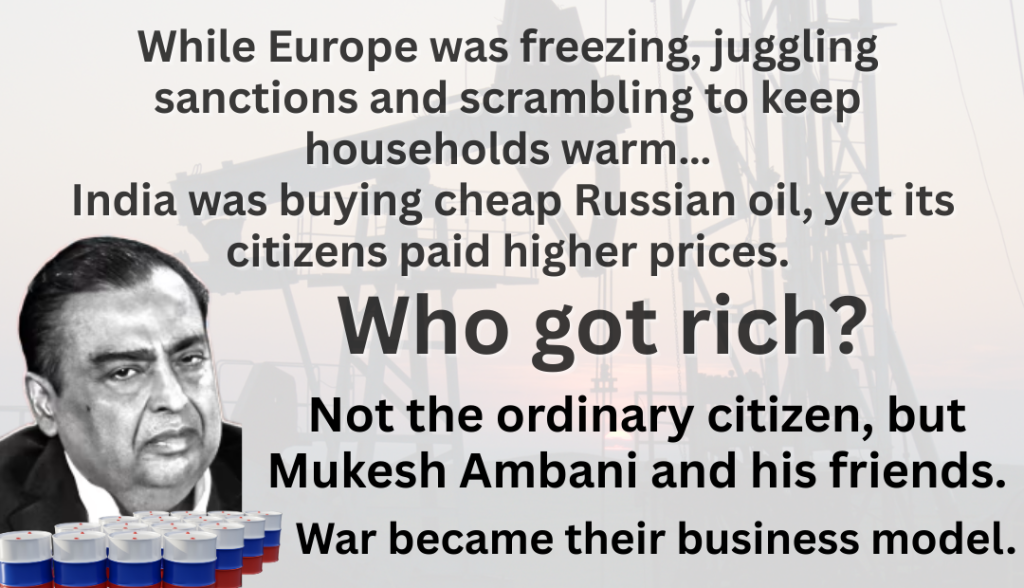
Instead of prioritizing scientific education, political narratives increasingly promote myths, such as hidden temples beneath minority heritage sites or pseudo-scientific claims about cow products. Madhav highlighted India’s defense strength, yet recent high-value equipment failures, including an aircraft crash in Dubai, went unaddressed publicly, and patterns of sudden terror incidents during elections have raised concerns about transparency. Strategic autonomy also rings hollow when the RTI system has been systematically weakened since 2014, with applicants doxed and attacked while officials evade disclosure. On multipolarity, the ground reality includes bulldozer demolitions targeting minority homes, attacks on Christians praying under the pretext of “forced conversions,” and growing impunity for communal violence. Though Madhav claims India opposes sanctions, the government has selectively used them, and while elites benefited from discounted Russian oil imports, ordinary citizens faced inflation and economic strain. His praise of decisive leadership ignores the failed demonetization experiment, which recovered no black money while conveniently enabling some political allies to launder funds. The assertion that India “does not listen to anyone” is contradicted by episodes like the 2019 escalation with Pakistan, when U.S. pressure quickly halted military action, and by India’s abrupt shift in Russian oil purchases under American sanctions. Despite saying India maintains strong friendships, relations with China, Nepal, Bangladesh and others have grown increasingly tense, with recent reports of Indian citizens from Arunachal Pradesh being interrogated by Chinese authorities. Even at the UN, when Switzerland raised concerns about India’s treatment of minorities, India’s representative responded with deflection rather than accountability. While Madhav’s polished narrative may sound reassuring, the lived realities, erosion of democratic transparency, rising communal tension, weakened institutions, fragile diplomacy, and shrinking civil freedoms, paint a far more troubling picture of India’s current trajectory.
India in Global Rankings: A Reality Check
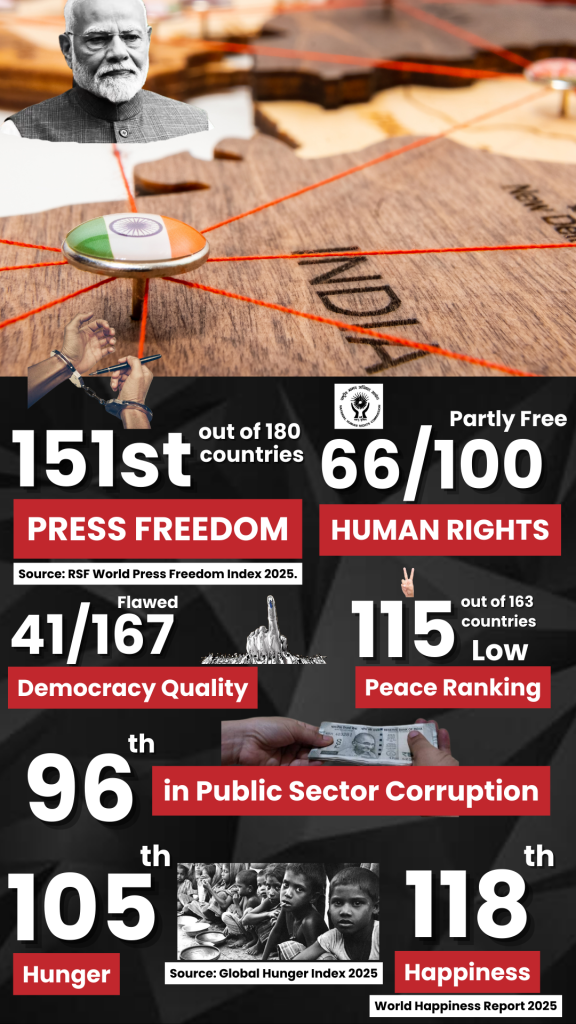
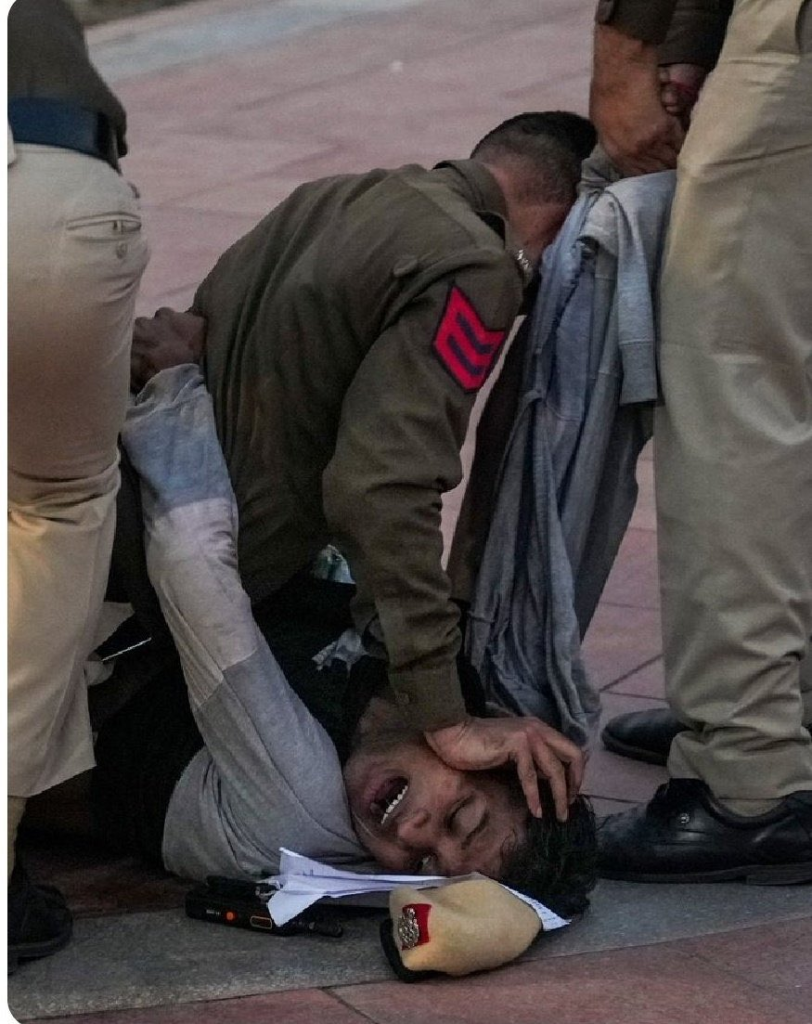
When Madhav speaks of India as an emerging technological and geopolitical giant, global data paints a more complex picture. According to the World Press Freedom Index 2024, India ranks among the lower tier worldwide, reflecting rising constraints on journalists, media ownership concentration, and increasing pressure on independent reporting. The Democracy Index 2023 by the Economist Intelligence Unit also places India in the category of a “flawed democracy,” citing erosion of civil liberties, weakened institutional checks, and growing political polarization. Transparency International’s Corruption Perception Index similarly positions India in the mid-range globally, indicating persistent governance and accountability issues. Human rights assessments from the European Union, United Nations, Amnesty International, and Human Rights Watch consistently highlight concerns over minority protection, the use of sedition and anti-terror laws against dissent, restrictions on NGOs, and the shrinking space for civil society.
Economically, although India is one of the fastest-growing large economies, structural problems remain stark. Per-capita income is still low compared to other G20 nations, and youth unemployment rates are among the highest globally. India’s claim to becoming a deep-tech power is hindered by limited R&D investment roughly 0.6–0.7% of GDP, far behind countries like China, South Korea, the US, and Japan. The country continues to depend heavily on foreign technology, critical components, and know-how, particularly in semiconductors, robotics, and advanced weapon systems. Defense procurement reflects the same dependency: Despite increasing domestic manufacturing ambitions, India remains one of the world’s largest arms importers, with Russia, France, and the United States supplying the majority of its high-end military systems.
Migration figures further complicate the picture. India has one of the world’s largest diasporas, yet there has also been a noticeable rise in asylum applications by Indian nationals in Europe, North America, and the UK, many citing political or religious persecution. India’s passport strength remains modest compared to Western, East Asian, and Gulf countries, limiting visa-free mobility and reflecting international concerns about governance stability.
Taken together, these indicators provide a grounded contrast to Madhav’s carefully curated portrayal. While India is undoubtedly rising, the country’s global rankings show that this rise is accompanied by significant internal challenges that cannot be ignored.
Who Is Ram Madhav? Background and Past Controversies
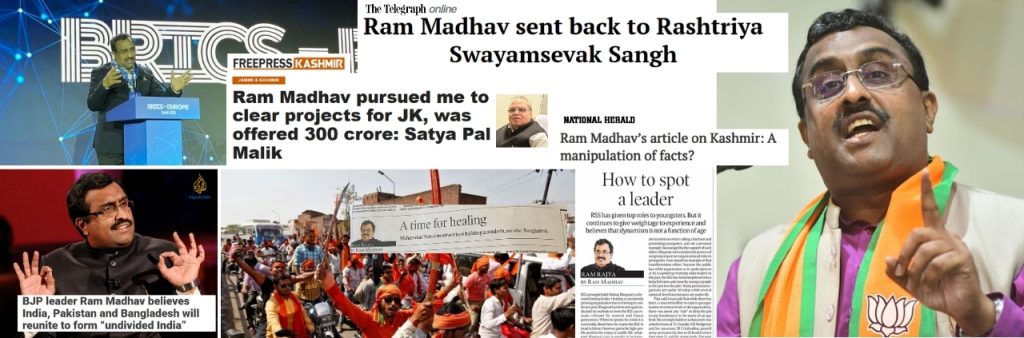
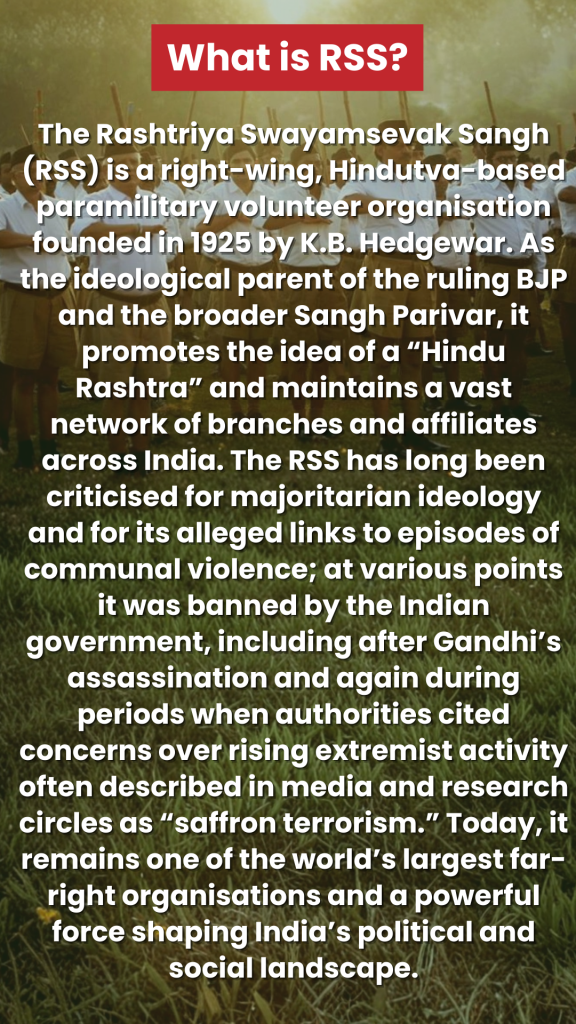
Ram Madhav is not an independent academic voice but a long-standing political figure closely tied to India’s ruling establishment. He began his career within the Rashtriya Swayamsevak Sangh (RSS), the ideological parent organisation of the Bharatiya Janata Party (BJP), where he served as a senior spokesperson and propagator of the group’s Hindu nationalist worldview. From there, he transitioned into mainstream politics, becoming a prominent national general secretary of the BJP, responsible for shaping the party’s political messaging, international outreach, and strategic alliances. Madhav later co-founded and led the India Foundation, a New Delhi–based think tank widely understood to operate as an unofficial foreign-policy arm of the BJP government, hosting high-profile conferences and cultivating relationships with diplomats, foreign political parties, and security establishments.
Although framed publicly as a policy intellectual, Madhav has frequently been associated with ideological controversies. His past statements on nationalism, religious identity, Kashmir, and India’s geopolitical posture have attracted criticism from civil society groups, international observers, and opposition leaders who view him as a hardline strategist rather than a neutral analyst. The India Foundation itself has faced questions about transparency, political influence, and the blending of government access with partisan interests. Madhav’s interventions abroad often present a carefully curated narrative aligned with the current government’s political objectives, emphasizing India’s global rise while downplaying domestic tensions and institutional challenges.
Former Jammu & Kashmir Governor Satya Pal Malik publicly accused Ram Madhav of attempting to pressure him into clearing two controversial files linked to the Ambani group, allegedly accompanied by a ₹300-crore bribe offer (approximately €2.58 billion). In an October 2021 interview, Malik explicitly named Madhav as the “senior RSS functionary” behind the approach, stating that he refused the offer and reported it to Prime Minister Modi. Madhav responded by issuing a defamation notice, but Malik—speaking later to ThePrint—insisted he would not apologise and would instead submit a written rebuttal. Malik passed away on 5 August 2025 at the age of 79 in Delhi’s Ram Manohar Lohia Hospital after a prolonged illness, yet his death has continued to fuel questions among politicians, journalists, and civil society, who point to unresolved allegations and lingering suspicions surrounding the circumstances of his final months. Read these articles which were published in some indians media 1, 2, 3, 4, 5.
Oxford’s Head-to-Head: The Exchange That Stripped Hindutva of Its Mask
In a December 25, 2015, episode of Al Jazeera English’s Head-to-Head titled “Is Modi’s India Flirting with Fascism?” RSS ideologue and BJP General Secretary Ram Madhav faced off against British-Pakistani Muslim journalist Mehdi Hasan in a tense Oxford Union debate, where footage of Madhav’s slip-ups quickly went viral, fueling relentless online trolling over his Hindutva worldview. Defending BJP’s policies amid rising intolerance claims, Madhav advocated for “Akhand Bharat” (undivided India), insisting Pakistan, India, and Bangladesh shared “one culture, one people,” and downplayed RSS chief Golwalkar’s inflammatory rhetoric labeling Muslims and Christians as “internal threats” as mere “challenges.” But the clip that exploded, Madhav’s flubbed retort to Hasan’s Kashmir probe, “We’ll worry about Kashmir, you worry about your ISIS”, left the visibly stunned anchor repeating “My ISIS?!” in disbelief, as Madhav awkwardly laughed it off as a tongue-slip.
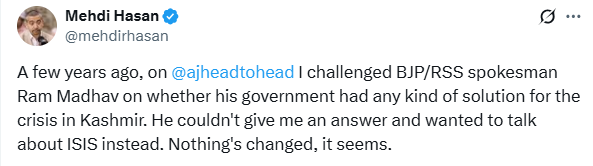
Circulated wildly across Twitter (now X), YouTube, and Indian outlets like Firstpost and Scroll.in, the moment branded Madhav a bigot in progressive circles, with memes likening his “one nation” pitch to Nazi slogans and critics decrying RSS’s “Muslim menace” undertones. Even Hasan tweeted about the ensuing Hindutva troll brigade’s abuse, turning the interview into a decade-defining symbol of BJP’s ideological extremism that still haunts Madhav’s global image.
Understanding his background is essential: He represents the political messaging of India’s ruling party, not an independent or academic view of the country. His remarks, therefore, must be read in the context of ideological alignment and strategic communication rather than detached analysis.
Why Western Right-Wing Politicians Should Be More Cautious
Many Western right-wing politicians mistakenly believe they share a natural ideological affinity with India’s right-wing establishment, imagining a partnership built on common values such as national pride, traditional culture, and scepticism toward globalist institutions. However, the political reality in India is far more complex and often fundamentally incompatible with Western conservative principles. The strategies deployed by India’s ruling party involve intense centralisation of state power, the use of religious nationalism as a political tool, and a tightening grip on civil society, opposition parties, NGOs, and media, methods that Western conservatives, who champion constitutional checks, individual liberties, and decentralised governance, would not apply within their own democracies. In addition, India’s political leadership often promotes narratives abroad that are carefully crafted for foreign consumption, while the domestic realities reflect deeper social tensions, institutional erosion, and ideological consolidation.
For these reasons, Western politicians, especially those on the right, must approach India with caution and informed analysis. Their assessments should rely on independent data, reputable global indices, and diverse Indian perspectives, rather than on narratives provided by politically aligned Indian organisations or government-friendly think tanks. Misreading India through an overly romantic or ideologically convenient lens risks enabling foreign influence, misunderstanding geopolitical intentions, and compromising the integrity of Western policy debates. Real partnership requires clarity, not blind ideological sympathy.
The Hidden Exodus from India: How Rising Asylum Claims Are Increasing Pressure on Western Taxpayers

India is not only a major source of global migration but is also increasingly a source of asylum seekers, contradicting the narrative of a uniformly “rising, stable” India. The Indian diaspora is one of the largest in the world. According to official data, there are more than 35 million people of Indian origin living abroad. Many of these migrants are highly skilled and settled in western economies, but there is also a sharp rise in Indians applying for international protection, particularly in countries like the United States, Canada, Australia and Europe.
In the US, asylum applications from Indian nationals surged by 855% between 2021 and 2023, jumping from approximately 4,330 to 41,330. The Times of India+2Maktoob media+2 In the same year, 5,340 Indians were granted asylum, including both affirmative and defensive cases. Click here to read the report. The Times of India+1 These numbers suggest that many Indians are fleeing not just for economic opportunity but due to fears of persecution, political coercion, or lack of protection.
While European data does not always break out Indian asylum seekers specifically, the broader trend of protection applications is illustrative: Eurostat reports that around one million first-time asylum applications were filed in the EU in 2023. European Commission Germany, as the largest destination in the EU, received 329,000 first-time applicants that year. European Commission Although not all of these are from India, growing anecdotal and media reports confirm that a significant proportion of Indian asylum seekers in Europe cite political and religious persecution, police intimidation, and civil society crackdowns as their reasons for fleeing.
Experts and human rights advocates argue that many of these asylum seekers come from marginalized communities including Sikhs, Dalits, Muslims, journalists, and political dissidents, who face systemic discrimination and even state-backed repression in India. This migration trend undermines the “India as invincible global powerhouse” narrative: despite its economic growth and geopolitical ambitions, India still produces large numbers of people who claim they must leave to find basic security and dignity.
Europe and other Western nations should therefore treat India not only as an emerging strategic partner but also as a source of serious human-rights and migration risk. Overlooking this dual reality could lead to policies that are naive at best and complicit at worst.
Over 6,000 Indian Nationals Now Reside in Luxembourg
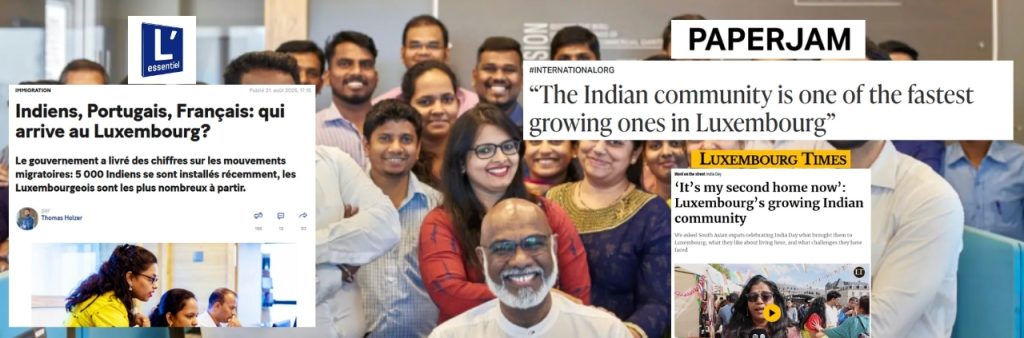
Luxembourg offers a revealing micro-case of Europe’s growing blind spot. As reported by PaperJam in 2025, the Indian community has expanded from fewer than 2,000 people in 2017 to more than 6,000 by 2024, plus an additional 700–800 naturalised citizens no longer visible in official data, a 350% demographic surge in just seven years. The Indian Association’s leadership openly acknowledges extensive support from the Indian Embassy, Ville de Luxembourg, and multiple communes, illustrating that these are not merely cultural groups but active soft-power extensions of a foreign state. Large In
dia Day events featuring ambassadors, national politicians, and thousands of attendees further turn public spaces into diplomatic platforms. Parallel WhatsApp ecosystems with thousands of members, along with subgroups managing housing, job placement, and schooling, create informal networks that can bypass official integration structures. Corporate pipelines, especially Amazon and major IT employers, accelerate this inflow by bringing workers from India, the UK, and the U.S., contributing to rapid demographic change with minimal public scrutiny.

A second news article from L’essentiel ‘Indiens, Portugais, Français: qui arrive au Luxembourg?’ reinforces these concerns. India has become the dominant non-EU source of migration with 5,781 arrivals in just five years, far surpassing all other third-country nationals. At the same time, Luxembourgers have become the group most likely to leave their own country, with more than 3,300 departures last year alone. A pattern linked to severe housing pressure, rising living costs, and a growing sense of cultural erosion. Between 2019 and 2024, Luxembourg registered 153,539 arrivals versus 96,681 departures, an extraordinary population turnover for such a small nation. With family reunification nearly matching labour migration and rising protection applications adding further strain, the country’s demographic transformation is advancing far faster than its political debate. Taken together, these developments make one reality clear and that is Luxembourg’s social fabric is being reshaped not by long-term national planning, but by foreign-linked migration pipelines and external demographic pressures operating beyond democratic oversight. Who will protect the local culture then? That is the question many Luxembourgish are starting to ask.
Why Europe Must Reassess Its Assumptions About India
At the BRICS Europe conference, the motive behind MEP Mr. Kartheiser’s questions was entirely understandable. He aimed to obtain an Indian viewpoint on U.S. secondary sanctions, especially those related to India’s oil dealings with Russia. His curiosity aligns with his broader political trajectory.
After a controversial trip to Russia in May 2025, he faced strong backlash within his own party, ADR, and was expelled after a majority of ECR members voted to remove him during an extraordinary meeting. On June 4, 2025, the ECR group expelled him in an extraordinary meeting. Kartheiser, however, remained defiant, calling his removal “a shame” but asserting he felt no guilt. Since then, he has continued his parliamentary work as an independent MEP, positioning himself as a bridge-builder between Russia and Ukraine who believes that genuine peace can only be achieved through diplomacy and dialogue. Not to forget that He is a former Cold War-era double agent who worked for the CIA after being approached by Soviet intelligence therefore his experience could have helped into peace talk between two nations.
Even after pressure from EU and from his own party he didnt stopped or discouraged himself. He recently visited second time to Russia which again made headline. This time MEA Mr. Kartheiser got support from some ADR party leaders.

The ADR leader Alexandra Schoos has defended her MEP Fernand Kartheiser’s trip to Russia last week, his second in recent months. “We are behind Mr Kartheiser,” Schoos replied when asked by the Luxemburger Wort whether there had been any criticism within the party of the visit. The ADR party stands for “dialogue and peace,” she added, after Kartheiser claimed his latest visit was aimed at “strengthening EU-Russia dialogue”. Robby Mehlen has been honorary president of the ADR since 2012, but has now quit the party over Fernand Kartheiser’s latest trip to Russia. In this light, his engagement with Ram Madhav (of the India Foundation) appeared consistent with his broader commitment to diplomatic engagement. Helvilux Media acknowledges and respects this intent.
However, the legitimacy and sincerity of the person he interviewed remain in question. Was Ram Madhav speaking as a representative concerned about the welfare of Indian citizens, or as a political loyalist defending the narrative of India’s ruling establishment? Throughout the entire ten-minute interview, Madhav failed to provide even a single precise or meaningful statement on the sanctions issue that Mr. Kremling was actually hoping to explore. Instead, he offered broad ideological rhetoric that served more as political messaging than substantive analysis.
For this reason, Europe must build a deeper and more realistic understanding of India and its governing forces, not to serve Indian political interests, but to safeguard European societies from being misled, manipulated, or influenced by orchestrated foreign narratives. This concern is not abstract. As mentioned before report by Le Essentiel highlighted that Indians are now the largest migrant group in Luxembourg, a development that raises serious questions about migration patterns, integration pressures, and the geopolitical origins behind such movement. This is not a matter of pride, but a matter of strategic concern for Western societies.