In recent weeks, Switzerland has once again found itself at the center of an intense public debate over media credibility, allegations of disinformation involving the SRG, and renewed controversy surrounding the funding and role of public service broadcasting. Against this backdrop, questions of media power, state influence, and freedom of expression have returned to the forefront of public discourse. It is in this context that the article “No Censorship in Switzerland” by Regula Heinzelmann is once again being widely discussed. In the interest of informed debate and out of respect for the author’s contribution to this important issue, Helvilux is publishing the article in full below.
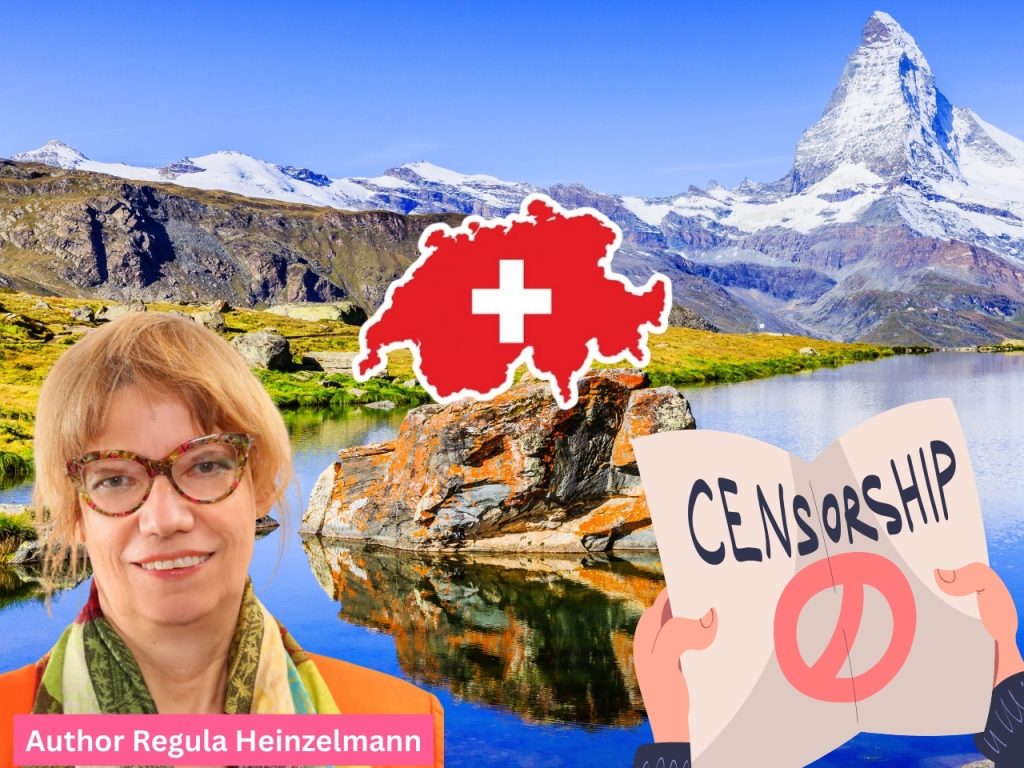
“No Censorship in Switzerland” by Author Regula Heinzelmann
The Federal Act on Communication Platforms and Search Engines (KomPG), also known as the Social Media Act, is intended, according to the Federal Council, “to strengthen the rights of users in the digital space and to oblige very large communication platforms and search engines to greater fairness and transparency.”
This must be viewed very critically, because the Federal Council fears “disinformation” — a term that advocates of censorship like to use. Further information can be found below.
Official page:
https://www.news.admin.ch/de/newnsb/6TmEAde4htulaWG9CWYtK
14 January 2025
Switzerland is a direct democracy, yet our government is increasingly making decisions over the heads of the people, against the people, and even against the law.
Nevertheless, abroad we are still regarded as a model democracy — and we should remain so.
Now Swiss authorities and politicians are also fearing the influence of platforms such as X and are demanding measures that are practically censorship. The Swiss people should not tolerate this.
Thus, the report of the Swiss Federal Media Commission (EMEK) on market and opinion power of platforms states:
“This concentration and combination of market power and opinion power of the companies behind the major platforms is relevant to democracy and potentially problematic.”
Accordingly, EMEK recommends in the present paper that measures be examined at several levels in a differentiated manner and not viewed fragmentarily, but rather understood as components of a holistic strategy for dealing with the combination of market and opinion power of major technology corporations.
The consultation draft currently being prepared by the Federal Council for a Federal Act on Communication Platforms represents an important building block of such a strategy. However, further building blocks are needed. Accordingly, EMEK outlines options for action for the governance of platforms:
Regulation of the market power of platform companies:
The traditional instruments of competition law are hardly able to capture the specific characteristics of platform markets. Therefore, consideration should be given to further developing competition law and to ex ante regulation of large platforms in order to ensure fair competition.
Governance of algorithmic recommendation and moderation systems:
Platforms must assume responsibility for the design and use of algorithms, for example through obligations for recommendation systems without profiling or through risk impact assessments and risk mitigation measures. In addition, alternatives to existing platforms should be enabled, and democracy-compatible algorithms should be researched and implemented.
Societal oversight of platforms:
Platforms should be obliged to grant research and civil society access to data. Only in this way can oversight in the public interest be ensured. Furthermore, independent competence centers and supervisory bodies should be established and equipped with sufficient resources and expertise.
Regulation of artificial intelligence:
Along the value chain of AI systems, transparency and accountability obligations must be established in order to prevent risks to fundamental rights and society. The ratification of the Council of Europe Convention on AI presents itself as an option, although sector-specific approaches should also be examined in implementation.
Comment: Regulations on AI are sensible as long as freedom of expression is not restricted.
Media and digital literacy:
Since public discourse today is significantly influenced by algorithmically controlled platforms, the population should be enabled, through various measures, to deal reflectively with the public sphere transformed by digitalization.
The report can be downloaded at the following link:
https://www.emek.admin.ch/de/markt-und-meinungsmacht-von-plattformen
Regulating Communication Platforms
On 5 April 2023, the Federal Council instructed the Federal Department of the Environment, Transport, Energy and Communications (DETEC / BAKOM) to draft a consultation proposal for the regulation of communication platforms. This will also address challenges arising from insufficient enforcement of law vis-à-vis digital platforms.
The proposal is based on the EU’s Digital Services Act and aims to place very large platforms in particular under greater responsibility through duties of care and reporting obligations. However, disinformation is only affected by regulation where it concerns unlawful content.
Content can only be described as unlawful if the law itself complies with the constitution and human rights. This was not always the case in Switzerland either, for example during the COVID period.
Surveillance by the Federal Administration
Since 2022, a network of contact persons on influence activities has been maintained within the federal administration, and workshops on this topic are regularly organized. This exchange serves to promote a shared understanding of this security policy threat, relevant developments, the situation, and relevant activities within the federal government, and to derive and coordinate measures.
Experts from academia or abroad, as well as responsible authorities from other states, are also involved. Ongoing international exchanges with partner states and in multilateral forums for the exchange of expertise and the strengthening of situational awareness are continuously maintained and expanded where appropriate.
Internal exchange within the federal administration is to be expanded and, if necessary, institutionalized. In this context, links to work on transnational repression are also to be examined. The threat posed by influence activities and disinformation and their security policy significance has increased, which raises the need for coordination. Coordination with the federal government’s security policy bodies is to be strengthened, and more closely coordinated analysis and situation assessments are to be incorporated both into their deliberations and into internal exchanges within the administration.
Report of the Swiss Government on Disinformation
In January 2022, the Security Policy Committee of the National Council (SiK-N) submitted a postulate requesting an overview of the threat to Switzerland posed by disinformation campaigns. Specifically, the Federal Council was asked to present a report explaining to what extent Switzerland is affected by influence activities or disinformation campaigns, and to propose measures to counter this threat.
The postulate refers to the Federal Council’s 2021 Security Policy Report, which examined the issue in greater depth and explained that influence activities can sabotage political processes and undermine public trust in institutions. Given growing power-political confrontations, the risk for Switzerland of being affected by such activities is also increasing.
The Federal Council recommended acceptance of the postulate on 23 February 2022. The National Council adopted the postulate on 9 March 2022.
The report “Influence Activities and Disinformation” can be downloaded here:
https://www.sepos.admin.ch/de/nsb?id=101494
See also my report on similar campaigns in Germany and the EU:
https://www.europa-konzept.eu/geben-sie-gedankenfreiheit-schiller/desinformation/
The EU Digital Services Act endangers freedom of expression and information in Europe; a legal analysis can be found at the link. The EU’s explanation is Orwellian:
“Creating a safer digital space in which the fundamental rights of all users of digital services are protected.”
https://www.europa-konzept.eu/geben-sie-gedankenfreiheit-schiller/eu-contra-informationsfreiheit
This alone is reason enough to reject a framework agreement with the EU.
What Is Disinformation?
There are no generally accepted precise definitions for the terms influence and disinformation. However, a basic understanding is shared by most studies. Influence activities in the information space are understood to be various behaviors and strategies that aim, with manipulative intent, to influence the perception, thinking, and actions of individuals, groups, and societies.
This has been a completely normal process for thousands of years. Societal groups have always attempted to influence others, and many of the methods used today are ancient. Today they are combined with digital technology and so-called artificial intelligence, which the report also addresses. Historically, populations have been influenced most by those in power and by religious leaders.
Disinformation refers to misleading or entirely fabricated information that is deliberately used to influence public opinion, affect political processes, undermine the credibility of institutions and media, or sow doubt about the reliability of information.
Even when disinformation has been identified and debunked, it is often still spread further. Psychology has shown that frequently repeated statements are more likely to be believed regardless of their truth value (illusory truth effect).
According to the report “Disinformation in Switzerland 2021,” commissioned by the Federal Office of Communications (BAKOM), almost half of respondents consider disinformation to be a major or very major problem. According to the report, disinformation represents a serious problem for trust in the media, politics, and authorities, as well as for social cohesion. To what extent influence activities have already led to such effects is difficult to determine.
The following question also applies to Switzerland and is particularly important for a direct democracy: Why should the people trust politicians and authorities, of whom they are the sovereign? On the contrary, they must watch them closely and critically. Journalists must support the people in doing so, not the government.
The Swiss population has many reasons to distrust the government; in recent years, much has gone wrong:
https://www.europa-konzept.eu/rechtsstaat-statt-relativierung/schweizer-politik-2023
In recent years, too much trust has been placed in politicians and authorities, and it has even been accepted that authorities in a direct democracy expect uncritical trust from the population.
VOX studies conducted by the opinion research institute gfs.bern show the population’s trust in information from the Federal Council, particularly in the context of referendums — for example, in the explanatory brochure of the Federal Council (83%), newspaper articles (81%), and television programs (72%).
Too much trust in politicians and authorities leads to dictatorship.
Direct democracy and Switzerland’s federal structure are strengths, but they also represent a potential vulnerability with regard to disinformation. The large number of votes at all state levels offers influence actors opportunities to exert influence on a case-by-case basis, according to the report.
That is called freedom of expression, and representatives of different views have the constitutional right to present their arguments to the electorate.
However, the authorities organizing elections and referendums at the various state levels have built up extensive experience through the numerous ballots, work closely together, and regularly exchange information in various institutionalized formats, specific committees, and at the international level.
In other words, they want the people to vote the way they prefer and influence by state representatives, so-called recommendations, exists in every referendum campaign.
Misinformation, including the omission of important information even appears in official voting brochures. A repeat vote on the COVID-19 Act was demanded because important articles of the law were missing from the brochure for the first vote.
In the vote on the so-called Climate Act, the population was not informed at all that CO₂ storage is an expensive high-risk technology, which means that the relevant article of the law must be considered invalid.
Deleting Comments
At its meeting on 19 June 2024, the Swiss Federal Council decided when the federal administration may delete comments posted on its social media profiles. For this purpose, it supplemented the Government and Administration Organization Ordinance (RVOV) with new articles.
The new articles contain provisions on the use of social media by authorities and regulate which comments authorities may delete on social media and when they may block users on their profiles.
Quotation (comments in italics):
Deletion of a comment is permitted if it:
- calls for offenses, crimes, hatred, or violence
- contains content that violates personal rights, is defamatory, threatening, discriminatory, pornographic, or depicts violence
- endangers the health or personal safety of individuals this was done for years by state COVID vaccination propaganda; that should be deleted first
- contains commercial advertising
- is obviously machine-generated (spam)
- has no relation to the topic of the post and is posted repeatedly
- is obviously false, posted repeatedly, and serves disinformation — a formulation that opens the door wide to arbitrariness, since there are different opinions on what constitutes disinformation (see the section above on the Swiss government report)
https://www.admin.ch/gov/de/start/dokumentation/medienmitteilungen.msg-id-101493.html
Information Against Disinformation
The only thing that works against disinformation is well-researched and neutral information. And it is precisely such information that is least provided by state-controlled and even compulsorily funded media. Many private and widely consumed media outlets also trample journalistic standards underfoot. That is why balancing information from platforms is needed.
https://www.europa-konzept.eu/geben-sie-gedankenfreiheit-schiller/journalistische-grundsätze
The most important example in recent years was the campaign for COVID vaccinations that was poured over the public. Even official vaccine injury statistics, for example from Swissmedic or the Paul Ehrlich Institute, were barely reported on. If this information had not been shared via platforms, the number of vaccine-injured people or even deaths would have been significantly higher.
https://www.europa-konzept.eu/corona/corona-impfung
It is also highly dangerous if only governing parties can exert political influence and discredit potential new competitors. This also happens in official media. Censorship of platforms would further worsen this tendency.
The only publications whose dissemination must rightly be stopped are calls for violence, violent videos, or clear defamation. However, equal treatment must apply to all — something that is practically never the case with state intervention.
Citizens must be left to decide which news they consider credible and which they do not. Censorship has no place in a democratic state.
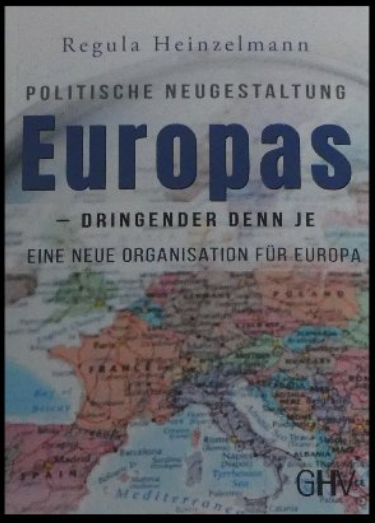
Regula Heinzelmann is also the author of the recently published book “Politische Neugestaltung Europas – dringender denn je! Eine neue Organisation für Europa”, released by Gerhard Hess Verlag (€22.80, ISBN 978-3-87336-775-3). In this work, she presents her concept “Europe Works Together (EWT)”, a proposal for a new European organization of sovereign states aimed at peace, prosperity, and democratic legitimacy beyond the current EU framework. Drawing on decades of political reflection, the book argues for cooperation without centralization, shared fundamental rights, coordinated security, and strong democratic oversight. Further information and orders are available visit www.gerhard-hess-verlag.de
(Author’s note: The original article No Censorship in Switzerland was written and first published on Author Regula Heinzelmann website www.europa-konzept.eu.)