
New Delhi (HELVILUX) – In a move that has left many Europeans scratching their heads and fearing for their cultural heritage, the European Union has sealed what Commission President Ursula von der Leyen boldly dubbed the “mother of all deals” with India. This massive Free Trade Agreement (FTA), concluded during the 16th EU-India Summit in New Delhi on January 26-27, 2026, promises to reshape global trade – but at what cost to Luxembourg and the wider EU? As Indians gear up for easier access to our markets and our shores, one can’t help but ask: Is tiny Luxembourg, already straining under housing shortages and cultural shifts, prepared for a potential influx of migrants from the world’s most populous nation? And why is the EU prioritizing profits over principles, ignoring India’s track record of sidestepping sanctions and human rights concerns?
This deal isn’t just about tariffs and textiles; it’s a gateway that could flood Europe with temporary workers, students, and professionals under a new “Comprehensive Framework for Cooperation on Mobility.” While EU officials tout it as a win for filling labor shortages, critics including voices here in Luxembourg, warn of unchecked migration eroding our way of life. Let’s peel back the layers of this so-called partnership and expose the double standards, ethical lapses, and dangers lurking beneath.
The “Mother of All Deals”: A One-Sided Bonanza for India, Shrouded in Secrecy
The FTA, still awaiting formal signing and ratification later in 2026, eliminates or reduces tariffs on over 96% of goods traded between the EU’s 27 nations and India, creating a market of nearly 2 billion people worth trillions in GDP. But who really benefits? India gains immediate zero-duty access for 70% of its exports, boosting labor-intensive sectors like textiles, apparel, leather, gems, and marine products industries that could undercut European competitors with cheap labor. EU exporters, meanwhile, face phased reductions on items like cars, wines, and machinery, saving about €4 billion annually but exposing sensitive sectors to fierce competition.
What stings most is the lack of transparency. Negotiations, relaunched in 2022 after a decade-long stall, wrapped up amid global tensions including Donald Trump’s tariff threats, without broad public consultation in Europe. Ursula Von der Leyen, Kaya Kallas and European Council President António Costa jetted to India for Republic Day festivities, shaking hands with Prime Minister Narendra Modi as if sealing a family pact. But where was the debate in the European Parliament or national assemblies? This top-down decision reeks of Brussels elitism, prioritizing geopolitical chess against China and the US over the concerns of ordinary Europeans already grappling with inflation and migration pressures.
In Luxembourg, where foreigners already make up 47% of our 682,000 residents, the Indian community has ballooned to over 5,000+ the second-largest non-European group after Ukrainians. Click here to read.
With the deal’s mobility framework easing visas for IT pros, engineers, and students (including post-study work extensions up to three years), we could see thousands more arriving. Our housing crisis, with rents skyrocketing and schools overwhelmed, isn’t equipped for this.
India’s Betrayal: Profiting from Russian Oil While Europe Bleeds for Ukraine
Adding insult to injury, this deal comes as India flagrantly disregards EU sanctions on Russia. Since the 2022 Ukraine invasion, India has become Moscow’s top oil buyer, snapping up discounted crude at 2-2.5 million barrels per day in 2025, even as Europeans foot the bill for billions in aid, weapons, and refugee support. Tycoons like Mukesh Ambani’s Reliance Industries, a close Modi ally, inked multi-billion-dollar deals with Rosneft, refining Russian oil and exporting fuels back to Europe through loopholes.
While EU taxpayers struggle with energy costs and war fatigue, India saves billions on cheap oil, indirectly funding Putin’s war machine. The EU has sanctioned some Indian firms like Aerotrust Aviation, Ascend Aviation, and Shree Enterprises in October 2025 for evading tech export bans to Russia but that’s a slap on the wrist. A new January 2026 rule bans EU imports of products refined from Russian crude in third countries like India, yet von der Leyen still toasts Modi. This isn’t partnership; it’s appeasement.
India’s Decisions Taken by Trump?
The EU-India FTA’s timing and tone raise fresh questions about India’s foreign policy independence – especially under Prime Minister Narendra Modi. US President Donald Trump has repeatedly claimed personal credit for de-escalating tensions between India and Pakistan, asserting he intervened decisively through phone calls and trade threats.
In multiple public statements in late 2025 (including at the US-Saudi Investment Forum and during a Diwali event), Trump recounted warning Modi that the US would not proceed with trade deals if India pursued conflict with Pakistan. He described receiving a call from Modi saying “we’re done” with war preparations, after which Trump claimed he secured a ceasefire and “saved millions of lives”. Trump repeated similar boasts in June and November 2025, framing his intervention as a masterstroke of diplomacy backed by tariff leverage.
Indian officials, including Modi himself, have firmly rejected this narrative. In a June 2025 phone call and public statements, Modi and the Ministry of External Affairs clarified that no US mediation occurred, no trade discussions were linked to the de-escalation, and India does not accept third-party involvement in its relations with Pakistan. The ceasefire was attributed to bilateral military channels not American pressure.
Adding to the perception of influence, Trump imposed aggressive economic measures on India in 2025–2026. He hiked tariffs on Indian goods (up to 50% in some sectors) partly over Russian oil purchases and introduced a $100,000 one-time fee on new H-1B visa petitions starting September 2025 (with restrictions on entry for non-compliant holders). These moves disproportionately hit Indian IT firms and skilled workers (Indians received ~71% of H-1B approvals in recent years), forcing rushed travel, family disruptions, and criticism from India’s government about “humanitarian consequences”.
India’s opposition Congress party led by Rahul Gandhi, has repeatedly accused Modi of being overly deferential to Trump. In October 2025 and January 2026 statements, Gandhi claimed Modi is “frightened” of Trump, allows the US president to “decide and announce” key policies (e.g., halting Russian oil imports), and outsources India’s decisions to Washington. Gandhi contrasted this with Indira Gandhi’s firm stance against US pressure in 1971, accusing the current government of shrinking India’s sovereignty for personal rapport. On 31 January 2026, while speaking to the media, Donald Trump said that India would stop purchasing oil from Iran and instead buy it from Venezuela. This once again suggests that Trump is taking decisions on India’s behalf, while Modi remains silent out of fear, acting merely as a puppet.
While Trump-Modi ties have been publicly warm at times, these episodes combined with Trump’s tariff threats and visa crackdowns fuel perceptions that major Indian decisions on energy, security, and migration are increasingly shaped by Washington rather than New Delhi. If India bends so readily to US demands, how independent can its commitments to the EU truly be?
After 20 years of stalling, the EU finally signs the “mother of all deals” conveniently timed to send a loud message to Trump that Brussels can still play in the big leagues. But when India’s foreign policy seems increasingly decided in the Oval Office (or Mar-a-Lago), how realistic is it for Ursula von der Leyen to treat India as a reliable, independent partner?
This dynamic casts serious doubt on the FTA as a genuine partnership of equals and raises the uncomfortable question: whose interests are really driving India’s global alignments… and whose are being sold short in Brussels?
Double Standards: Luxembourg Politician Punished for Russia Visit, While EU Cozies Up to Sanction-Busting India
The hypocrisy is glaring. Recall Luxembourg’s own Fernand Kartheiser, then the ADR MEP expelled from his party in June 2025 after a self-funded Moscow trip to “promote dialogue”.
Labeled a “red line” crosser for engaging Russia amid sanctions, Kartheiser was isolated even his party distanced itself amid backlash. Yet, EU leaders waltz into New Delhi, ignoring India’s sanction violations. Why the kid gloves for Modi? Geopolitics, apparently diversifying from China trumps principles.
This double standard erodes trust in EU leadership. If a Luxembourg and EU politician faces exile for talking to Russians, why no repercussions for India, which actively profits from the war Europe is funding? It’s unethical, prioritizing economic expediency over moral consistency.
Modi’s Epstein Ties: A Stain on Accountability
Further tarnishing the deal is Modi’s tangential link to the Jeffrey Epstein scandal. In the 3 million pages of Epstein files released by the US Justice Department on January 30, 2026, Modi’s name surfaces in a 2017 email where the convicted sex offender speculates that Modi “took advice” and “danced and sang in Israel” to benefit US interests after meeting Trump.
This aligns eerily with Modi’s real June-July 2017 trips. A White House visit with Trump, followed by Israel’s first Indian PM state visit, complete with cultural dances and photo-ops.
India’s opposition Congress party seized on this, demanding clarity on any “advice” from Epstein’s circles, calling it a “national shame.”
Modi’s government dismissed it as “trashy ruminations by a criminal,” but the optics are damning. How can the EU ink deals with a leader whose name, however peripherally appears in such sordid files? India’s accountability vacuum from human rights abuses to opaque diplomacy, should give pause.
Women Safety in India: A Stark Warning Amid EU Ties
India’s troubling record on women’s safety casts a long shadow over the EU-India FTA, which could bring thousands more Indian nationals to Europe as skilled workers, students, and professionals. In May 2025, the Netherlands issued a “code red” travel advisory for high-risk areas like Jammu and Kashmir, Manipur, and India-Pakistan border regions, deeming them “too dangerous” due to conflicts and military activity urging Dutch citizens to avoid them entirely. Most of India falls under a “yellow” advisory, advising vigilance amid unpredictable security. Other EU nations followed suit: Sweden warned against Kashmir and border areas; the UK advised avoiding within 10km of the India-Pakistan border; Finland and Belgium echoed calls to limit travel to high-risk zones. While not exclusively focused on women, these reflect broader dangers.
Reports like Berkshire Hathaway Travel Protection ranking India 42nd out of 44 popular destinations in 2026, citing high risks of harassment and assault for women. Women travelers are urged to avoid solo trips, dress modestly, and steer clear of public transport at night due to common sexual harassment and gang rapes.
There have been isolated cases of Indian women receiving subsidiary protection in the Netherlands and other EU states by proving lack of state protection from gender-based violence, particularly in regions like Rajasthan, Gujarat, Haryana and Punjab of India where issues like domestic abuse, forced marriage, and honor crimes persist with inadequate enforcement. For example, EU asylum data shows low but positive grants for Indians (235 in 2024 EU-wide), including gender-persecution claims under the Qualification Directive where return risks serious harm without state remedy.
Recent scandals in India amplify concerns. On January 10, 2026, the BJP appointed Tushar Apte (RSS member and BJP party worker) a co-accused in the 2024 Badlapur sexual abuse case involving two minor girls (charged under POCSO for failing to report the assault) as a copt councillor in Kulgaon-Badlapur Municipal Council in Thane District of Maharashtra. He resigned amid backlash, but the move sparked outrage over protecting the accused. In another infamous case from 2021 (resurfacing amid debates), Congress leader KR Ramesh Kumar joked in Karnataka’s assembly. He said, “When rape is inevitable, lie down and enjoy it,” drawing laughter before a forced apology. Such statements from leaders across parties trivialize violence against women, reflecting a culture where accountability is lax.
Dozens of BJP leaders and affiliates have been accused of raping or sexually assaulting women and children, yet many face no judgment or prosecution from Indian courts. According to a 2024 ADR report, 151 sitting MPs and MLAs have declared cases related to crimes against women, with 16 facing rape charges. The BJP tops the list with 54 such lawmakers. In many cases, victims and their families are threatened to withdraw complaints, allowing accused leaders to contest and win elections. For instance, Brij Bhushan Sharan Singh, a BJP MP accused of sexually harassing top female wrestlers in 2023 (charges framed in 2024), was dropped by the party for the 2024 elections but his son Karan Bhushan Singh was fielded and won the Kaiserganj seat. This harsh reality of “New India” leaded by MODI govt highlights poor policing, judiciary delays, flawed voting systems, and voter mindsets that enable such figures.
What if migrants with this mindset in the name of skilled workers comes to europe and after some years become EU citizens, supporting injustice and wrongdoing politicians? Does EU leader Ursula von der Leyen want that kind of mindset in next-generation EU citizens? With the FTA easing entry for Indians, who will safeguard European women and children from potential risks? EU leaders like Ursula von der Leyen, championing the deal, seem blind to these dangers prioritizing trade over the safety of our families.
Allegations of Election Manipulation in India
In late 2025, Indian opposition leader Rahul Gandhi intensified his “vote chori” (vote theft) campaign, alleging large‑scale manipulation of voter rolls and election results in states like Haryana, Karnataka and Bihar by the ruling BJP and the Election Commission of India. Gandhi presented what he described as an “atom bomb” of evidence showing duplicate voters, fake addresses and irregular entries claiming this amounted to systematic vote theft orchestrated with the ECI’s cooperation. He even warned of a coming “hydrogen bomb” of revelations meant to expose the full scale of alleged fraud, asserting that millions of votes were manipulated and accusing the poll body of failing to protect democratic integrity.
The Election Commission strongly rejected these claims, calling them “baseless” and “absurd,” and demanded Rahul Gandhi either sign a formal declaration with supporting evidence or apologise for the allegations highlighting that such serious claims are treated under strict legal and procedural rules. But same election commission fail to provide the cctv footage of the voters putting vote to identify fake voters, later on commission said footage of womens sharing in public will be uncultutral act and also that footage deleted because of retention period.
This bitter dispute has raised deep questions about electoral transparency and institutional neutrality in India. It also contrasts sharply with European norms, where electoral oversight and the independence of election bodies are widely viewed as essential pillars of democratic legitimacy. How can Europe claim similarity in democratic processes with a system under repeated allegations of vote manipulation, hacking possibilities and contested institutional accountability?
Shared Values? The Illusion of Similarity Between India and the EU
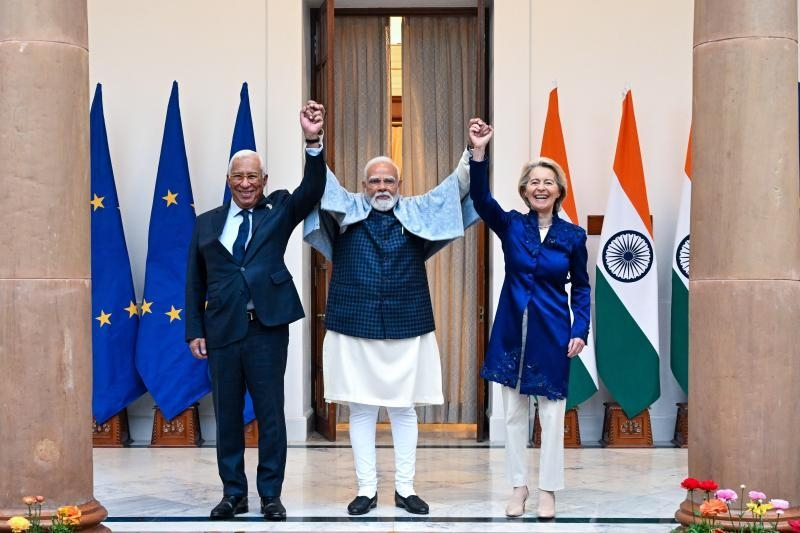
The EU and India have concluded a historic free trade agreement, the largest ever for either side, creating a €180 billion trade corridor and a market of 2 billion people. The deal will eliminate or reduce tariffs on 96.6% of EU goods exports to India, saving around €4 billion annually and doubling EU exports by 2032, while giving EU industries and agri-food sectors unprecedented access to India’s 1.45 billion-strong, fast-growing economy. Key tariffs on cars, machinery, chemicals, and pharmaceuticals will be gradually reduced or abolished, and SMEs will benefit from dedicated support, regulatory transparency, and predictable trade rules, making this the most ambitious trade opening India has ever granted.
During the EU-India Summit, Commission President Ursula von der Leyen repeatedly emphasised deep similarities between the two partners. She stated that “The EU and India make history today, deepening the partnership between the world’s biggest democracies. We have created a free trade zone of 2 billion people, with both sides set to gain economically. We have sent a signal to the world that rules-based cooperation still delivers great outcomes. And, best of all, this is only the start – we will build on this success, and grow our relationship to be even stronger. We have always been natural partners. We share a deep commitment to democracy, human rights, international law, and multilateralism…” portraying them as natural allies united by shared democratic values.
This narrative, however, stretches reality. India has still not signed or ratified key international human-rights and legal frameworks such as the ECHR, Budapest Cybercrime Convention, CAT, ICC, ICCPR optional protocols, and the ICRMW treaties to which most European states are parties. Freedom of speech is not at all being respected in India. Reporters and journalist are being throw in prison for years and police violence is everyday life in India. India’s national human rights commission fail to protect citizens and fail to give justice to them or action against those who violate human rights. India and the EU differ profoundly in governance, rule of law, human rights enforcement, social structures and cultural norms.
Key differences include:
- Rule of law and equality: The EU operates under strong, independent judiciaries and uniform application of law. India’s system suffers from chronic delays, widespread corruption and selective enforcement.
- Human rights protections: EU standards are robust and enforceable. India faces persistent issues with freedom of speech, minority rights, caste discrimination and police excesses.
- Gender equality and social norms: Women’s safety and equality remain major challenges in India, in stark contrast to EU norms.
- Secularism vs religious influence: The EU is largely secular. India’s politics is deeply intertwined with religion and caste.
- Economic transparency and corporate accountability: EU regulations (REACH, anti-corruption laws) are strictly enforced. India struggles with crony capitalism.
A glaring example of India’s selective rule of law is the Adani Group case. The US SEC filed a civil fraud lawsuit in November 2024 alleging Gautam Adani and his nephew Sagar orchestrated a $265 million bribery scheme to secure solar contracts. Federal prosecutors in Brooklyn also brought criminal charges. Despite repeated US requests, India’s Law Ministry twice rejected serving the summons on procedural grounds (missing signatures or seals). The SEC has now asked a US court to bypass India entirely and serve notices via email. Meanwhile, ordinary Indian citizens accused of minor crimes routinely face public humiliation by Indian authority. Indian Police parade suspects handcuffed through streets, most of the time beating them on camera, recording videos, and forcing them to wear humiliating signs (a practice known as “public parading” or “dhindora” shaming). India’s Supreme Court has repeatedly condemned these acts as violations of human dignity, yet they continue in many states specially in Maharashtra and Uttar pradesh.
Against this backdrop, when Maharashtra Vikas News Media through journalist Kashiram Vichare sought information under the Right to Information Act from the Home Minister of India on why summons were never served on Adani, authority avoid to provide information citing ‘privacy reason’ rejected again on appeal, and followed by local harassment by police and politicians in Ambernath (Thane), while so-called ‘godi media’ chose to question applicants journalism credentials instead of reporting the collapse of India’s transparency and rule-of-law mechanisms.
The same pattern emerged when journalist Kashiram Vichare sought information under the RTI Act about wanted criminal Nilesh Ghaiwal from Pune’s Kothrud Police Station, to support Swiss authorities in the deportation of Ghaiwal. Indian authorities avoided disclosure on baseless grounds, and even the appeal produced the same outcome. Subsequently, police publicly disclosed Vichare’s name in the media and initiated a criminal case falsely alleging he made disrespectful phone calls to a woman police officer regarding his RTI application, despite his non-involvement, reinforcing his conclusion that the RTI Act has been effectively destroyed under BJP rule. Meanwhile, compliant ‘godi media’ focused on questioning Vichare’s journalism credentials and, together with police, tried to portray the honest journalist as an extortionist operating from the UK, even though no evidence of extortion exists. Click here.
Regarding this, Maharashtra Vikas Media’s former publisher, Irshad Shamim Shaikh, stated that journalists who speak lies or only praise ‘godi media’ receive awards, respect, and even protection from the police, whereas those who report the truth or facts critical of the Modi government are labeled as extortionists or terrorists in India. Recently, Mr. Shaikh was arrested by Badlapur West Police Station on a false complaint filed by a local politician. While in lockup, he was physically assaulted by police officers. After 14 days of police custody and judicial remand, the court granted him bail. Facing torture due to his journalism work and being a Muslim, he ultimately left Maharashtra Vikas Media.
While rich industrialists and politically connected figures often evade accountability, ordinary citizens endure medieval-style public shaming. This two-tiered justice system is fundamentally incompatible with European principles of equality before the law.
How can EU leader Ursula von der Leyen, Antonio Costa, Kaja Kallas, Maros Sefcovic claim “shared values” and “respect for human dignity” when partnering so closely with a country exhibiting such stark contrasts? The push for the “mother of all deals” appears driven by geopolitics and trade ambitions rather than genuine alignment of principles.
Narendra Modi’s “Swadeshi” Push and What It Means for EU-India Trade
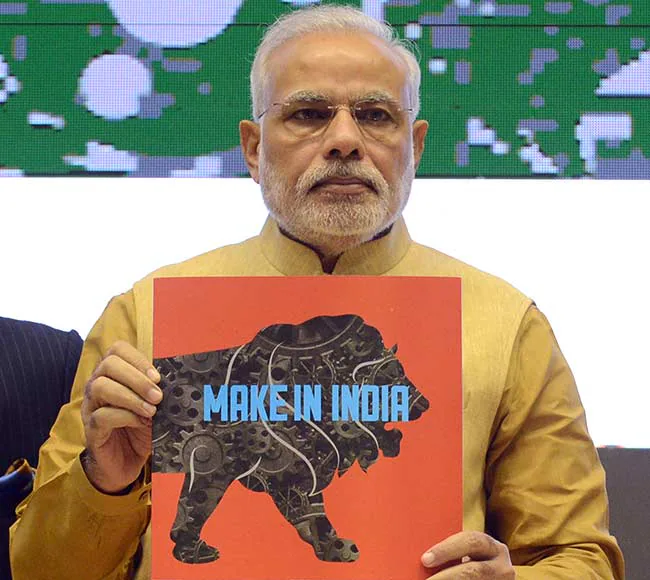
Prime Minister Narendra Modi has repeatedly urged Indian citizens and businesses to prioritise Swadeshi — that is, locally made products as part of a broader push for economic self-reliance and domestic industry growth. In public addresses, including rallies and speeches linked to India’s economic policy agenda, Modi has called on consumers and traders to “buy Indian” and make Made in India goods a point of national pride, echoing long-standing initiatives like Atmanirbhar Bharat and “Vocal for Local.”
For example, in October 2025 Modi urged Indians during a festive season to celebrate the work of their fellow citizens by choosing Swadeshi products and sharing their purchases on social media to inspire others. He has also publicly appealed to shopkeepers and traders to sell predominantly Made in India items in their markets, suggesting that such a culture will strengthen local industry and employment.
This nationalist economic messaging reflects India’s strategic aim to reduce dependence on foreign imports and build domestic manufacturing capacity a laudable goal within India’s internal economic debate. But it does raise a question for EU policymakers in the context of the EU-India free trade agreement. If India’s leader is promoting Swadeshi consumption and urging citizens to reduce reliance on foreign products, how realistic is it to assume that European exporters will enjoy smooth access to the Indian market under the new deal? Especially in sectors where Indian consumers might favour lower-cost local alternatives?
Moreover, there have been reports of local markets and traders in India posting Swadeshi-themed signage and campaigns to encourage purchase of Indian-made goods as a response to this national directive.
From an EU perspective, this dynamic complicates the narrative that reduced tariffs and trade facilitation will automatically translate into greater European market penetration in India. If Indian commercial culture increasingly favours indigenous products, EU exporters may face cultural preference barriers in addition to traditional trade challenges even if formal tariff barriers are lowered under the FTA.
Tragedy Amid Triumph: Airplane Crash Exposes India’s Lax Safety Culture
Just as EU leaders were packing up from their triumphant visit to seal the deal on January 26-27, tragedy struck on January 28, 2026, underscoring the perilous “chalta hai” or “it’ll be fine” attitude that permeates Indian society at every level. A Learjet 45 business jet carrying Maharashtra’s Deputy Chief Minister Ajit Pawar, a prominent Nationalist Congress Party (NCP) leader and key political figure, crashed during a second landing attempt at Baramati Airport in Pune district. The plane burst into flames upon impact, killing all five on board: Pawar, his personal security officer Vidip Jadhav, flight attendant Pinky Mali, Pilot-in-Command Sumit Kapur, and Second-in-Command Shambhavi Pathak.
Eyewitnesses described the aircraft falling about 100 feet short of the runway, with initial investigations pointing to a possible aerodynamic stall or botched last-minute maneuver. This wasn’t just bad luck; it highlights systemic failures in India’s aviation sector, where regulatory oversight is often lax, maintenance shortcuts are commonplace, and a casual “chalta hai” ‘(it’ll be fine)‘ mindset dismisses rigorous safety protocols.
India has a long history of fatal air crashes involving senior politicians, raising repeated questions about safety standards:
- Madhavrao Scindia (senior Congress leader) – died in a plane crash in 1993 near Kota, Rajasthan (9 people killed).
- Y.S. Rajasekhara Reddy (Chief Minister of Andhra Pradesh) – died in a helicopter crash in 2009 in the Nallamala forests (all 8 on board killed).
- Sanjay Gandhi (son of Indira Gandhi) – died in a test flight crash in 1980.
- G. Parameshwara’s father and other state leaders have also died in helicopter crashes in past decades.
In addition, the Air India Express Flight IX-1344 crash in Kozhikode on 7 August 2020 killed 21 people, including two British citizens of Indian origin (NRIs). The aircraft overran the tabletop runway in heavy rain, killing both pilots and 19 passengers. The Aircraft Accident Investigation Bureau (AAIB) report blamed pilot error (descending below safe altitude) and poor runway conditions, but critics, including families of victims and aviation experts, accused the investigation of lacking transparency, failing to hold senior Air India management accountable, and not addressing long-standing issues like pilot fatigue and inadequate infrastructure. Despite the deaths of UK passport holders, the UK’s Air Accidents Investigation Branch (AAIB) was not invited to participate, leading to complaints of inadequate international cooperation.
The Pawar crash, coming just one day after the EU-India summit, serves as yet another grim reminder. If basic aviation rules and safety protocols are not respected even at the highest levels in India, how can Europe trust the country with complex trade commitments and increased people-to-people mobility? Von der Leyen’s handshake with Modi coincided with this stark warning of India’s disregard for fundamental safety and regulations a dangerous omen for deeper ties.
Dumping Grounds for Substandard Goods: The Hidden Dangers of Easier Indian Exports to the EU
With the FTA slashing tariffs and easing market access, Europe risks becoming a dumping ground for Indian products that flout our stringent standards on quality, safety, human rights, and environmental impact. India has a notorious track record of export rejections by the EU in 2025 alone, shipments of food and agricultural commodities were frequently turned away due to pesticide residues like ethylene oxide and tricyclazole, microbiological contamination, and banned chemicals that pose health risks.
Even Swiss companies, known for their rigorous environmental and consumer protection standards, have been cheated in their pursuit of high-quality “bio” or organic cotton from India. Swiss retailers and ethical brands (including those linked to initiatives like the bioRe Foundation, established in the 1990s by Swiss firms to promote sustainable cotton farming in India) have faced widespread deception: suppliers and certifiers falsely labeled conventionally grown, pesticide-treated cotton as organic/bio, using forged transaction certificates, cloned government websites (e.g., APEDA templates with fake QR codes), and manipulated documentation. Major exposures, such as the Global Organic Textile Standard (GOTS) investigation in 2020 that uncovered over 20,000 metric tonnes of falsely certified Indian cotton, along with the 2022 New York Times probe revealing systemic fraud affecting up to half of global organic cotton supplies from India, show how these products contaminated with prohibited pesticides and chemicals were exported and sold as premium “bio” goods to European markets, including Switzerland.
From spices and rice to chemicals and textiles, Indian exports often fail EU tests for contaminants with norms far stricter than India’s domestic lax enforcement. Human rights and labor violations compound the issue. India’s recent labor codes dilute worker protections, restricting strikes, weakening safety committees and ignoring ILO standards on forced labor and collective bargaining.
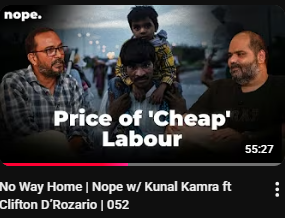
Regarding inequality and the problems faced by unskilled workers, Indian comedian and activist Kunal Kamra recently discussed the issue on his YouTube show with labour lawyer Clifton D’Rozario. Click here to watch it.
Factories in textiles and gems now set for zero-duty entry are rife with exploitative work cultures, child labor risks and unsafe conditions, as documented by Amnesty International and Human Rights Watch. On-site inspections in India are rare, compliance is often “on paper” only with corruption enabling evasion. Maybe good policy for those diamond merchant who are fugitive and hiding in UK and one is in Belgium prison awaiting deportation but how it will profit for Europeans is still a big question?
The FTA’s sustainable development chapter sounds noble but without robust enforcement, it’s toothless – allowing sweatshop goods to flood our markets while undercutting ethical European producers. Product quality is another ticking bomb. From food laced with banned hormones and antibiotics to chemicals failing REACH regulations, Indian industries prioritize cost over safety.
And on carbon footprints? The EU’s Carbon Border Adjustment Mechanism (CBAM) starting full force in 2026 aims to tax high-emission imports but India secured no exemptions, raising fears of tariff offsets. Yet, with India’s coal-dependent manufacturing, we’re importing pollution while paying dearly for our green transitions. Who will be responsible when substandard, high-carbon “garbage” from India undermines EU climate goals and endangers consumers? Brussels’ rush to counter Trump reeks of ego, but it endangers our health, jobs, and environment.
Asylum Seekers, Irregular Migrants and Non-Cooperation: Another Red Flag for EU-India Relations
While Luxembourg has seen relatively few Indian asylum seekers with overall asylum applications hovering around 2,000–2,700 annually and Indians representing a negligible share the picture across the broader EU is more concerning. In 2024–2025, Eurostat data shows Germany, Spain, Italy, and France receiving the bulk of first-time asylum applications (often 70–80% of EU totals) with Indian nationals contributing to irregular migration through visa overstays, fraud and low-success asylum claims (recognition rates around 2–4%). Indians do not top the lists but hundreds to thousands of applications occur yearly EU-wide, adding to pressures in these key destinations.
Several EU countries have ramped up deportation efforts for rejected Indian asylum seekers and irregular migrants but success rates remain dismal due to persistent non-cooperation from Indian authorities. India frequently delays or refuses to issue travel documents, verify identities promptly, or accept returnees a long standing issue frustrating bilateral readmission talks. Not just that because of poor condition of prison facility in india therefore high profile criminals in UK, Belgium applied for asylum and stay for years while commiting more crimes. The EU has responded by linking trade preferences to readmission cooperation with 2025 decisions allowing suspension of benefits for non-compliant countries. Yet, despite India’s public statements of openness to “legitimate returns,” verification backlogs and bureaucratic hurdles mean many deportations fail, leaving rejected migrants in legal limbo or absconding.
A headline-grabbing recent case, covered by HelviLux media, exemplifies this accountability gap. Pune-based gangster Nilesh Ghaywal, wanted in India under MCOCA for multiple serious crimes including murder and extortion, fled to Switzerland via London on a UK tourist visa despite Indian alerts and passport revocation probes. Indian police investigations revealed he obtained the visa amid alleged passport irregularities (using fake address and altered surname), allowing him to operate from the UK while expanding alleged criminal networks across Europe. Similar patterns involve fugitives from gangs like the Lawrence Bishnoi syndicate. Delhi Police’s 2025 crackdowns arrested over 130 in visa fraud rackets but extradition remains slow when Indian authorities drag their feet on cooperation.
If Indian officials cannot or will not reliably partner with Europe on returns, deportations or fugitive extraditions even as criminal elements exploit the system, how can Brussels justify rushing the “mother of all deals”? This lack of reciprocity on migration security and rule-of-law matters raises serious doubts about the wisdom of deeper economic integration. Luxembourg and overall Europe deserve partners who match words with action, not empty promises while our systems bear the burden.
Growing Demands: Pressure on Luxembourg’s Limited Space and Resources
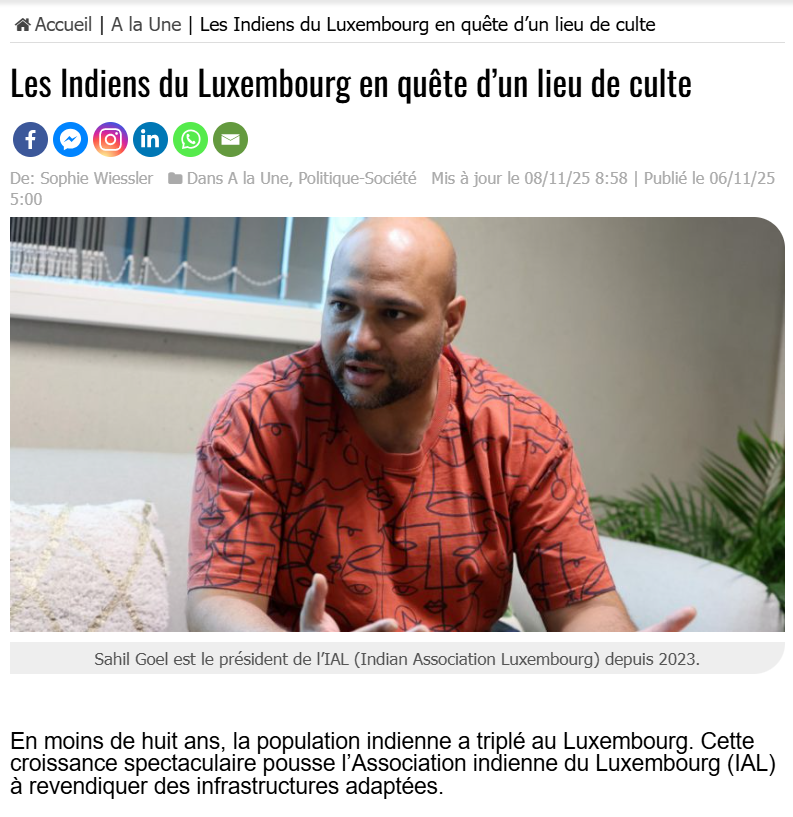
The rapid expansion of Luxembourg’s Indian community, now around 6,500 strong, has led to increasing calls for dedicated religious and cultural infrastructure, including a Hindu temple and a proposed “Bharat Bhavan” cultural center. While framed as integration efforts, these demands add pressure to Luxembourg’s already stretched public resources, including limited municipal space, cultural funding and secular governance frameworks. With ongoing housing shortages, overcrowded schools and tight municipal budgets, accommodating specialized facilities for a small yet growing community risks prioritizing one group over others and further complicates social cohesion.
Moreover, as per Sahil goel the president of Indian association of Luxembourg while speaking with Journalist Sophie Wiesseler from LeQuotidien Media He Said, ‘When I arrived as a student, we were a small community. Today, we are three times as numerous. We are not only speaking for ourselves, but also for friends of India who wish to learn our language or our music. The authorities are open to discussion for cultural space, but there are conditions. Funding for religious activities was stopped in 2015, even for Christianity. So we need to find a different formula. In a year and a half, there have been four or five deaths, including that of a young person following an accident. Families are struggling to find suitable places to celebrate funeral rituals in accordance with their beliefs.” The news article title ‘Les Indiens du Luxembourg en quête d’un lieu de culte’ was published in LeQuotidien media on 8 November 2025. Click here to read.
HELVILUX notes that while newcomers often speak of integration, true integration involves more than maintaining all aspects of one’s previous lifestyle. Finding spaces for cultural or religious activities or observing traditions, is understandable but integration also means adapting to local norms, participating in community life and balancing personal needs with the priorities of the broader society. Simply securing employment, starting a business, or buying a home does not automatically make someone part of the community. Integration is about mutual adaptation and shared responsibility.
Traditional practices such as funeral rites and large festivals require venues and public support, potentially straining civic planning and public services. As migration from India is set to accelerate under the new EU-India FTA, Luxembourg faces the dual challenge of meeting these cultural demands while maintaining its secular, resource-limited infrastructure raising questions about whether the Grand Duchy is equipped for this next wave of social and cultural pressures.
Cultural Integration Concerns: Paan Spitting and River Pollution in the name of festival
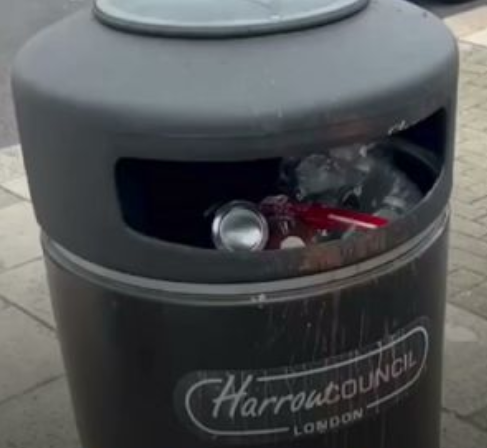
A highly visible and controversial habit has become a major public nuisance in several parts of the United Kingdom, Portugal and in Spain. The chewing of paan (betel leaf with areca nut and often tobacco) and the subsequent spitting of bright red saliva. In late 2025, Brent Council in northwest London reported spending over £30,000 annually cleaning stubborn reddish-brown stains from pavements, telephone boxes, flower beds, shop fronts, and buildings particularly in Wembley and along Ealing Road. Enforcement officers now patrol hotspots, issuing £100 fixed penalty notices with banners warning residents of zero-tolerance.
Similar complaints have emerged in Harrow (Rayners Lane and North Harrow), Leicester (Melton Road area, with £150 fines and bilingual English-Gujarati warning signs), Southall, Ilford, Tooting, and East Ham all areas with large South Asian populations.

The stains are difficult to remove completely, even with high-pressure jets, and raise hygiene concerns.
Another growing environmental problem linked to the same communities is the immersion of Ganesha idols during the Ganesh Chaturthi festival, especially among Marathi-speaking groups from Maharashtra. In India, immersion of plaster-of-Paris (POP) idols, chemical paints, nirmalya (flowers, leaves, decorations), and non-biodegradable materials into rivers and lakes has been banned or heavily restricted in many states, including Maharashtra, where devotees are required to use designated artificial ponds to avoid pollution. Despite this, the practice continues abroad specially in Europe and in US.

In the UK, Canada, and the US, large-scale immersions now occur in natural water bodies such as the River Thames (London), lakes in Leicester and Birmingham, Toronto’s Humber River, and various lakes in New Jersey and California. These immersions introduce heavy metals (lead, mercury, cadmium), plastics, and decaying organic matter, causing significant water pollution. Local authorities often hesitate to impose fines or penalties due to cultural sensitivity, even though such actions would be illegal or strictly regulated for other groups.
Does the EU want these habits paan spitting and river pollution spreading across the continent with increased Indian migration under the new FTA? Is this the culture Luxembourg and Europe wish to import? And who pays the bill? European taxpayers will once again foot the cost for cleaning streets and restoring polluted rivers and lakes defaced or contaminated by practices not aligned with our public standards of cleanliness, environmental protection, and respect for shared spaces.
Cow Urine and Dung Sold in Luxembourg Ethnic Stores: Health and Regulatory Concerns
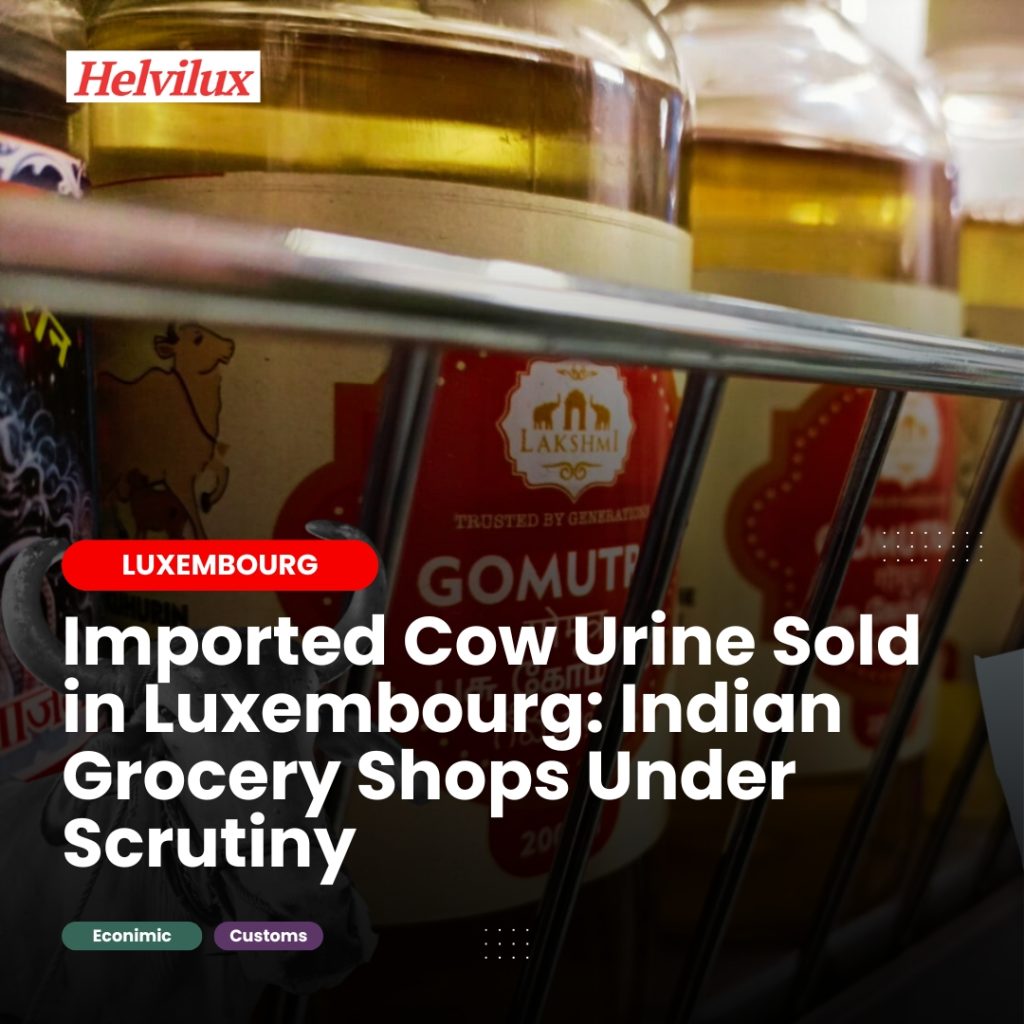
In a detailed investigative report published by HelviLux on 2 December 2025 titled “Imported Cow Urine Sold in Luxembourg: Indian Grocery Shops Under Scrutiny” (click link to read), it was revealed that several Indian and Nepali-run shops in Luxembourg are openly selling bottled cow urine (known as gomutra) and cow dung products.
Shops such as Euro Indian Market and Indian Spice Bazar near Luxembourg’s central station and in Esch-sur-Alzette were found offering 500ml bottles of cow urine imported from Gujarat and Mumbai cities of India for €2.50 to €3.99. The products are marketed for “Ayurvedic medicinal use”, “detoxification”, and religious rituals. Cow dung cakes and powders were also available in shops and online shopping websites for use in traditional medicines or incense.
The report highlighted serious regulatory violations:
- Cow urine is not authorised as food, medicine, or cosmetic under EU law.
- No safety assessment, hygiene certification, or novel food approval has been obtained.
- Potential health risks include bacterial contamination (E. coli, Salmonella), heavy metals, and antibiotic residues.
- Many bottles lack proper labelling, batch numbers, or traceability, suggesting possible smuggling or informal imports.
HelviLux questioned whether Luxembourg taxpayers should bear the cost of monitoring, testing and potential enforcement actions against such products. Similar sales have been documented in Indian ethnic stores in Germany, Belgium, the Netherlands and France raising wider EU concerns about unregulated traditional remedies entering the market through migration networks.
This incident underscores the cultural and regulatory clashes that may intensify with the new EU-India mobility provisions.
EU Funding Indian Firms Amid Violations: Ego Over Ethics?
Worse, the EU funnels funds to Indian entities despite rampant violations. Amnesty International and Human Rights Watch decry India’s crackdowns on dissent, using laws like the FCRA and UAPA to harass activists and NGOs. Labor rights are abysmal: millions in informal work, unions stifled, and the FTA lacks robust enforcement on ILO conventions.
Firms like Reliance (via Ambani) and others in textiles or IT receive indirect EU boosts through trade, despite allegations of poor work cultures and rights lapses. The EU’s €500 million for India’s green initiatives ignores these red flags.
Instead of sanctions, Brussels rushes the deal to counter Trump perhaps von der Leyen’s ego play to prove EU relevance. But this risks invading European culture. Language barriers, housing strains, and “habits” from afar, as HelviLux has warned in pieces like “Some People Leave Their Country, But Not Their Habits.“
Wake-Up Call for Luxembourg and Europe
Luxembourg, with its financial hubs attracting Indian IT talent, stands on the front line. Our daughters, our traditions, our limited resources – all could be overwhelmed. The EU’s deal isn’t just trade; it’s a cultural gamble.
HelviLux Demand accountability: Why partner with a nation that betrays sanctions, skirts rights, and lacks transparency? Europe deserves better than this dangerous blind spot. As HelviLux Media continues to scrutinize, it’s time for citizens to speak up before it’s too late.
To support independent voices that prioritises European interests and holds power to account, please follow and support HELVILUX Click here.
(This article is not motivated by any hatred towards India or its people. The author and publisher KAMATH M. is of Indian origin and writes from a place of deep concern rather than prejudice. HelviLux remains committed to truthful, evidence-based reporting. Our sole aim is to protect the unique beauty, safety, cleanliness, and cultural heritage of Europe and especially of small, high-quality nations like Luxembourg and Switzerland from being eroded by poorly considered decisions taken at the EU level without sufficient public debate or regard for long-term consequences.)