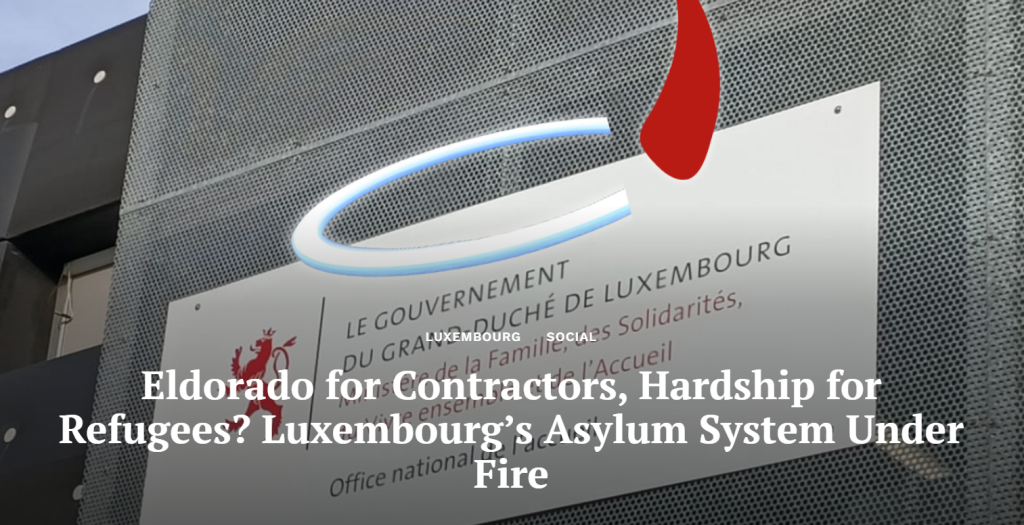
Luxembourg (Helvilux) – Maison de Retour, the return center for rejected asylum seekers and irregular migrants in Luxembourg, was launched on 1st September 2024 at 11 Rue Camer Hemmer, Luxembourg. Since its opening, it has faced significant criticism from the media and last year from the CCDH for alleged inhumane treatment of families. Now in 2026, there appears to be no improvement in respecting the universal human rights of residents in accordance with international standards.
Helvilux investigative team was taking followup into this matter from last some months. Some residents of Maison de Retour have voluntarily provided information and images to Helvilux investigative team that once again expose the Maison de Retour project as a “home in name only.”
Applicants whose requests for international protection have been rejected and who are required to leave Luxembourg, as well as those subject to Dublin transfers, are being transferred to Maison de Retour a so called Returning center. Many asylum seekers who did not receive proper accommodation in municipality while their asylum applications were being processed face an even more painful and difficult situation after their protection claims are refused because they lost the asylum accomodation. Although certain conditions related to clearliness in bathroom and toilets at Maison de Retour may be better than those in primary and secondary asylum reception centers, when compared to international standards, it represents yet another concerning situation.
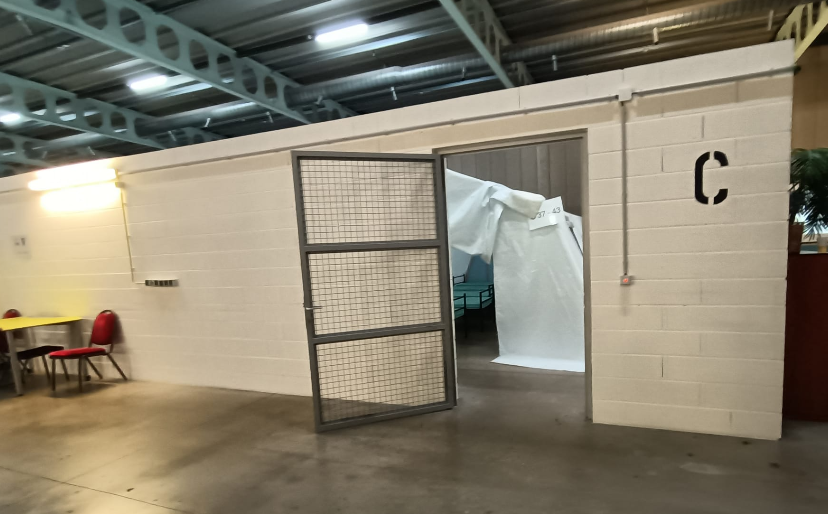
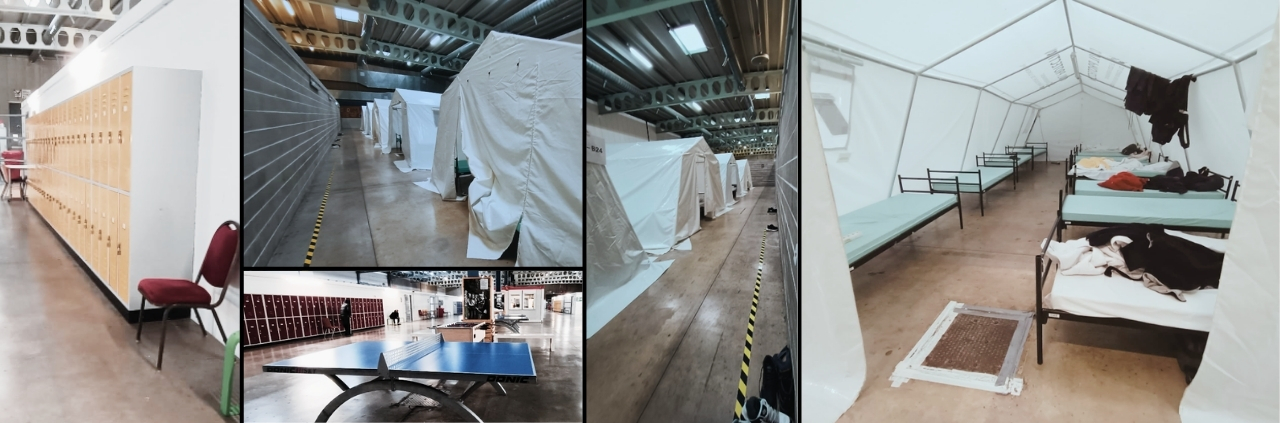
When a rejected asylum seeker arrives for the first time at Maison de Retour, located at 11 Rue Camer Hemmer in Luxembourg, they are required to stay in a tent with 10–12 other rejected asylum seekers. The facility is divided into Sections four sections seperated by brick walls. In each section, 4–5 tents are installed, and each tent contains 10–12 beds.
Although the current population of the return center consists of only a few individuals and families, the situation remains inhumane and disrespectful to human dignity which is not at all as an international standards.
The center consists of a large hall with several tents separated only by partition walls. There is no real privacy and limited safety, while residents also report experiencing additional pressure and aggressive behavior from certain security guards.
On condition of anonymity, a rejected asylum seeker told Helvilux: “Inside Maison de Retour, some security staff make us feel it like a Nazi system in camp. You must do whatever the security staff says. Do not ask why or question the instructions or they will speak harshly, show disrespect, and sometimes threaten you with deportation.”
Although security guards do not have the authority to deport anyone, residents claim that guards inside Maison de Retour exercise strict control. They also allege that there are no CCTV cameras installed inside certain areas of the facility.
Another rejected asylum seeker and resident of Maison de Retour voluntarily provided several images to Helvilux Media so that the general public in Luxembourg, human rights defenders, organizations and local media can better understand the situation inside the so-called return center.
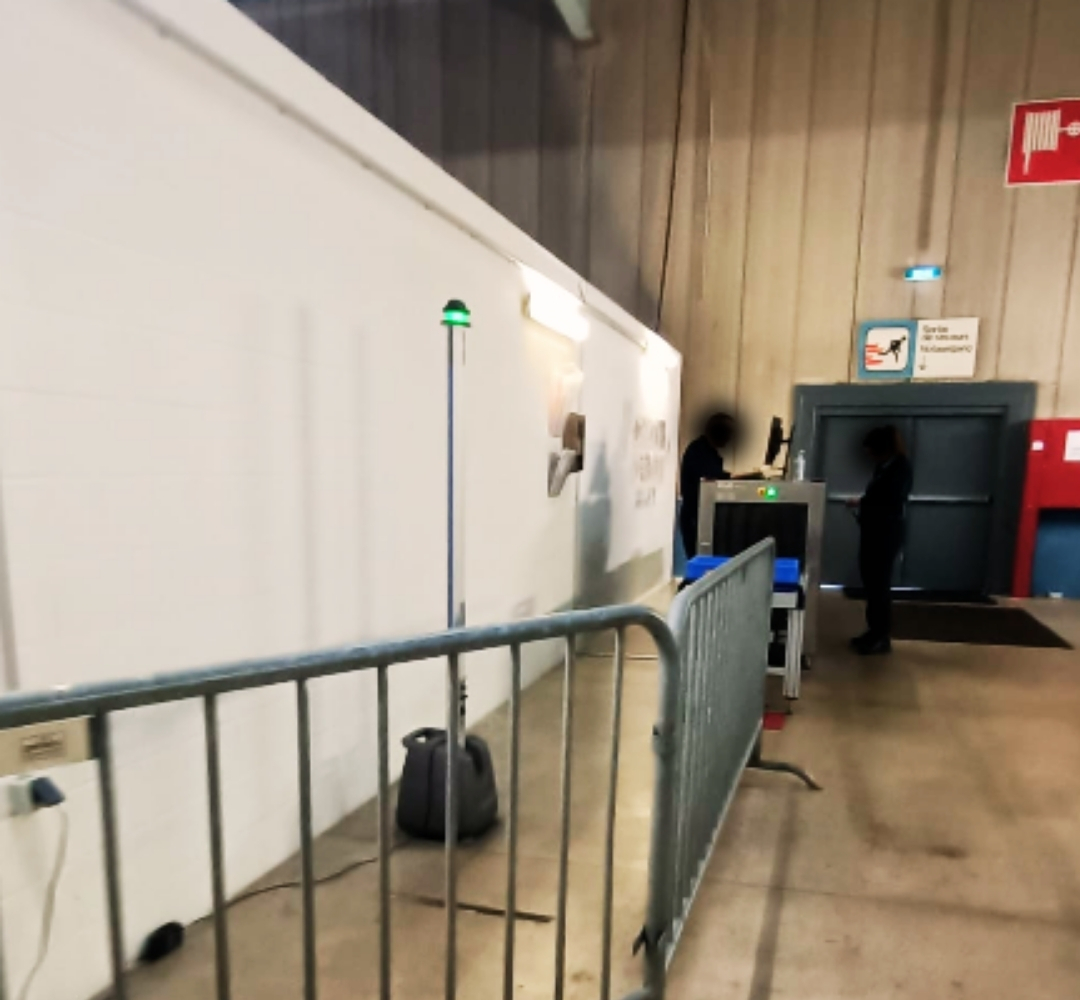
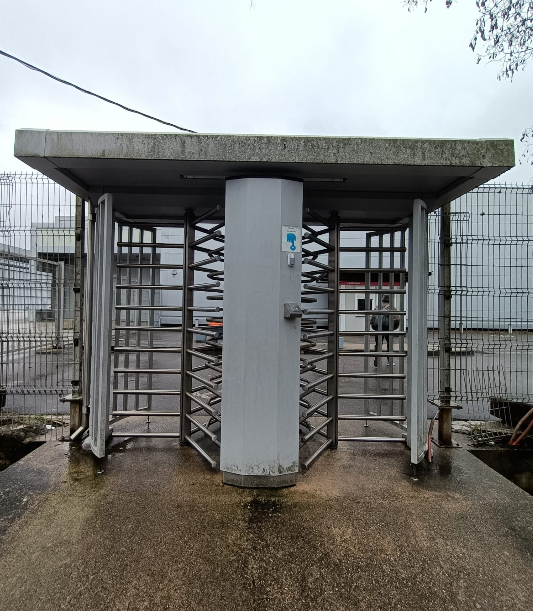
Airport style checking of each residents with two metal detectors in enterance of Maison de retour hall
At the entrance, there are two metal detector machines, one for body checks and another for scanning bags and belongings. Every time a resident enters the facility, they must undergo a security check similar to airport screening.
Images show that the tents for single men and families are not properly separated. Children live in the return center with their families, while single men are housed in close proximity. Parents, especially mothers often report feeling stressed about their children’s safety, particularly their daughters, when they are playing in common areas.
Although sleeping tents are divided by partition walls with single men on one side and families on the other, residents state that this arrangement does not provide real privacy or meaningful separation between families and single male rejected asylum seekers.
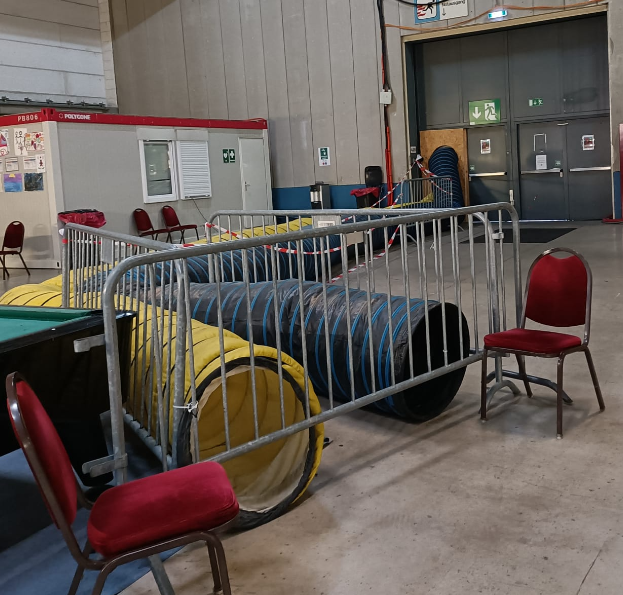
As usual, each tent contains 12 beds. There is no carpet, cold concrete ground and there is no proper heating system capable of warming the entire hall effectively. Although a hot air blower machine is available, it is not sufficient to heat the large hall and all the tents adequately. Some residents, when they feel unbearable cold, reportedly sit directly next to the air blower pipe where the hot air is released.
Each resident is provided with a small locker; however, it is not large enough to store all of their clothes. General theft is daily issue. A lock is not provided, and residents must purchase one themselves. Residents who have one or two suitcases may store them in a container area referred to as “–1” (which is not a basement, but simply the name of the container storage area), with the assistance of a social worker. However, residents do not have daily access to this storage space. In most cases, luggage can only be accessed when a resident is being deported or transferred to another facility.
There are no CCTV cameras installed inside the main hall where residents live. However, CCTV cameras are installed outside the hall, main enterance and in surrounding areas. The ONA authority in first and second receiption facility center did installed the cctv camera mostly everywhere and gave the reason of safety of asylumseeker. This raises the question of why there are no cameras inside the hall of Maison de Retour were rejected asylumseeker and illegal migrants live.
Some observers suggest that in cases of forced deportation or escalated situations, physical confrontations or interventions may not be recorded for evidentiary purposes, which could explain the absence of CCTV cameras inside the hall. Helvilux has requested clarification from the Ministry regarding the lack of cameras in the living area of Maison de Retour. However, at the time of publication of this article, no response had been received.
When residents first arrive at Maison de Retour, they receive a copy of the house rules in a language they understand. They are also provided with a clean towel, bedsheet, pillow, and basic like toothpaste and a toothbrush.
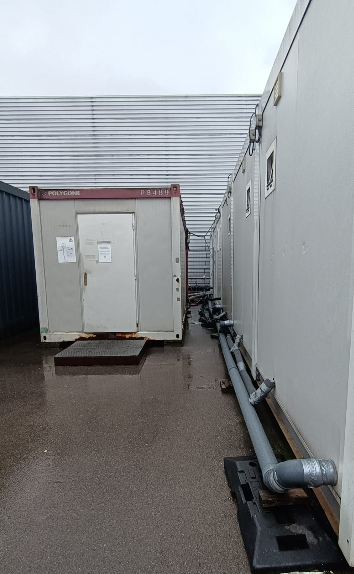
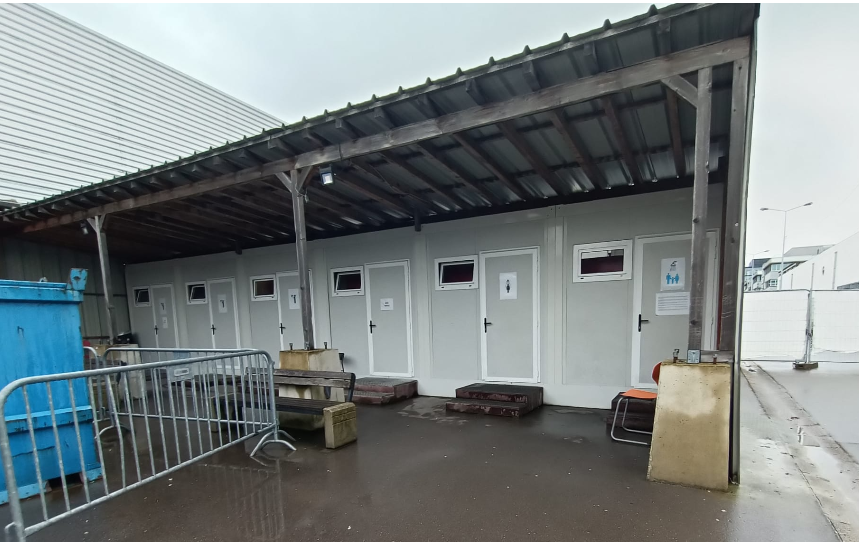
For toilet paper, residents must request it from a social worker, as it is not freely available inside the toilets or in a designated area for voluntary access. Outside the main hall, there are two separate sections: one for toilets and bathrooms, and another for the kitchen area where food is provided to residents.
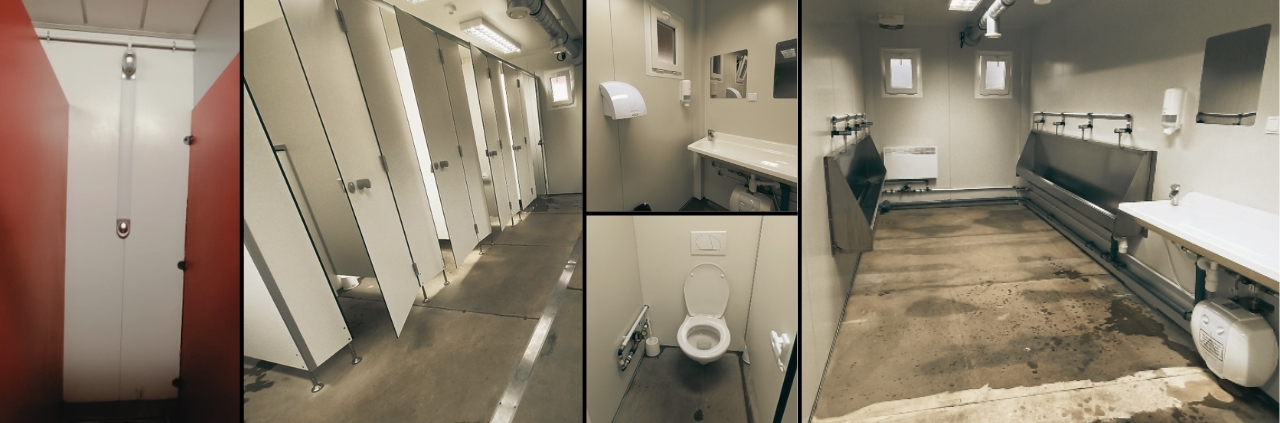
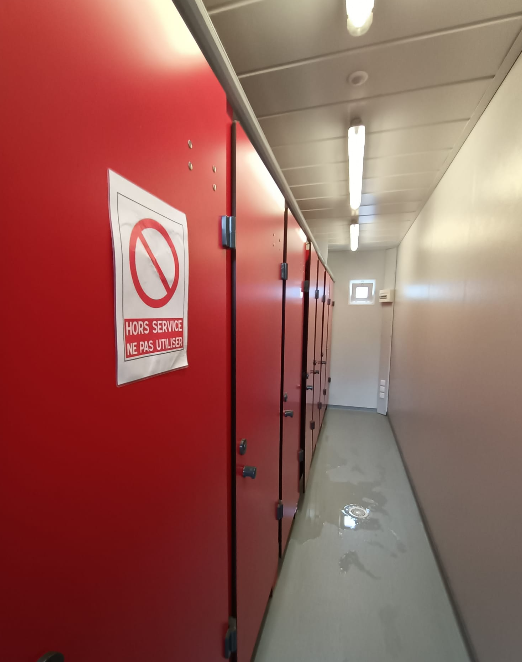
Although images of the toilets and bathrooms indicate that they are significantly cleaner and in better condition than those in the first- and second-phase asylum reception centers in CPA Kirchberg, Mersch, and other locations, sanitation facilities at Maison de Retour are reportedly cleaned regularly.
Good condition of toilets, bathroom and time to time cleaning and mainitnain took place. In bathroom the equipement is not good therefore water have no pressure and no facility of warm or hot water for shower, hope ministry will solve that problem soon.
Enterance of Maison de retour
Regarding the good quality of toilet equipment installed and maintained at Maison de Retour, another question arises: if toilets and bathrooms can be kept clean and well maintained in the return center, why are facilities in the first and second stages asylum facility centers often reported to be poorly maintained? Is this neglect a form of psychological pressure placed on residents upon their arrival in Luxembourg? Helvilux will soon publish a detailed article addressing this issue. Stay connected.
While speaking with a residentof Returning center, He provided additional information about the bathrooms. He stated:
“The bathrooms here are cleaner compared to the dirty bathrooms in the first- and second-phase refugee camps in Luxembourg. However, there are no special facilities for residents with disabilities.”
According to residents, bathrooms for families and single individuals are separated into sections but remain within the same container structure. Each bathroom area consists of approximately five to six small sections, which do not offer complete privacy. Residents also report that some equipment is in poor condition, with low water pressure. As a result, although the interior and exterior structures may appear modern and well designed, they are not always practical in daily use.
Residents further state that there is no hot or warm water available for showers, requiring them to bathe with cold water. In cold weather its more strugle for residents to take shower. During nighttime, women and children reportedly feel uncomfortable going outside the main hall to access the toilets, as the facilities are located outside the sleeping area.
At the washing machine counter, social workers help residents with laundry.
For washing clothes, washing maching is available and social workers assist residents. However, psychosocial staff are reportedly insufficient in number to provide adequate support to all residents who may need assistance.
In the common area, several containers serve as offices for social workers, security personnel, and administrative staff. Residents report the presence of three different types of security guards: One guard stationed at the entrance, responsible for checking documents and wearing a security company uniform. Guards positioned near the bathroom and toilet areas, also in uniform. A guard stationed at the central counter in the common area. Residents say this individual wears black clothing without a visible name badge or identification, making it difficult to determine which security company he represents.
According to multiple residents, one specific security guard displays particularly aggressive behavior. When asked why they describe his conduct as resembling “Nazi behavior,” one resident responded:
“This particular security guard sometimes gives instructions that do not make any sense. On the first day when a rejected asylum seeker arrived and their picture was being taken by a social worker, this guard behaved in a provocative manner, posing with the resident and giving a thumbs-up gesture during the photo.”
Another resident added:
“If we do not follow what the security guard says, he becomes angry and starts speaking in a disrespectful manner. Sometimes, in anger, he bangs on the window of his cabin, which serves as a counter. The threat of being thrown out of the accommodation is always present.”
An Arabic speaker resident, while speaking with Helvilux, said:
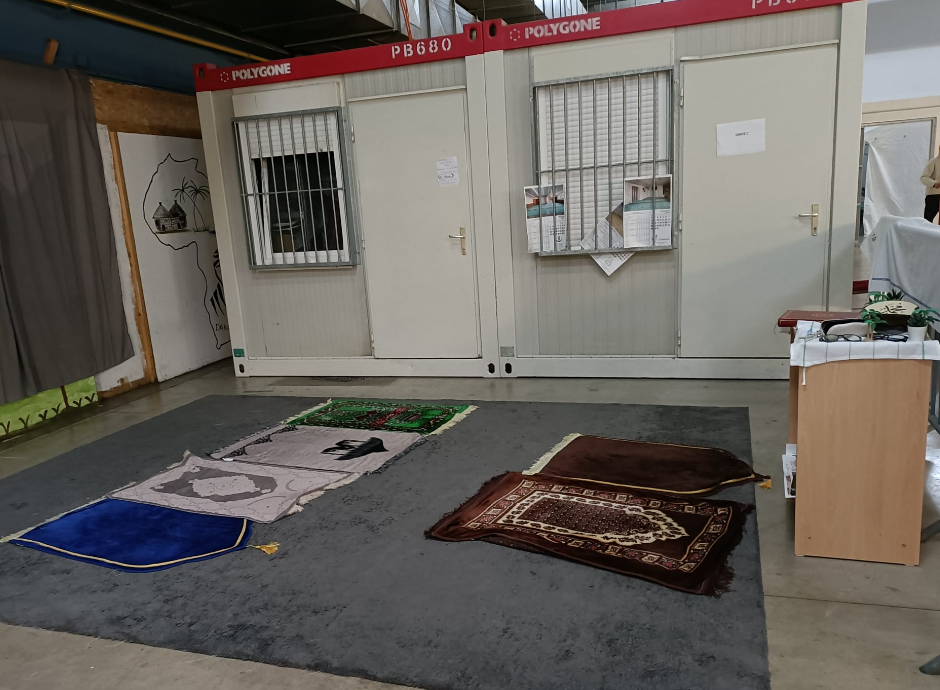
“I am thankful that in Maison de Retour there is a special area where velvet mats are provided and a designated space for Islamic prayer.”
In the common area, there are also indoor recreational facilities, including table tennis. For readers, there is a La Essentiel newspaper stand offering free newspapers and magazines. A television is available for entertainment, and there is a drinking water facility for residents.
One resident also claimed that security guards and staff have separate bathroom and toilet facilities with greater privacy and better quality equipment. Helvilux Media contacted the Ministry to confirm this information but had not received a response at the time of publication.
A female resident stated: “We cannot cook our own food in the return center and are not allowed to bring utensils or an electric kettle. The food provided is very limited in quantity. Many ordinary personal items are not allowed inside the camp, which makes us feel like we are in a prison.”
Bathroom and toilet are outside of hall so in night time and in snowy and rainly weather its hard for residents to go to use bathroom and toilet specially for women and childrens in night time.
According to information provided by the reception desk at Maison de Retour, visitors are not permitted inside the return center. This raises questions about how the facility aligns with international standards for return centers. When a resident wishes to leave the center, a security guard must unlock the main entrance door; otherwise, residents cannot exit freely.
There is reportedly no facility providing free legal advice within the center. In addition, it is difficult for volunteers from non-profit organizations to access the facility and independently assess the living conditions of residents.
In Parliament, the Minister stated that the Return House does not accommodate unaccompanied minors. However, no detailed information was provided about the conditions of minors who are living in the return facility with their families. This raises concerns about who is responsible for ensuring the well-being of those children.
The Minister also stated in Parliament in 2024:
“It should be recalled in this context that persons accommodated at the Return House are assigned there with a view to their return for the shortest possible period.”
However, this raises another important question: why are rejected asylum seekers whose appeals are still pending before the Administrative Tribunal being transferred to Maison de Retour? Until a final court decision is issued, there remains the possibility that their cases could be accepted. During this period, applicants are generally considered eligible to remain in accommodation provided by the National Reception Office (ONA).
Helvilux has written to both responsible ministers requesting clarification on this matter. At the time of publication, no response had been received.
Residents huddle near the hot air blower outlet for warmth when heaters aren’t enough to heat all tents.
The Minister also stated in Parliament that specific arrangements have been made to ensure that the stay of minors is “as pleasant as possible.” However, residents report a different reality. As the bathroom and toilet facility is outside of the call, minors must strugle at night time if want to go for toilet. Privacy for families and children is extremely limited, as tents are separated only by partition walls, allowing residents to see and hear one another easily. In such conditions, serious questions arise as to how this environment can be described as “pleasant” for minors. Helvilux calls on the Minister to clarify this statement.
In a parliamentary questionnaire, the Minister further stated that the Return House is a “semi-open structure” and that residents are free to leave during the day. However, the Helvilux investigative team observed that the main entrance is secured with an automatic locking system that can only be unlocked by a security guard. This raises the question: how can Maison de Retour be described as a semi-open structure if residents cannot exit freely without staff intervention?
The Minister also stated:
The term “adequate accommodation” generally means satisfactory or acceptable in quality and quantity. This leads to a critical question: can sharing a tent with 10–12 strangers, without proper ventilation or windows for fresh air, be considered adequate accommodation? Helvilux requests clarification from the Minister on this adequate accomodation matter.
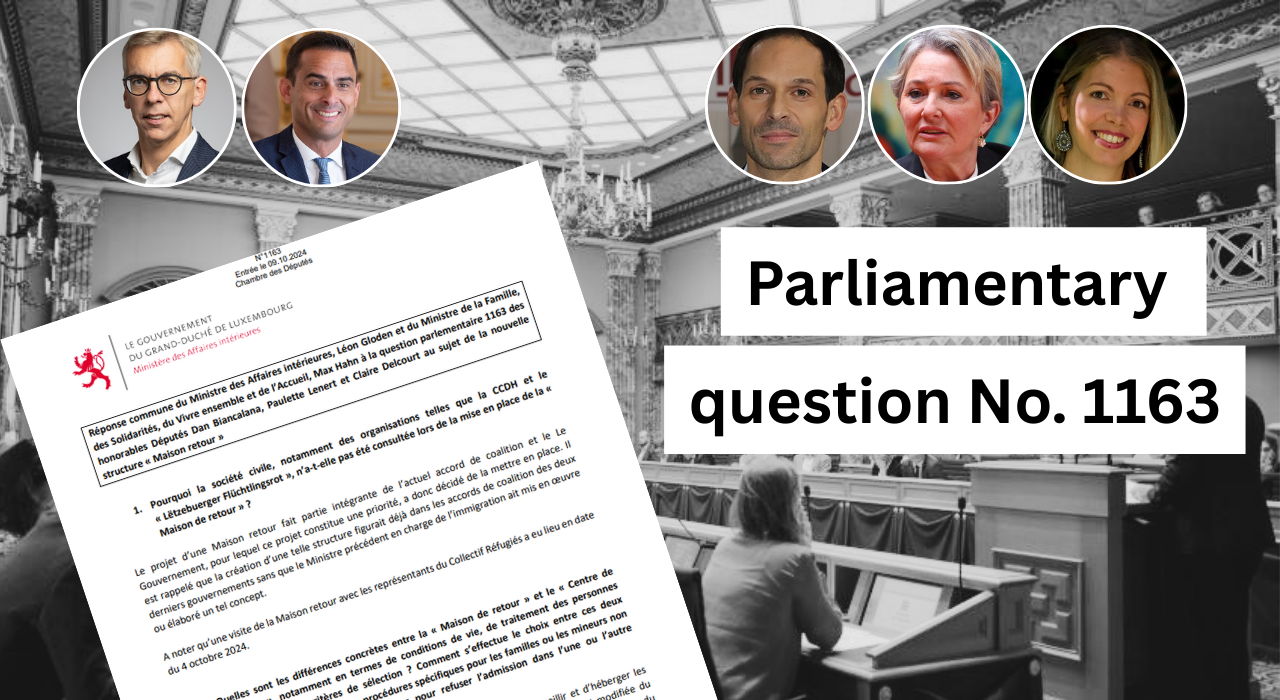
In a parliamentary response in 2024, the Minister also stated that the provisional Return House would remain in place only until an adequate alternative structure could be found. Now, in 2026, the facility remains operational, and residents continue to report serious concerns. Helvilux therefore asks: what efforts have been made to identify or develop a more suitable structure? Clear answers from the responsible ministries are required. Click here to read the full detail of Parliamentary questionery no. 1163.
According to the Ministry of the Interior and the Ministry of Family, Solidarity, Living Together and Reception, the Return House is intended to accommodate Persons whose applications for international protection have been definitively rejected and who have exhausted all legal remedies, pending their return to their country of origin; and Persons who must be transferred to another EU Member State under the provisions of the Dublin III Regulation. The official press release from the Ministry provides further details regarding this policy framework. Click here to read the official press release from Ministry.
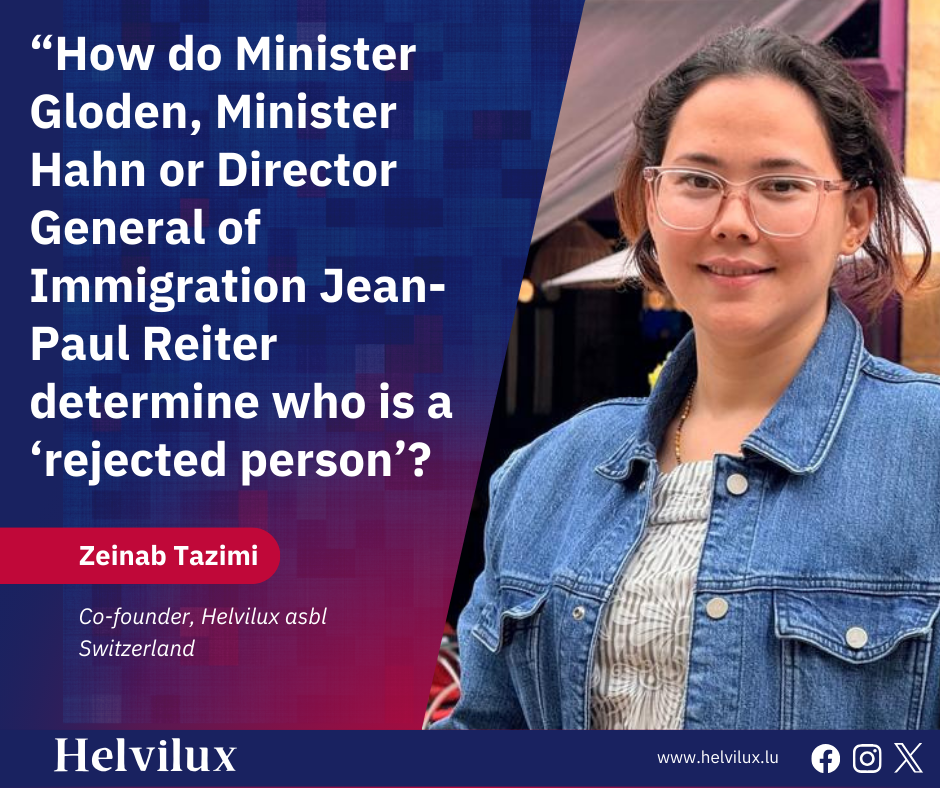
Zeinab Tazimi, co-founder of Helvilux ASBL and a human rights defender, responded critically to the Ministry’s statement. She said: “How do Minister Gloden, Minister Hahn, or Director General of Immigration Jean-Paul Reiter determine who is a ‘rejected person’? If the Ministry of the Interior and the Immigration Department have not properly examined a particular asylum case and the case is later appealed to a higher court and sent back to the Ministry for reassessment, how can the applicant be considered a rejected person during that time period? Furthermore, when an applicant submits an appeal before the Administrative Tribunal and is still awaiting a final decision, why is he or she transferred to Maison de Retour? This practice is unfair and the Ministry must bear responsibility for any damage caused to the applicant’s well-being.”
In 2024, when Maison de Retour was newly opened, Luxembourgish media outlet Le Quotidien reported that both Ministers, Max Hahn and Léon Gloden, defended the management structure of the facility. Minister stated that supervisory responsibilities were assigned to SHUK staff who had been reassigned to the return center.
According to the Ministers, these professionals in the psychosocial sector have extensive experience in caring for families with children. They further stated:
“This same team had managed the reception of Ukrainian refugees, mainly women and children, at the beginning of the war, and then supervised families before their transfer to another Member State.”
Following Helvilux’s exclusive report published on 22 November 2025 and on 16 Feb 2026 exposing poor conditions at CPA Kirchberg, further concerns emerged in January 2026. Ukrainian activist and Vice President of LUkrain ASBL, Inna, shared several photographs on social media revealing the deteriorating situation inside CPA Kirchberg. Major media outlets including RTL Today, L’Essentiel, Luxemburger Wort, Tageblatt Letzebuerg, and Luxembourg Times subsequently published reports accompanied by images showing the poor conditions in the asylum reception center.
Reports indicated that many asylum seekers, including a large number of Ukrainian refugees, were experiencing significant psychological distress, health problems and hardship due to unhygienic living conditions. Critics argue that despite repeated exposure, the Ministry has failed to adequately address these issues.
This situation raises an important question: when the primary reception center housing a large number of Ukrainian refugees and other asylum seekers was reportedly in such poor condition, did the experienced psychosocial staff raise these concerns with the Ministry or with the Croix Rouge Luxembourgeoise in order to safeguard residents’ well-being?
According to previous statements by Minister Max Hahn and Minister Léon Gloden, the same team that managed the reception of Ukrainian refugees was reassigned to Maison de Retour to provide psychosocial support to women and children. If this is the case, some observers argue that instead of reassurance, this overlap increases concern particularly if earlier facility conditions were not publicly challenged by the responsible staff.
Helvilux has officially requested clarification from the Croix Rouge Luxembourgeoise regarding this matter. As an organization contracted to provide care services, it carries responsibilities of accountability. As a humanitarian organization, this responsibility is arguably even greater when its staff provide psychosocial services in environments described as unhygienic or inadequate eg. Kirchberg CPA. Whether the organization took steps to address or report such conditions to ONA authorority remains an important question.
In 2025, one year after the opening of Maison de Retour, and with no visible structural improvements, local media began openly criticizing the government. At that time, the Ministry maintained that the Return House, in its current form, remained a temporary solution.
The Ministry stated to Land magazine and other journalists:
“The relevant authorities are constantly seeking municipalities willing to provide either land for the construction of a permanent structure or existing infrastructure that could be converted into a Return House.”
However, the Commission consultative des Droits de l’Homme (CCDH) rejected this argument, stating:
“By resorting solely to emergency solutions instead of requiring municipalities to provide housing for refugees, the government is shirking its responsibilities.”
Despite ongoing concerns about conditions at Maison de Retour including constant supervision and other reported issues criticism has continued from civil society representatives.
Last year In a position paper adopted on 30 September 2025 by the Commission consultative des Droits de l’Homme (CCDH), issued a comprehensive critique of Luxembourg’s “Return House” warning that the model, as currently implemented, risks undermining fundamental rights and distorting the notion of voluntary return. While formally presented as an alternative to detention, the Commission questions whether departures can genuinely be voluntary when residents face loss of legal status, risk of homelessness, limited access to essential services, or the threat of detention, particularly if they are transferred while legal remedies are still pending.
The CCDH highlights that the facility’s structure operating within the Kirchberg Emergency Accommodation Structure (SHUK) since 1 September 2024 resembles detention, with constant surveillance, nightly confinement, a disproportionate security presence, repeated identity checks, and restricted freedom of movement, raising concerns that the “alternative to detention” may in practice constitute a de facto deprivation of liberty. Living conditions remain precarious, with thin partitions, overcrowding, noise, limited healthcare and psychosocial support, and substandard sanitation, while national housing and hygiene standards appear inconsistently applied. Children are particularly affected, with windowless sleeping areas, lack of play or study spaces, external sanitary facilities, insufficient supervision, and disruptions to schooling, raising serious compatibility issues with constitutional and international protections.
The CCDH also warns that European discussions of externalizing return procedures and linking development aid to migration cooperation risk weakening safeguards, exposing individuals to potential violations of non-refoulement and human rights, and shifting Luxembourg’s responsibilities abroad. In conclusion, the Commission calls on the government to fundamentally rethink the Return House model, ensure genuine alternatives to detention, guarantee safe and dignified accommodation, protect children, respect judicial remedies, and abandon coercive or externalization-linked practices, questioning whether the current model is truly a humane alternative or an institutionalization of precariousness and coercion under another name.
According to critics, despite reports from the CCDH and extensive media coverage, many of the reported issues remain unchanged. Observers argue that meaningful improvements at some asylum reception facilities in Luxembourg have only occurred after sustained media scrutiny and public exposure.
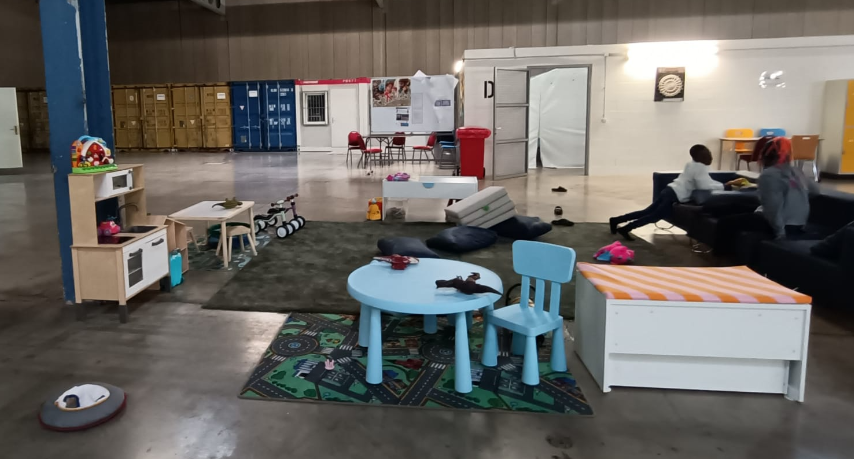
Play corner in the common area with toys for kids.
International standards are increasingly moving toward an absolute ban on the detention of children for migration-related reasons. However, children are currently living at Maison de Retour in Luxembourg. This raises concerns among human rights advocates about whether Luxembourg is fully respecting its obligations under the Convention on the Rights of the Child and international standards.
In 2024, Maison de Retour was opened without a formal press conference. The Ministry issued only a brief press release in August 2024 before officially opening the so-called “Maison de Retour” for rejected asylum seekers on 1 September 2024.
Senior journalist and member of the International Consortium of Investigative Journalists (ICIJ), Luc Caregari, later published a detailed article in Reporter.lu analyzing the structure and underlying objectives of Maison de Retour. In his report, he suggested that the goals behind the rapidly established facility may differ from the official narrative presented by authorities. Click here to read.
Regarding the ongoing inhumane conditions at Maison de Retour, the non-profit organization Passerell Luxembourg has repeatedly criticized the government. In 2024, Ambre Schultz, Project Manager of Passerell, told the media:
In December 2025, on the occasion of Human Rights Day, Luxembourg’s Refugee Council spokesperson, Laura Zuccoli, issued a sharp critique of both European and national asylum policies while speaking with RTL Today. She described shelter conditions as “deplorable” and expressed concern over controversial EU proposals for external “return hubs.”
Zuccoli also reiterated the Council’s long-standing appeal to grant asylum seekers the right to work immediately upon application. She argued that early activation would allow asylum seekers to integrate into the workforce by the time they receive refugee status and must leave asylum shelters. She highlighted this as a pressing issue, noting that many recognized refugees today find themselves without housing.
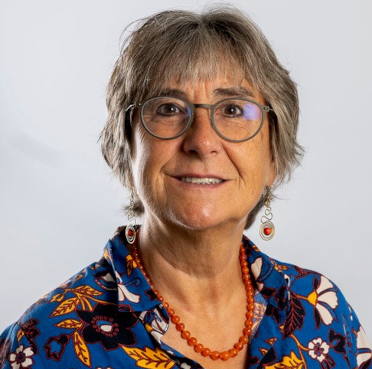
Recently, Marianne Donven, President of the refugee support association Open House, spoke with Helvilux Media and criticized the Ministry for failing to ensure that families have access to decent and adequate housing. As a founder of the social restaurant Chiche, Donven interacts regularly with asylum seekers and refugees who come for employment support or guidance. She expressed concern that the treatment of asylum seekers and refugees by authorities can have long-term negative effects on the mental well-being of vulnerable populations. On 16 February 2026, Helvilux did publish article about how a rejected asylumseeker single mother even after integrating and contributing in Luxembourgish economy by acquiring job still facing risk of being homeless. Click here to read the article.
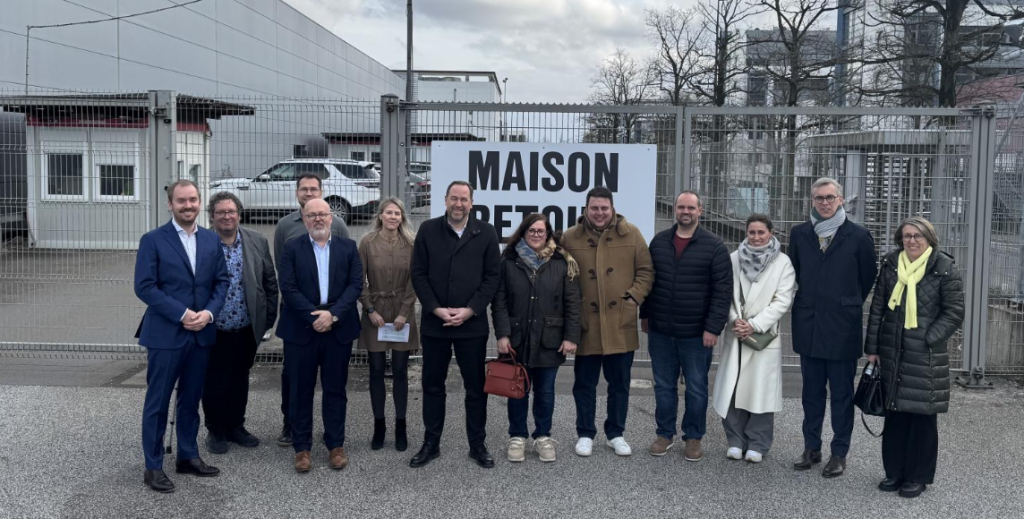
At the request of the déi gréng political group, members of the Committee on Internal Affairs visited the site of the House of Return on March 12, 2025. The delegation was accompanied by Minister Léon Gloden.
After reviewing the current situation at Maison de Retour in 2026 which remains largely unchanged from when it opened in 2024 Helvilux ASBL filed a formal complaint with the responsible authorities, submitted a petition to the courts, and informed about this with pictures of the Maison de retour to the Luxembourg Refugee Council, requesting their response. On behalf of a resident of Maison de Retour, Helvilux ASBL also submitted a civil case against the government, aiming to improve conditions at the return center.
While illegal migration and large-scale asylum applications present challenges in Europe, and particularly in Luxembourg, these issues must be addressed legally and in compliance with universal human rights standards. Rejected asylum seekers and irregular migrants require proper reform, support, and reintegration not psychological and mental harassment.
Mahesh Kamath, founder of Helvilux ASBL and publisher of Helvilux Media, emphasized: “If the government believes that creating harsh conditions, artificial housing crises, and inhumane treatment of rejected asylum seekers and irregular migrants will deter them from coming to Luxembourg, this will not work. What is needed instead is comprehensive reform of migration and asylum regulations.
🖼️ PRESS: If you require photos of the Maison de retour for publication, click here.
Helvilux does not receive any subsidies or financial assistance from the governments of Luxembourg or Switzerland to support its journalism work.HELVILUX Media is an independent media outlet run by the non-profit organization Helvilux asbl in Luxembourg. To support our work with a donation, click here.
With more than 15 years of experience in political and investigative writing, I have dedicated my work to uncovering truth and giving voice to communities that are too often overlooked. Alongside my investigative work, I am actively engaged in human rights advocacy.
Born in Asia, shaped by Swiss culture, and now based in Luxembourg, I continue to report with a cross-cultural perspective and a commitment to integrity and justice.
My commitment is simple: to report with integrity, courage, and respect. Although I do not hold the legally protected journalist status in Luxembourg, Instead I focus on the work itself, writing openly and responsibly so the next generation can inherit a world where truth still matters and justice remains essential.