Helvilux Files Official Complaint Against Luxembourg with the European Commission
Luxembourg, one of the richest countries in Europe, is widely known for its high standard of living, humanitarian work, advancements in AI, banking, and overall prosperity. However, Luxembourg also has some darker aspects that the local public should be aware of, but which are rarely discussed. Recently, several of these issues were exposed by Mahesh Kamath, Indian origin Journalist arrived from Switzerland the founder of Helvilux Media and his team.
Luxembourg has been a member of the European Council from the very beginning, and as such, it is obligated to follow EU laws and regulations while also adhering to its national laws. However, from time to time, the findings of the Helvilux investigative team have revealed that Luxembourg is not following several rules and laws that should be implemented according to EU directives and EU law.
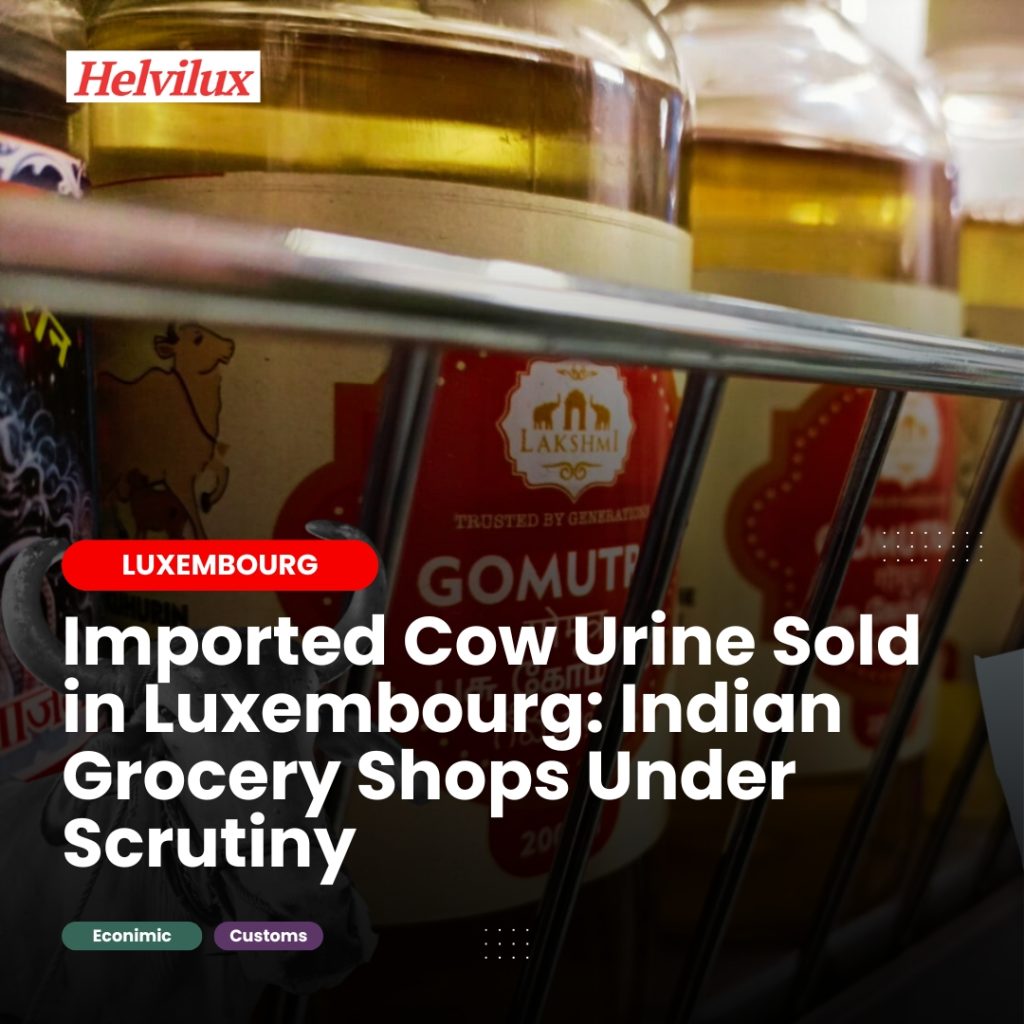
The initial investigation findings revealed how Luxembourg has ignored EU import/export laws and animal welfare laws. In December 2025, Helvilux reported in detail how Indian ethnic shops smuggle cow urine from India and sell it openly in Luxembourg. Click here to read the full report.
The Helvilux team hoped that, following the media report and the official complaint, Luxembourg would implement and respect EU laws, taking action before any potential outbreaks occurred due to Indian shops selling cow urine in the country. Unfortunately, no proper actions have been taken by the Luxembourg state. The situation is concerning, as hundreds of Luxembourgish farmers and locals, who place great trust in their authorities, are now anxiously waiting for an outbreak, which could be a disaster for local farmers.
After four months of in-depth investigation, the Helvilux team with evidential documents, has uncovered that, just as with import/export laws and refugee and asylum laws, there are significant issues within the Luxembourg judicial system.
The official documents received by Helvilux Media from the state of Luxembourg expose how Europe’s richest country has, for decades, cleverly violated several EU laws and disrespected the European Convention. Click here to see the evidence 1, evidence 2, evidence 3, evidence 4, evidence 5, evidence 6.
Asylum and refuge, which are important factors when it comes to understanding about a country that violates human rights, national law, the Luxembourg Constitution, and also international law. Asylum law was previously well respected in some European countries, in which Luxembourg was also one of them, but recently the asylum and refugee law is used not for the protection of victims and applicants who are seeking protection, but this asylum law is mainly being exploited to provide contracts, tenders and high amounts of profit to private companies and organisations. This so-called money-making scheme was happening for several years, but recently there was a whole twist in the Luxembourg asylum system which exposed several unethical actions.
An Indian-origin journalist from Switzerland arrived in Luxembourg and applied for international protection, requesting it from Luxembourg’s Ministry of Home Affairs authority against Switzerland. This whole case is very interesting because a journalist in just a few months exposed several wrongdoings by several Luxembourg authorities, which is demonstrated by well-documented evidence. For the state of Luxembourg, this applicant was another sheep in the rush for a better life, but he was here for a special mission.
While speaking with Helvilux, Mr. Kamath revealed some of the shocking and dark secrets of Luxembourg’s migration authority, police authority, refugee and family ministry, and the judiciary system’s systematic abusive systems and wrongdoings.
Violation of Asylum Law in Steps
Kamath said, The Ministry of Home Affairs systematically violates several protocols and asylum laws, which is dangerous for our democratic system in Europe. Even if a big portion of applicants are using asylum as a channel for seeking a better life or job opportunities, there are still some isolated cases where genuine applicants seek international protection due to political persecution and especially journalism activities, which put their and their family’s lives at risk to expose corrupt regimes. When they apply for international protection in Luxembourg, unfortunately the corrupt system puts them also in the same category. Then how in the future will a journalist take any risk for the betterment of society?
In Switzerland some so-called asylum service provider public-private limited companies like AOZ and ORS Group AG (Serco owned company from the UK) do high levels of corruption, scandals and violations of Swiss criminal law and international human rights law. The local Swiss police protect these criminals and the Swiss judiciary system does not provide basic protection and justice. Therefore, to expose Switzerland’s misdoings as a journalist, I arrived in Luxembourg and provided all the evidence, but instead of doing proper investigation the state of Luxembourg is putting a curtain on Switzerland’s misdoings by violating the Dublin III Regulation Act and the Asylum Procedures Directive Act of the European Union.
He further said, I provided 419 pages of evidence to the Ministry of Home Affairs but the authority arbitrarily refused to do an investigation. Worst is they arbitrarily arrested me and threw me into detention prison so that they could forcefully deport me back to Switzerland.
The Helvilux investigative team received some of the evidence which shows how Luxembourg’s Ministry of Home Affairs violation of EU law can be seen. For better understanding for our readers about the laws which were violated by the state of Luxembourg, the following are the EU laws, Luxembourg Constitution and national laws.
Dublin III Regulation Article 17. Click here to read.
Asylum Procedure Directive 2013/32/EU – Article 41 – Applicant shall have the right to be heard and to present all elements in support of all the applications.
Article 41 (2)(3) of the Asylum Procedural Directive of EU law guarantees the right to submit written statements, evidence with arguments.
Luxembourg Constitution Article 10 – Right to fair trialGuarantees everyone the right to have the case heard fairly and publicly, including the right to participate effectively in the procedure.
Luxembourg Constitution Article 11 – Equality before lawGuarantees that all persons are equal before the law.
Kamath menitoned that, when he submitted his international protection application against Switzerland he submitted all arguments and evidence, therefore the state of Luxembourg Ministry of Home Affairs is obliged to do an individual case-by-case investigation with respect to Dublin III Regulation law of the EU.
Another shocking allegation was about the neutrality of the lawyer which is provided to applicants by the Bar Council of Luxembourg. LSAP political party member and Leners Law Firm owner lawyer Max Leners was officially appointed for representing the journalist’s case to the Ministry of Home Affairs. Instead of representing the applicant’s arguments and evidence, Max Leners said to Mr. Kamath via telephonic conversation and email not to write or send any evidence directly to the Ministry of Home Affairs.
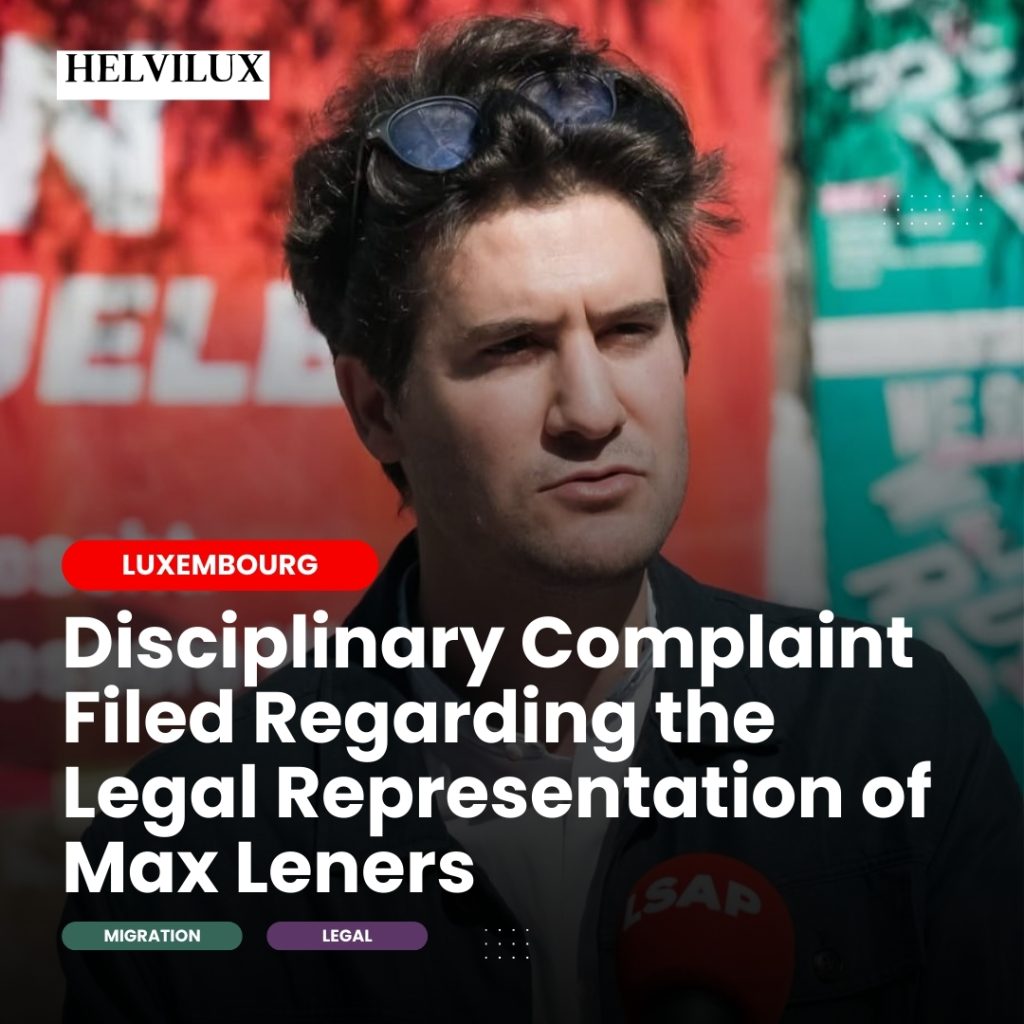
Kamath said Max Leners betrayed and violated the ethics of lawyers in Luxembourg. He literally tried to play like a government agent, but as I kept copies of all the evidence for both the lawyer and the authority, he is now exposed; therefore, he is silent on this topic.
A detailed report about Max Leners was recently published by Helvilux media. Click here to read.
Helvilux co-founder Zeinab Tazimi said, “an asylum seeker is a vulnerable person and those who are supposed to protect the rights of the asylum seeker, if they betray them, then who will protect the rights of the vulnerable population in Luxembourg? At least in this case the applicant is an educated professional journalist, therefore he could expose the systematic abuse happening in Luxembourg with evidence. But what about when the victims are vulnerable people from the African continent, where the mass population still does not know the law and their rights? The Bar Council of Luxembourg should investigate how many other cases Max Leners betrayed his clients to help the opposing party, which in this case is the Luxembourg Ministry of Home Affairs authority.”
Kamath submitted an official disciplinary complaint against Max Leners to the Bar Council of Luxembourg, and Helvilux contacted Leners to provide more details about this matter, but he refused to respond. Click here to read.
Regarding the other laws and articles of the EU which, as per Mr. Kamath, were violated by Luxembourg, he further said: when I arrived at the Ministry of Home Affairs to renew my document, the authority arrested me and put me in a detention center, even when my application was still under the appeal process with the Tribunal Administratif. The authority is using all their power and systematic authority so that, with all this arbitrariness and without proper amenities, I will fail to present my case to the Tribunal Administratif court.
While in detention prison in Findel, the applicant was physically assaulted by security staff of the detention prison, which was recorded on CCTV cameras, and the local police station confiscated the footage, and further investigation is going on. Click here to read the report.
Kamath said, I dont have my laptop, printer, or fax facility, and I have no liberty here; therefore, I am unable to properly present my case to the Tribunal Administratif court. Because of this, if my appeal gets dismissed, the state of Luxembourg is responsible for that.
Kamath said, “No wonder why senior journalists like Edward Snowden did not arrive in Luxembourg for seeking protection against the United States of America; otherwise, Luxembourg’s corrupt Ministry of Home Affairs would have used him as a bargaining chip and handed him over to the USA same day for exposing United States. In my case, there is evidence that there are series of corruptio and illegal activity going on in Switzerland against which i fight for long time and therefore once I am deported to Switzerland, the broken Swiss judiciary system and corrupt regime of the canton of Zurich will forcibly hand me over to Indian authorities, where I will be killed. To prevent being exposed, Switzerland has a very easy method: just deport me to India, and afterwards I will face death by Modi’s Indian regime.”
An Indian-origin journalist arrived in Switzerland in the year 2020, fleeing political persecution in India. There is evidential proof demonstrating that, as a journalist, Mahesh Kamath, including his father, who is the owner of a print house in India, was mistreated, kidnapped, and physically assaulted by Indian politicians and police authorities from 2014–2017–2019. Click here to read one of the reports published in Indian media. Click here to read the NGO report about the attack on the journalist, where the Kamath case was mentioned.
As a journalist, Kamath made several allegations against the business tycoon and conglomerate Mukesh Ambani, Gautam Adani, Indian Prime Minister Narendra Modi, Maharashtra Chief Minister Devendra Fadnavis, politician Kisan Kathore, Eknath Shinde, corrupt businessmen Kamboj, and their regime. Switzerland’s migration authority very smartly, just to keep the case isolated, kept the international protection interview limited to those local goons who attacked journalist Kamath. While his application was under process, in the municipality of Nürensdorf, Asylum Coordinator Nihat Halis and SVP political party member Edith Berschaft threatened him on several occasions to withdraw his international protection application and not to speak about anything to the SEM authority.
Kamath was in shock when he experienced this in Switzerland. When he ignored the threats, he was mistreated by the municipality of Nürensdorf in the canton of Zurich.
In the asylum interview, whenever I mentioned the main points and those who were the reason for my political persecution, those names and points were omitted, and the protocol mentioned was limited so that in the future they could dismiss my case.
On some occasions, while his international protection appeal was still under process, he, including his first newborn daughter and the mother of the child, was intentionally made homeless by the authorities. Several pieces of evidence clearly show that Switzerland used a systematic abusive system to purposely give degrading and inhuman treatment to the applicant and his family.
After two years, journalist Kamath’s international protection was rejected.
Journalist Kamath, during his stay in Switzerland, also established a non-registered organisation called Helviasylum, and through his journalism activities he exposed several authorities in Switzerland, including the municipality of Nürensdorf’s rental scam in the social department, office abuse by the Social Welfare Department of the canton of Zurich, corruption inside ORS Group AG, AOZ, the Public Prosecutor’s Office of Winterthur-Unterland, and civil registry office misconduct in the city of Winterthur. Some documents presented by Kamath also demonstrate how the SEM authority misled the Federal Administrative Court of Switzerland.
Kamath also presented official documents from the SEM authority on one occasion when he was arrested and put in detention prison in Zurich, and a Level 2 flight was booked for his forced deportation to India, where he will be killed, while he has two minor daughters dependent on him in Switzerland. This clearly shows Switzerland not respecting Article 8 of the European Convention.
At the end, the appellate authority did release him from detention prison but did not provide a permit to stay in Switzerland; therefore, he was in a limbo situation where he could at any time be forcibly taken and deported to India. Therefore, to save his family from being broken, he left Switzerland and applied for international protection in Luxembourg.
Dublin III Regulation is clear that the applicant’s first country of application is responsible, but when the country systematically mistreats the applicant, does not properly respect the law and regulations, does not conduct a proper assessment, and refuses to provide international protection, then with respect to Article 17(1) of the Dublin III Regulation, the applicant’s current country should take over the case, which is not being respected in this case by the state of Luxembourg. Click here to see the evidence 1, evidence 2, evidence 3, evidence 4, evidence 5, evidence 6.
I am not here for seeking a better life, dream, job, or money opportunity. I am in Luxembourg because it is an EU member state responsible for checking all the evidence and mistreatment done by Switzerland in asylum and other laws, where Switzerland failed to protect me and my family. In that way, a neutral assessment investigation and strong precedent will improve the broken system in Switzerland, Kamath mentioned.
Kamath also gave an example from some years ago when the asylum system was so corrupt and broken in Italy. At that time, an Afghan family arrived in Switzerland from Italy and exposed the whole system, and afterwards, after a strong judgment from the European Court of Human Rights, the Italian government improved the system. Read the judgment: Tarakhel v. Switzerland [GC] – HUDOC. Therefore, individual case-by-case assessment is always important for the improvement of the asylum system in Europe. All the evidence accessed by the Helvilux investigative team also shows that Luxembourg’s investigation into journalist Kamath and his family’s mistreatment case would expose systematic abuse committed by Switzerland, and in that way Luxembourg could show the whole Europe a good example. But then why is the Ministry of Home Affairs not interested in respecting their own EU asylum law and trying to protect the corrupt Switzerland regime? That is the big question.
Kamath claimed that, In Luxembourg for recent years, this current regime uses the asylum system as a money-making machine for specific people and companies. Keeping international protection applicants for some months as a short-term stay, without doing any proper investigation of cases, then transferring them to another country and using the space for new applicants the cycle of corruption goes on. Asylum camp maintenance companies receive their tenders and contracts, free legal aid provided by the state of Luxembourg allows lawyers to earn money, those who provide other services related to the asylum and migration sector earn profit, but the cause of the problem is never solved. The chain of cruelty is nonstop, where there is no final result, just support to specific companies, which later support political party funding during elections.
Kamath also provided a series of email communications and documents which show how, in the state of Luxembourg, Article 6 of the European Convention on the Right to a Fair Hearing, and Luxembourg Constitution Articles 10 and 11 on equality before the law, are not fully respected. The email evidence shows that journalist Kamath’s series of responses with the Ministry of Home Affairs and the Ministry of Refuge and Social Department were not properly addressed by the authority. Therefore, whether the right to be heard under EU law actually happens in practice or is only written in law books is a big question.
My fight with the system is not for support to migrants or asylum seekers but against the system, which is slowly transforming towards fascism. Now I understand why, even after having all the evidence, my case was dismissed. My legal representative was managed by the opposing party, and without a lawyer my arguments would never be heard by the Tribunal Administratif, as they mentioned in their letter. He said this while showing the letter from the Tribunal Administratif Court of Luxembourg. Click on link to read File 1, File 2.
A Luxembourgish resident in Schifflange said, if I am the one who suffers, why I cannot represent myself in the national court? What if my lawyer does not properly represent me? Does that mean that if a victim does not have a lawyer, they are not eligible for justice in Luxembourg?
Another Irish citizen, a long-term resident in Esch, said, I have lived here for more than 10 years and never discovered this condition in Luxembourg courts. To represent a case and submit written arguments requiring a lawyer’s signature is systematic abuse of the judicial system in Luxembourg. How is this even happening in a democratic country?
Helvilux co-founder and Portuguese citizen, a long-term entrepreneur in Luxembourg, said, this kind of law from 1998, still being implemented now, shows that our team appreciates journalist Kamath for identifying this flaw in the Luxembourg judicial system. But the question is: for several years this national law was violating EU law and even Luxembourg’s Constitution guaranteeing equality before the law then why did no other non-profit organisations or politicians speak about this for decades? This is a concerning topic in our democratic country, which is a member of the EU.
Following the formal complaint submitted by journalist Kamath, several alleged illegal activities involving the Ministry of Home Affairs, the Ministry of Family and Refuge, and ONA authorities are now under discussion. It is expected that the European Commission will examine whether the state of Luxembourg has complied with EU law. Click here to read.
Kamath said that blocking direct communication to the court could be considered a restriction on access to justice, particularly if there is no practical way to ensure all arguments are submitted. From a procedural fairness perspective, the constitutional court emphasises that procedural rules cannot make it impossible for a person to exercise their rights. But in Luxembourg, this specific lawyer signature condition law is a systematic way to restrict the appellant’s ability to participate effectively.
To improve the judicial system in Luxembourg, Kamath requested the Tribunal Administratif Court, in his ongoing appeal, to raise a QPC. Click here to read.
Kamath also shared another screenshot of an email he received from the Tribunal Administratif Court, where it is mentioned that without lawyer submissions to the court, the request could be inadmissible.
So, whether a father of two minor daughters and an Indian-origin journalist from Switzerland, Kamath, will get justice in Luxembourg, or for protecting the Luxembourg Constitution and EU law he will be sent back to Switzerland and then to his country of origin where he could be killed for exposing the corrupt government regime, remains the question. In this way, the state of Luxembourg, as an EU member, could also violate Articles 3 and 8 of the European Convention. On 17 March is the first hearing of this appeal.
Just three months ago, the Minister of Home Affairs, Léon Gloden, in the EU Council “Solidarity Pool Meeting,” while speaking with the media, said, “I regret that the EU migration report has classified Luxembourg in the fourth, in the last category.” The Minister expects that in June the EU Commissioner will take into consideration the letter he addressed to consider criteria of regionalisation, but when cases like journalist Kamath’s could expose corruption and illegal activity within the Ministry of Home Affairs, the Minister expects the ranking will improve. Click here to watch.
For now, one thing is clear: everything is not as perfect in Luxembourg, the richest European country, as the government has tried to show and represent for years. There are several dark secrets and this is just the tip of the iceberg.