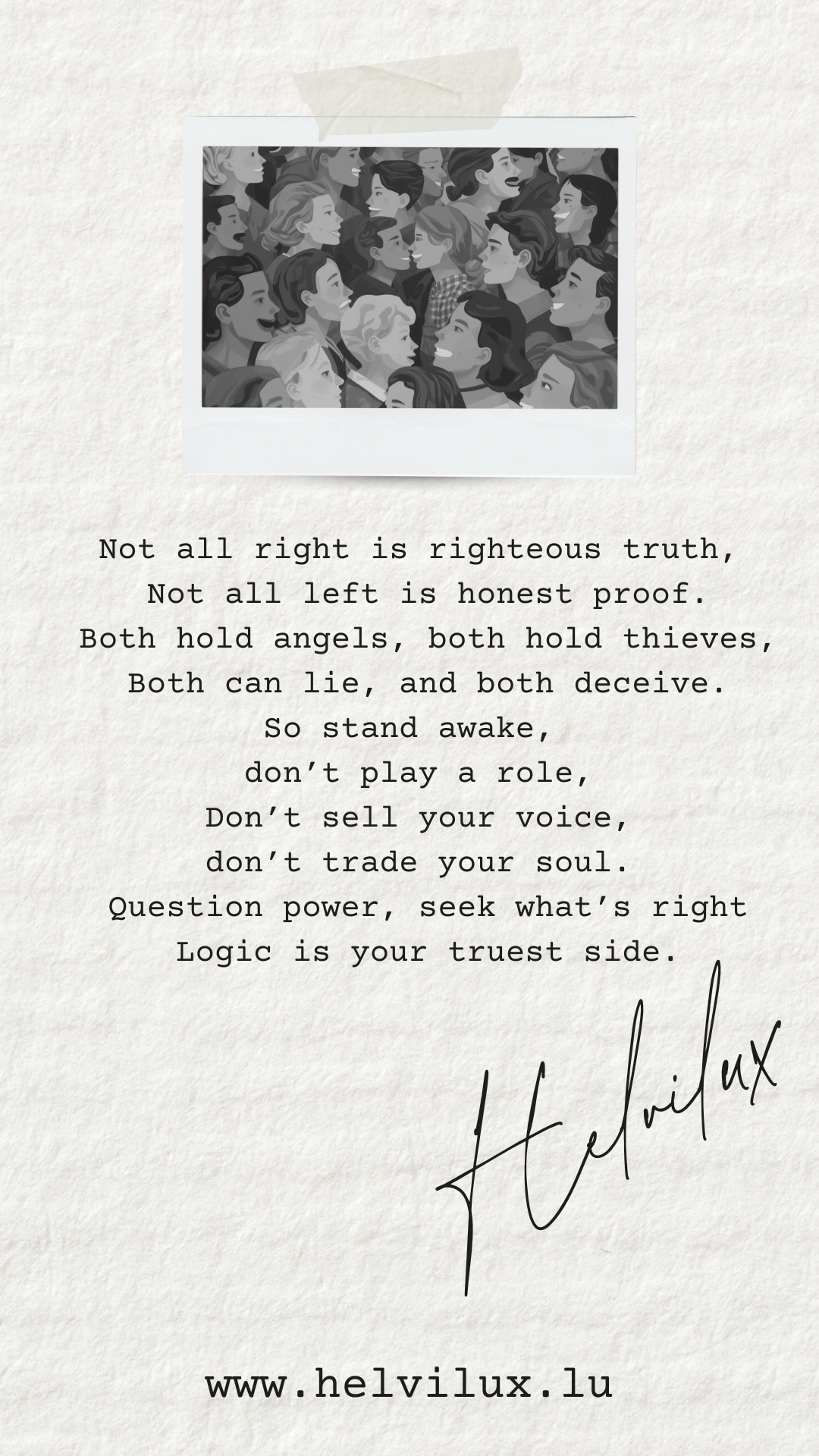

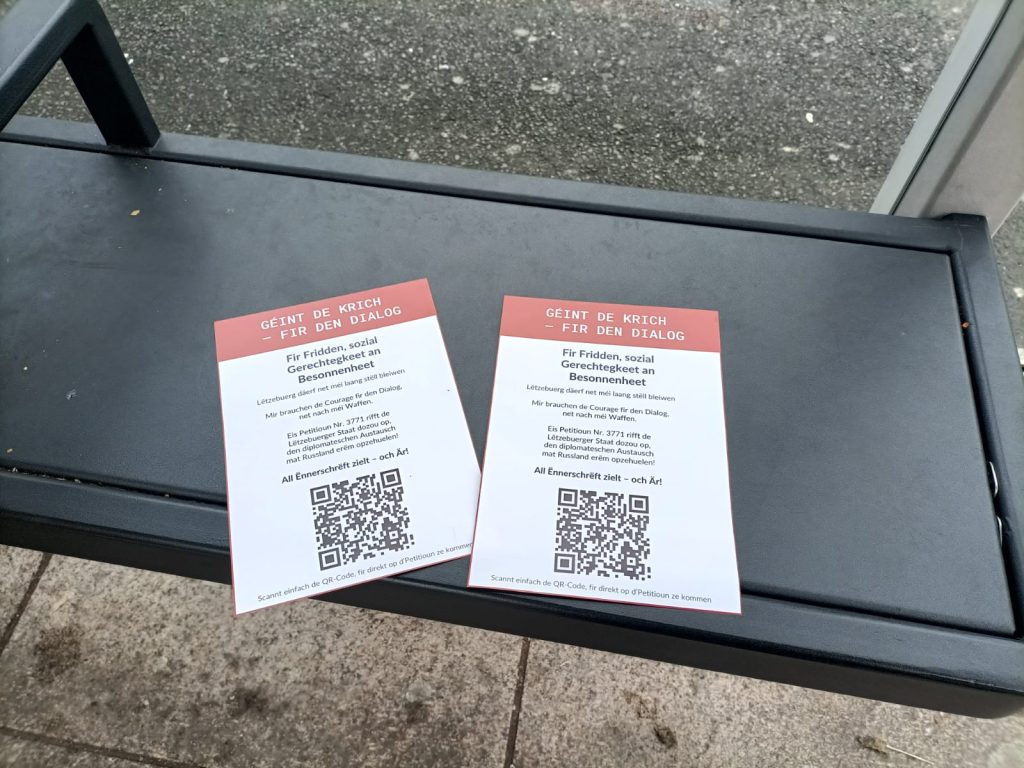
On 25 November 2025, leaflets calling on citizens to sign Petition Nr. 3771 were distributed widely across Luxembourg City. Bearing the slogan “GÉINT DE KRICH FIR DEN DIALOG – Fir Fridden, sozial Gerechtegkeet an Besonnenheet” (Against war — for dialogue, peace, social justice and prudence), the leaflets urged Luxembourgers to take action. They warned that “Lëtzebuerg däerf net méi laang stell bleiwen” (Luxembourg must not remain passive) and stressed the need for courage in dialogue rather than further militarization. “Mir brauchen de Courage fir den Dialog, net nach méi Waffen.” Citizens were encouraged to scan a QR code linking directly to the petition page, with the message : “All Ënnerschrëft zielt – och Är!” (Every signature counts, including yours!). The petition itself calls on the Luxembourg government to re-open diplomatic channels with Russia as part of a broader effort to promote peace, social justice, environmental protection, and long-term economic stability.
Why Supporters Say This Is Necessary — Peace, Lives, Futures
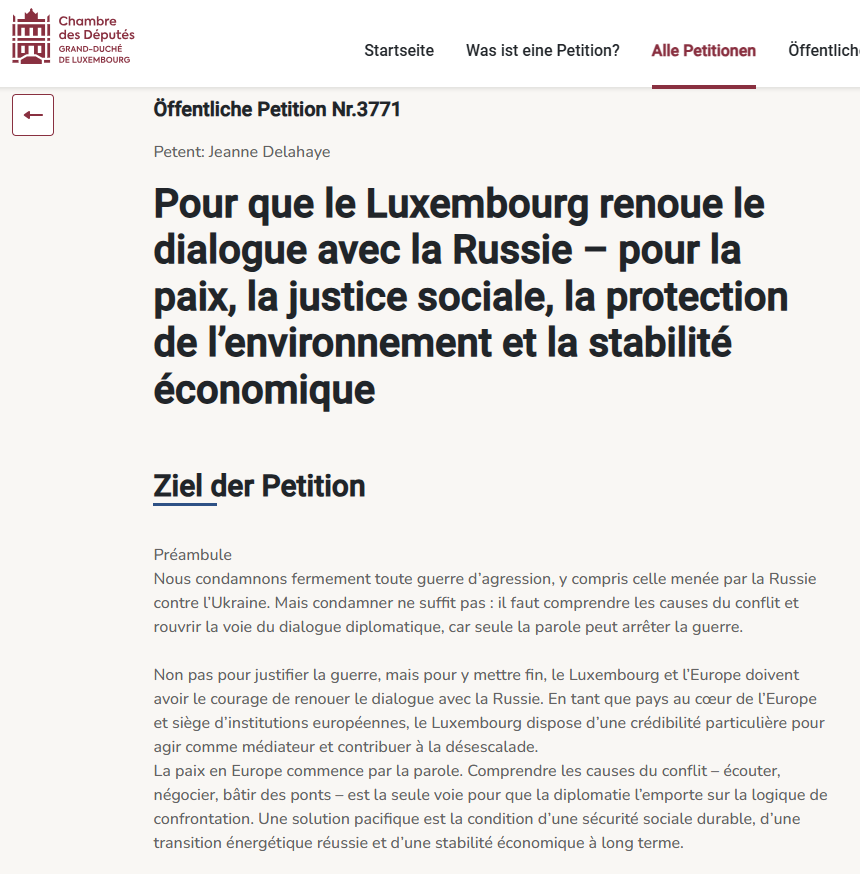
Supporters of Petition 3771 argue that the initiative is urgently needed because the ongoing war, now in its fourth year still continues to destroy lives, infrastructure and hopes for a stable European future. They insist that further military escalation will not bring security, but rather prolong a cycle of violence with devastating human and social consequences. According to the petition’s promoters, only a return to diplomacy can open the door to a lasting peace, allowing space for negotiation, reconstruction and healing between nations. They warn that war not only kills thousands of soldiers and civilians, but also undermines the social foundations of European societies: every billion spent on weapons and conflict is a billion not invested in pensions, affordable housing, schools, hospitals or assistance for families struggling with the rising cost of living. Environmental concerns add another layer of urgency, as military operations cause massive pollution, destroy ecosystems, increase carbon emissions and deepen Europe’s energy insecurity, all factors that jeopardies long-term sustainability and ecological transition. Above all, supporters emphasize the human toll: every life lost, every child displaced, every home reduced to rubble represents an irreplaceable tragedy. By distributing the petition city-wide through a simple QR-code leaflet, campaigners hope to demonstrate that citizens of Luxembourg refuse to remain indifferent. They believe public pressure can send a powerful signal to decision-makers, that Luxembourgers want a return to dialogue, de-escalation and diplomacy, rather than a future shaped by endless war.
Toll of the War: What Has Already Been Lost
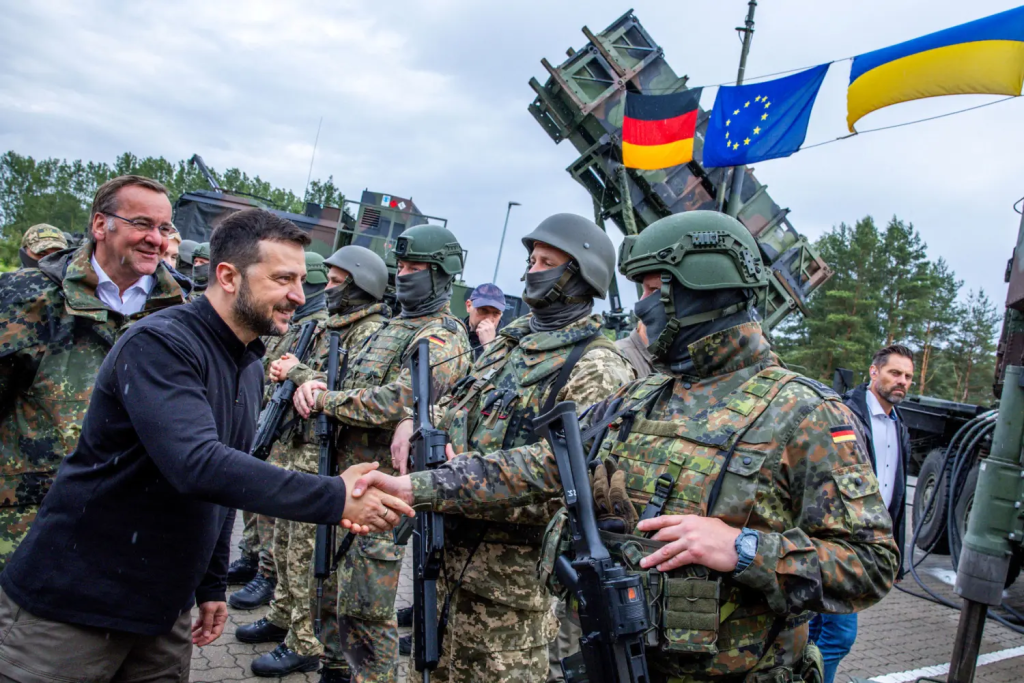
As the conflict between Russia and Ukraine drags into late 2025, the scale of devastation has reached staggering proportions. Analysts estimate that Russian forces continue to control roughly 19 to 20 percent of Ukrainian territory, an area comparable in size to the U.S. state of Ohio- leaving vast regions scarred by destruction and depopulation. Military losses on both sides have climbed to unprecedented levels, with Russia alone having reportedly lost more than 23,000 tanks, armored vehicles, aircraft and naval units since the start of the invasion. Yet the human cost dwarfs even these figures: tens of thousands of civilians have been killed or injured, while millions more have been forced from their homes, creating one of the largest displacement crises in Europe since the Second World War. Entire cities have seen their housing blocks, hospitals, power stations and transport networks reduced to rubble, and experts warn that rebuilding Ukraine will require hundreds of billions of euros. A burden that will weigh heavily not only on Kyiv, but on the wider European and global economy for decades to come. The effects of the war ripple far beyond the battlefield: disrupted trade routes, shortages of agricultural exports such as grain and sunflower oil, and volatile energy markets have strained economies from Europe to Africa and Asia. As the conflict grinds on with no clear end in sight, the cumulative losses, human, economic and geopolitical – continue to deepen, reinforcing the urgency of calls for renewed diplomacy and efforts to end the fighting.
The Global Damage: What the War Has Already Cost Ukraine, Russia and the World
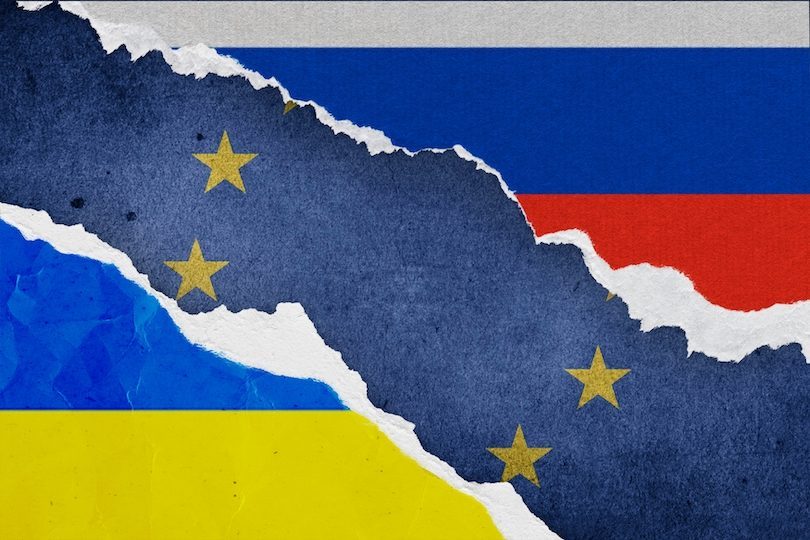
The human and material toll of the war between Ukraine and Russia continues to escalate, with consequences far beyond the immediate battlefield. Millions of people have been displaced, either internally or abroad, and tens of thousands of civilians, including thousands of children have been killed, with countless others wounded. Military losses are staggering. Thousands of vehicles, aircraft, and naval vessels have been destroyed, representing not only strategic setbacks but also major economic and industrial losses, including jobs and production capacity. Across Ukraine, energy networks, housing, water supplies, and transportation infrastructure have suffered severe damage, leaving long-term challenges for rebuilding and daily life.
The war’s ripple effects extend across Europe and the wider world. Disrupted agricultural exports and volatile energy markets have driven up prices, strained household budgets, and slowed economic growth. Trade and supply chain disruptions have affected key industries from agriculture to manufacturing, while millions of refugees seeking safety in EU countries have created substantial humanitarian and financial challenges. Security concerns and political tensions within the EU have also intensified, underscoring that the costs of this conflict are shared not only locally, but regionally and globally, affecting both everyday life and long-term stability across Europe.
What the Petition Seeks to Achieve ‘Why It Matters’
The petition calls on Luxembourg and Europe to “renounce silence” and reopen diplomatic channels with Russia, aiming to shift the focus from military escalation to constructive dialogue. Its supporters hope to pressure governments to priorities negotiation over conflict, while giving voice to citizens committed to peace, social justice, and long-term stability. The petition underscores that human lives, welfare, environmental protection, and the well-being of future generations must take precedence over short-term geopolitical gains. Advocates argue for a broader European strategy that relies on diplomacy and negotiation rather than solely on military confrontation, in order to prevent further destruction, death, and societal disruption. In the context of mounting casualties, widespread destruction, and global economic repercussions, the petition’s signatories stress that even small countries like Luxembourg have a responsibility to act. Each signature, they argue, represents a stand for humanity, responsibility, and a future grounded in peace rather than conflict.