A short film that hits where history still hurts
On 7 December 2025, at the Kinoler in Kohlerat 5 p.m. and 6 p.m. and last month on 23 November 2025, the little theatre in Mersch was packed. More than two hundred people came to watch the premiere of a 35-minute film that, through its restraint and raw power, left the audience stunned into silence: Lager 103 – Part 1: De Feind am Duerf (The Enemy in the Village).
Produced by the Mierscher Guiden a Scouten (Scouts and Guides), the Grupp Saint-Michel, and the Geschichtsfrënn vun der Gemeng Miersch (Friends of Mersch History), this amateur short (total budget: €7,000) is the latest chapter in a remarkable remembrance project launched several years ago. Every year, a new film is dedicated to one of the 48 names engraved on the local war memorial. This time, it is the story of the Arendt family from Reckange-Mersch.
19 September 1942, 6 o’clock in the morning
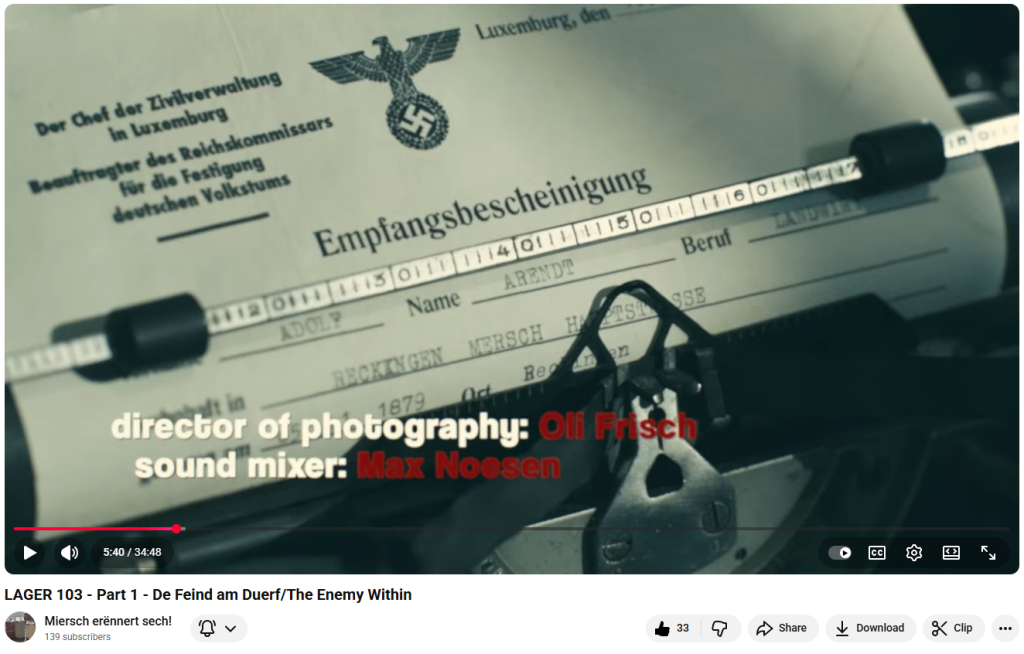
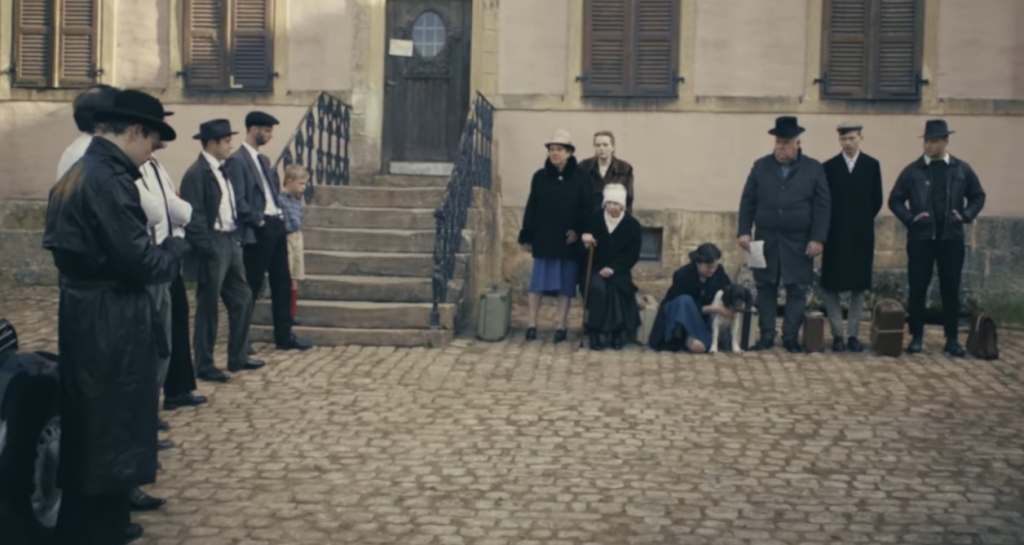
A violent knock at the door. The local collaborator Schranz, a real historical figure from the village accompanied by German officials, informs the Arendt family that they have two hours to pack their lives. 30 kg per person, everything listed on official forms, then onto a bus. Destination: “Lager 103 Boberstein” in Lower Silesia, one of the first “re-education” and forced-labour camps for Luxembourgers deemed politically unreliable after the nationwide strike of August–September 1942.
The entire film unfolds in real time inside the single living room-kitchen of the family farmhouse (shot on location in Savelborn). There are no battle scenes, no swelling orchestral score, only the thud of suitcases being closed, whispered conversations, stifled tears, children who do not fully grasp what is happening, and above all the unbearable presence of the “enemy in the village”. The neighbour who speaks the same Luxembourgish dialect and who, in a few short months, has become the willing enforcer of Nazi orders.
Neither black-and-white nor sentimental
What is striking is the refusal of easy pathos. Schranz is not a cartoon monster, He knows the family personally, shares their language, and justifies himself with party slogans (“That is the justice of National Socialism”). The film quietly shows how an ordinary man becomes a collaborator. Opposite him stands the teenage Catherine (“Käthe”) Arendt, embodying a calm yet unbreakable resistance, a look, a short sentence, a refusal to bow that forms the emotional spine of the film.
Fred Mersch and Erny Kohn wrote the screenplay and carried out the historical research. Oli Frisch operated the camera, and Paul Kohn directed the volunteer cast (many of them current Scouts). Ada Funck’s costumes and Marie-Lou Clonan’s music are pitch-perfect. Nothing feels cheap or forced.
A living, collective memory
For several years now, the Geschichtsfrënn have produced one such short film annually. Each is first screened on National Remembrance Day in Mersch’s Deanery Church, then in the local theatre, and finally released free on the YouTube channel “Miersch erënnert sech!” (“Mersch remembers!”). Last year’s film, D’Ierbsenzopp ass gutt, has already surpassed 14,000 views and is regularly shown in schools.
Lager 103 – Part 1 is now freely available on YouTube: https://www.youtube.com/watch?v=7n6qkd5ysvk
Part 2, which will follow the family’s ordeal in the camp and Catherine’s traumatic return to Luxembourg at the end of 1943, is already in production for 2026.
Lager 103 Boberstein: A “Model Camp” of Coercion and Exploitation
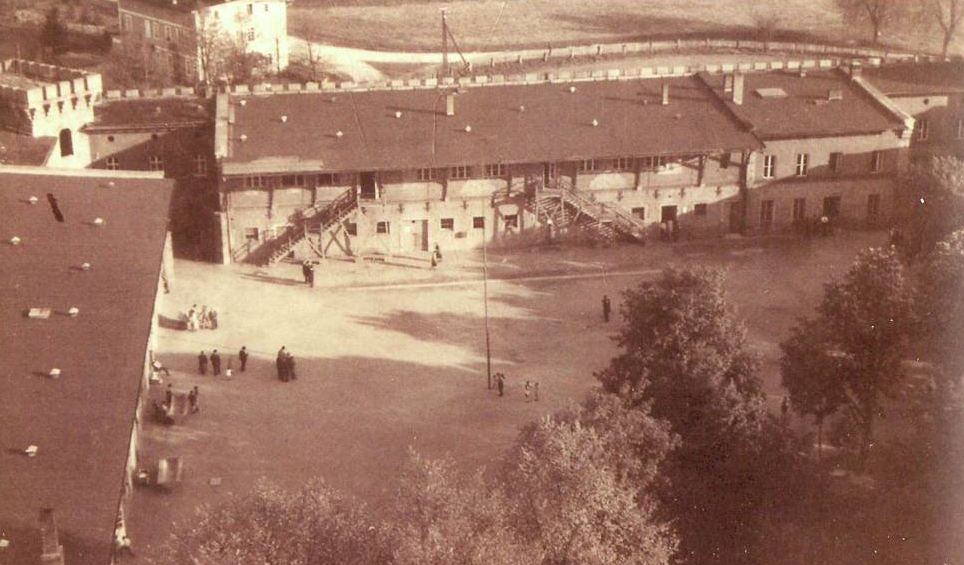
Established in 1942 amid the Reich’s insatiable hunger for labor – which peaked at 12 million forced workers by 1944, 20% of Germany’s workforce – Umsiedlungslager Boberstein (Camp 103) was one of several “resettlement camps” in the annexed Polish territories of Lower Silesia. Located near the Bóbr River in what was then German Gau Lower Silesia, it functioned as both a transit point and a forced-labor site under SS oversight, tied to the Reichskommissariat für die Festigung deutschen Volkstums (RKFDV), Heinrich Himmler’s office for strengthening German ethnicity.
Officially a “family camp” for “re-Germanization,” Lager 103 housed deportees from Luxembourg, Alsace-Lorraine, and other “borderlands” deemed insufficiently loyal. Families were torn from their homes, allowed only 30 kg of belongings per person (inventoried on Gestapo forms), and shipped east by rail – a journey of days in cattle cars, often without food or sanitation. Upon arrival, they were stripped of identity: men and older boys assigned to brutal factory or mine work (e.g., for Krupp or IG Farben affiliates), women to domestic or agricultural drudgery, children “educated” in Nazi youth indoctrination. Conditions mirrored broader forced-labor horrors: starvation rations (1,000–1,500 calories daily), disease (typhus, dysentery), beatings by Kapos, and “extermination through labor” for the weak.
Unlike death camps, Lager 103’s mortality was “indirect” – through overwork and neglect – but no less lethal. Deportees from Luxembourg, often farmers like the Arendts, were forced into industrial roles ill-suited to their skills, leading to high attrition. The camp’s “103” designation was pure Nazi efficiency: a ledger entry in the vast Zwangsarbeit (forced labor) system, which exploited 20 million Europeans, including 5.7 million civilians by 1944.
Himmler’s vision was total: survivors would be “redeemed” as Germans or perish, their lands colonized. By 1945, as the Red Army advanced, the camp was evacuated in death marches; remnants liberated, but families shattered.
Legacy: From Silence to Screen, and Why It Matters Now
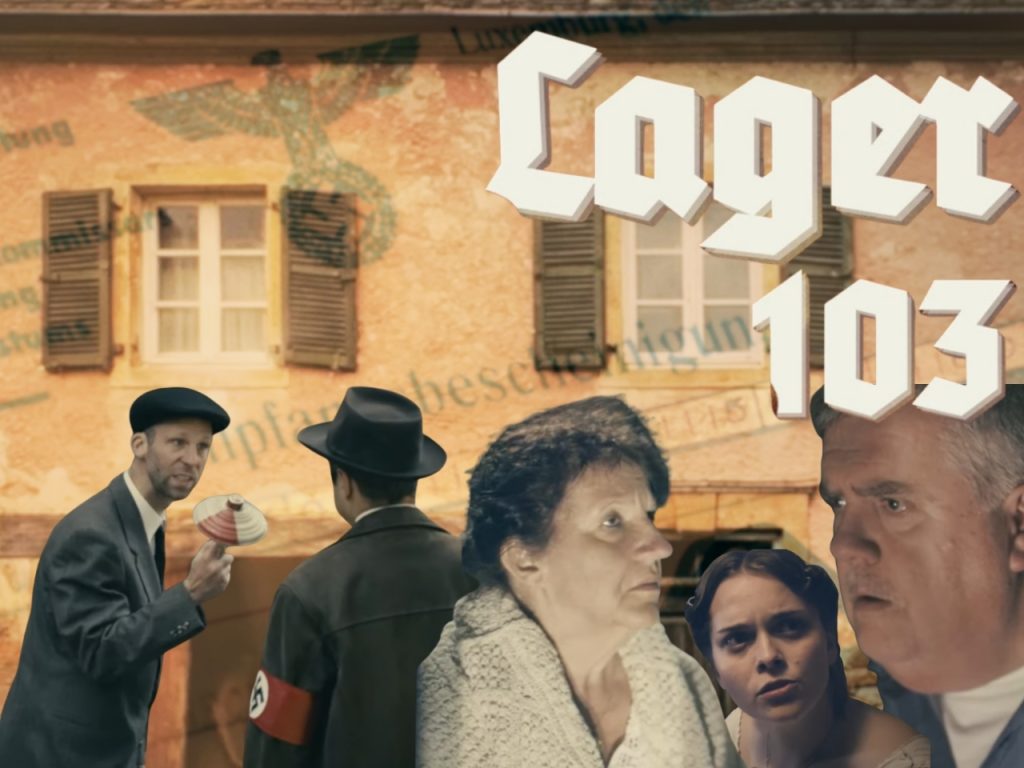
Luxembourg’s WWII toll- 5,700 dead, 2% of the population was disproportionate, with deportations claiming thousands beyond Jews: strikers to Hinzert, evaders’ families to camps like Boberstein. Post-war, the Grand Duchy grappled with collaboration (e.g., VDB trials) and trauma, forging a resilient identity. Yet, as the film Lager 103 (premiered November 23, 2025 in Mersch and on 7 December 2025 in Kohlert) reveals, memory thrives locally, scouts and historians recreating that fateful morning, humanizing the statistics.
In a country where the Second World War can still be a sensitive, sometimes hushed topic between family silences and official ceremonies, these homemade films, carried by young and old from the community itself, achieve something extraordinarily precious. They make history tangible, human, and impossible to forget.
Because the real enemy, then as sometimes now, often hides in the very heart of the village.
Watch it. Share it.
Mersch remembers and reminds us why we must never stop remembering.