Zurich (HELVILUX) – Today we are writing about a person who exposed several things. First, she exposed her hypocritical liberal mentality through the use of an airgun. Then she exposed her hate towards Switzerland. Next, she exposed the painful psychological journey as an asylumseeker in Switzerland were she has been going through for several years. Finally, she exposed how, in Switzerland, one can disrespect the Christian religion and walk away with just a CHF 500 fine and a conditional fine.
Yes, we are talking about Sanija Ameti, member of Zurich City council, the person who did not think twice before shooting 20 times at an image of Baby Jesus and His mother Mary, an artwork she herself brought, filmed the act, and posted the video on her social media.
Readers may think this happened last year and why it should be remembered now. That is exactly the problem of todays Switzerland: we forget after news, but the scars remain, cases followup in the court and that all takes time. Recently, in July 2025, the Public Prosecutor’s Office of the Canton of Zurich proposed that the accused, Ameti, should receive a CHF 2,500 fine with a provisional fine of CHF 10,000, or two years of probation. On January 28, 2026, Sanija Ameti was found guilty by the Zurich District Court. According to the verdict, the court sentenced her on that day to a conditional (suspended) fine of 60 daily rates of CHF 50 and an additional fine of CHF 500.
Ameti’s actions, the public reaction, the attitude of the Church, and the verdict proposed by Swiss authorities together show how broken the Swiss system has become, one that cannot even protect its own religion or the sentiments of its people. This case demonstrates that one can disrespect Christianity on Swiss soil and get away with a modest fine and extensive media publicity. Big smile while coming in the court like she gain some big award for her act, ignore the questions and not doing any public appology for the act – Zero accountability as a politician.
The PR agency where she worked terminated her contract after the 2024 incident. However, the timing of her actions and the outcome now only highlight how strategically Ameti handled the situation from a public relations perspective.
Before we start our analytics views for readers first see what really happened.
An act directed against the Christian religion in a country widely known for its Christian heritage it becomes clear that nothing concrete followed. The person who spread an ideology through her actions received significant media attention, then maintained a low profile for three months, only to reappear later in interviews using her brother’s death as an explanation for her behavior. This entire sequence highlights a deeper problem within Switzerland.

Readers may recall the recent United Nations meeting where former United States President Donald Trump made a statement that went viral on social media and prompted many European and Swiss citizens to reflect.
‘Europe opened its arms to them, and they paid it with crime‘ -Trump
This sentence is something many Swiss people hear repeatedly in their minds when they see the actions of Sanija Ameti. An agnostic politician from a Muslim background who fled with her family from Bosnia in 1995, when she was just three years old. At that time, the migration authority was known as FOS (now SEM), and Swiss society was far more supportive and welcoming toward foreigners and asylum seekers.
As a result, Ameti and her entire family received full support from Swiss authorities. She received a good education, became a lawyer and an expert in cybersecurity, entered Swiss politics, and eventually became a member of the Zurich City council. According to her own statements to various media outlets, she was also pursuing a doctorate in cybersecurity.
This Christian-rooted Swiss society gave her and her family safety, protection, education, name, fame, and opportunity. The question many now ask is how she returned that generosity by handing air gun and shooting 20 times at an image of Mother Mary and Baby Jesus or by mocking the christmas decoration which is central to the faith of christians worldwide.
Those who claim that racism and discrimination have increased in Switzerland must also acknowledge that there have been repeated incidents that have caused local Swiss citizens to lose trust in shared values and social harmony. Any kind of racism and discrimination should have no place on Earth, and there should be no justification for it. At the same time, the primary cause should never be ignored. The Ameti case is one such example, even if she claims her actions occurred while she was “grieving the death of her brother, which happened decades ago in Bosnia.”
Swiss Bishops and Christians Extend Forgiveness to Ameti. Andi Bachmann-Roth, co-secretary general of the Swiss Evangelical Alliance said, Sanija Ameti’s act deeply hurt many Christians, myself included, yet being Christian also means choosing forgiveness over anger. Forgiveness does not erase consequences, but it frees the heart from hatred and reflects the grace we ourselves have received.
Operation Libero’s “Liberalism”: At What Level?
After the incident, Ameti was removed from her political party, but Operation Libero continued to support her. Because of this many members did resign and left the party. In its press release, the organization stated that what Ameti did was wrong. However, the overall framing of the statement raises serious questions about whether Operation Libero is respecting its own stated values and principles which they mentioned in statues regarding freedom and respect of all religion and respecting swiss law. Click here to read Operation Libera Status.
HelviLux contacted Operation Libero to understand where they draw the line to what extent liberals are willing to accept everything. Today, the shooting was directed at an image of Baby Jesus and Mother Mary, fired 20 times. What if tomorrow a real child were killed and the accused claimed, “I am sorry, it was a mistake; I was reliving the tragedies of my childhood”? Would such an explanation also be accepted or defended?
And what if the accused had targeted members of the liberal community itself because also some liberals have christian faith? Would the reaction and public stance be the same?
When Operation Libero speaks about equality of rights for all, that principle must also apply to people of the Christian faith. What about the rights and religious sentiments of Christians that were attacked by Ameti? How is it not hypocritical if these concerns are ignored?
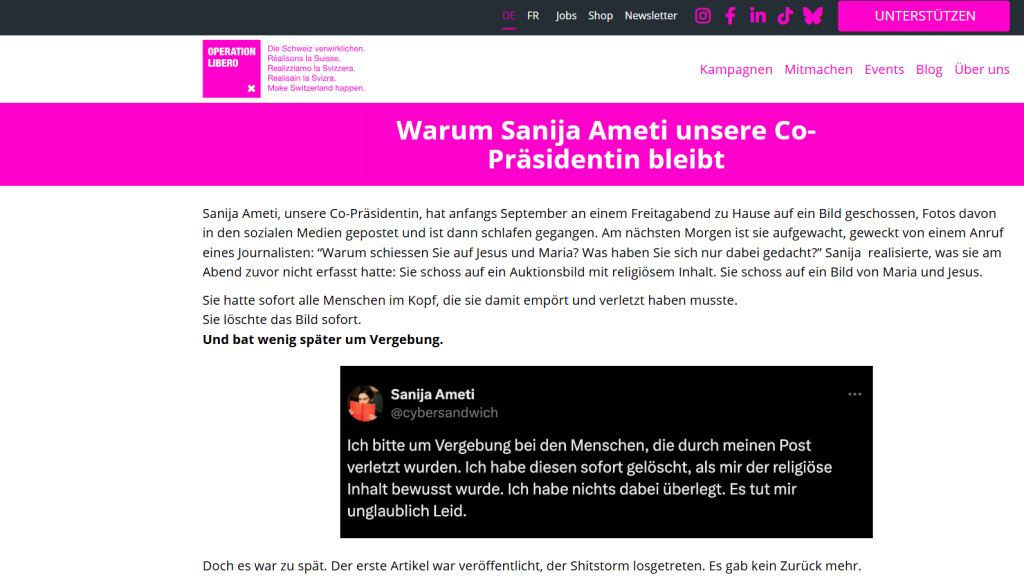
The 2024 incident caused a public uproar, and even members of Operation Libero were reportedly unhappy with Sanija Ameti. Yet, the association waited until 2025 apparently letting the negativity simmer before realizing that Ameti’s actions were creating PR headaches. In September 2025 Operation Libero also posted an article saying Why Sanija Ameti remains our co-president. Click to read. Only then, in November 2025, did they finally “grace us” with a statement, The movement needed a new leadership team, and Sanija Ameti and other would step down as co-presidents. Click here. Clearly, Operation Libero wanted to see just how much patience their members and the public could endure before acting. Click here to read.
Helvilux hopes that Operation Libero will uphold its own Article of assicaition which they formed when establish the association, commitment to equality, humanity, and freedom of speech including respect for Helvilux’s right to report the truth.
Click here to read the press release issued by Operation Libero regarding the Ameti case.
If Ameti Could Be a Future Problem, Who Will Be Responsible?
In her own words, as expressed in an interview with Watson, Ameti spoke openly about her feelings. Certain statements from that interview are of serious concern to Helvilux. Several of the things she mentioned raise clear red flags and suggest that Frau. Ameti may need professional psychological consultation. This is not stated out of personal judgment, but in the public interest. The casual manner in which she addressed the entire incident raises a broader question: Was Ameti testing the patience of Swiss citizens and Christians?
After the shooting incident, the post remained online until the next day. She stated that she slept until the late morning and removed it only after being contacted by a journalist in late evening. According to her own explanation, she then realized the seriousness of the situation. But what if the reaction had been more supportive than critical? What would have happened then? Would even then have she deleted the post?
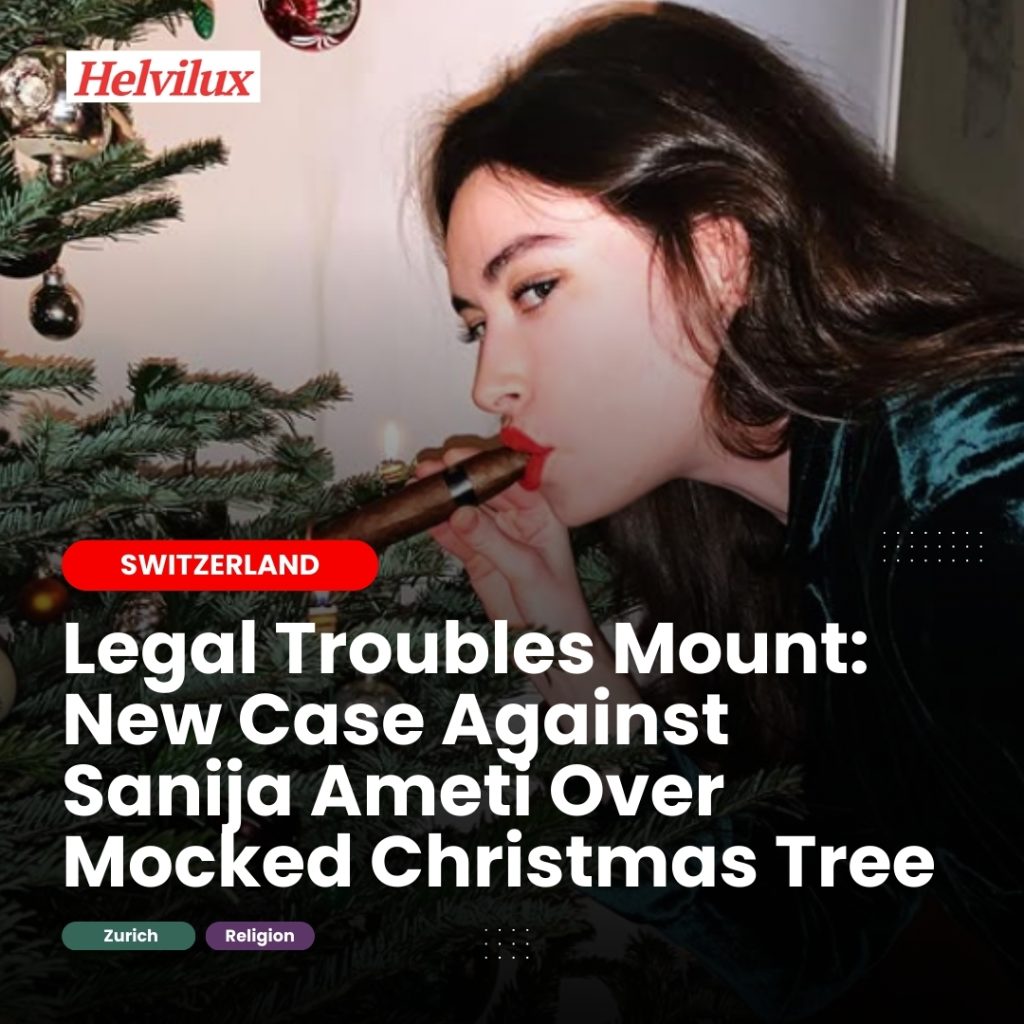
Helvilux is not engaging in assumptions or speculation. In an interview conducted by Watson several months later after the incident, Ameti herself admitted that she had made a mistake, which indicates that she was aware her actions were wrong. However, her current Instagram account still contains another image in which she appears to be lighting a cigar using a candle hanging on a Christmas tree. A Christmas tree, which again is related to Christian society. How on earth could she think it was acceptable to light a cigar from a Christmas tree candle? This is not an exercise of freedom of speech, but a blatant mockery of the law in Switzerland. This imagery clearly suggests that Ameti continues to show disregard for the feelings and religious sentiments of Christians in Switzerland while also upholding her personal conviction that she ought to be free to express herself liberally through freedom of speech. Therefore Helvilux, in the public interest, did submit a complaint to the Public Prosecutor of the canton of Zurich.
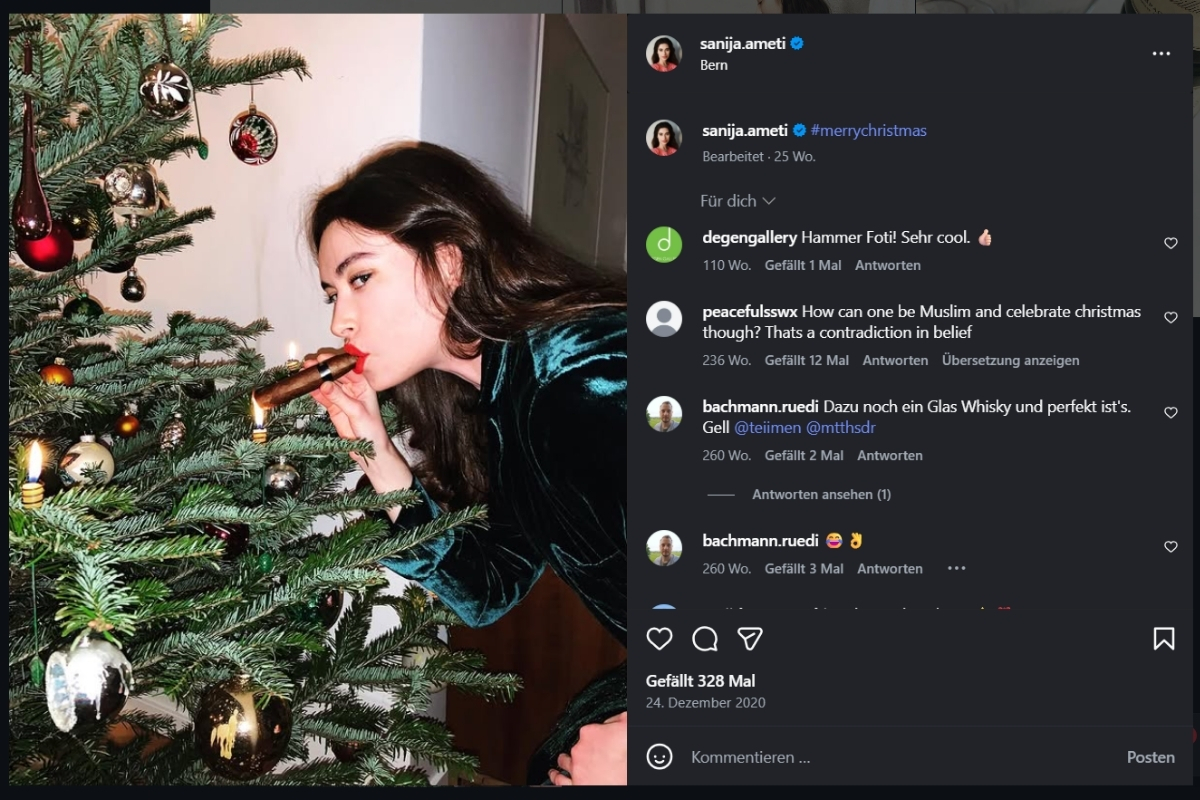
Lighting a cigar using a candle hanging on a Christmas tree is widely perceived as disrespectful because the Christmas tree and its candles are religious and cultural symbols associated with the birth of Jesus Christ, family, peace and spiritual reflection. When a public figure uses such a symbol for a casual or provocative act, it is not seen as a neutral expression but as symbolic mockery, regardless of stated intent. Following an earlier incident involving violence against Christian imagery (shooting on baby jesus image), such behavior appears as a continuation of disregard rather than an isolated coincidence. For many Christians, this reinforces the feeling that their faith is treated lightly or dismissively, especially when similar actions toward other religious symbols would likely provoke stronger condemnation. Freedom of expression does not remove social responsibility and when religious symbols are repeatedly used in ways that offend, the issue shifts from personal choice to public accountability and respect for the beliefs of others.
For a moment, let us assume that she was completely unaware of who was depicted in the image (first incident of shooting) that she did not know the woman and child were central figures in Christianity. Even under that assumption, shooting 20 times at an image of a baby remains an act of cruelty. What, then, is the difference between those who killed her brother in Bosnia and her own act of repeatedly shooting at that baby image?
This case goes beyond the disrespect of a religion. It raises deeper concerns about Ameti’s psychological well-being. For the sake of children living in Switzerland, especially in the canton of Zurich and for public safety, at the very least, she should consult a psychiatrist. Helvilux asked for her opinion on this matter, but no response was received before publication. If her response is provided, it will be published to present her side as well, in the spirit of fair and responsible journalism.
Even without a response, her actions and public statements reveal issues that cannot be ignored when it comes to public safety and public interest.
Zurich’s Prosecutor Fails to Uphold Religious Respect?
The proposal regarding the decisions and verdicts issued by the Public Prosecutor of the Canton of Zurich reveals a judiciary system that, in many cases has become a joke in Switzerland and clearly needs reform.
Recently, Helvilux exposed instances where the public prosecutor handled matters involving Swiss police officers lightly (Click here to read), Baised behaviour of President and Senior Judge of Supreme court of the canton of Zurich Criminal Chember III (Click here to read) and another case of corruption in the Gemeinde Nürensdorf received similarly careless treatment by court. (Click here to read).
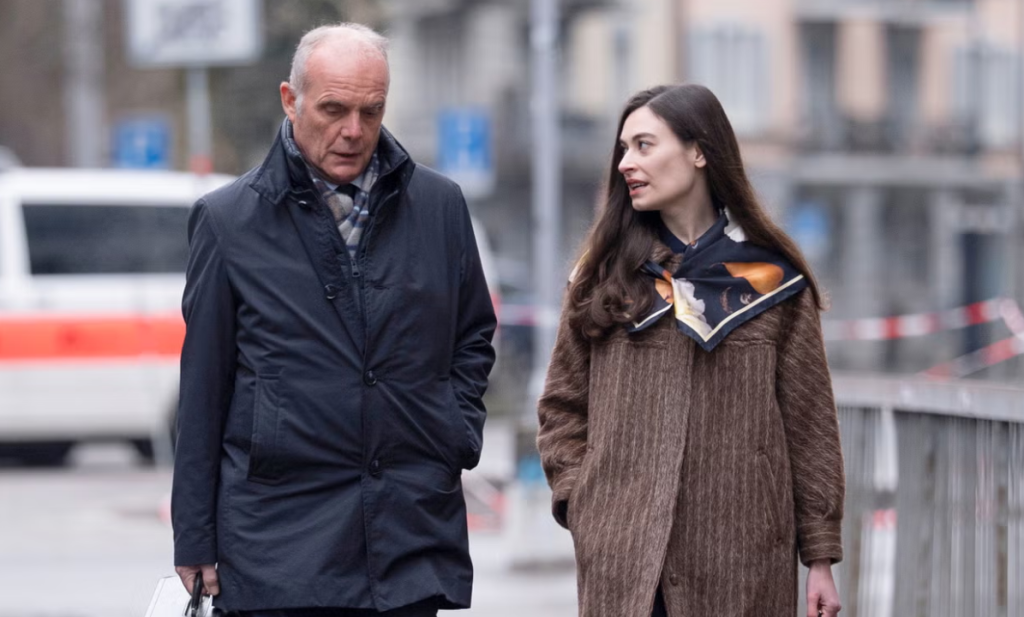
The Ameti case demonstrates the same problem. A Bosnian-origin Swiss politician in Zurich caused harm to thousands of Christians, as well as atheists and Muslims, yet she could be facing only a CHF 500 fine and condition fine. Such a proposal for the verdict raises serious questions about whether the public prosecutor is fulfilling their duties properly. Is it acceptable that someone can disrespect the Christian religion, gain widespread media attention, test the patience of Swiss citizens, and potentially inflame interfaith tensions, yet face only a minimal penalty? The handling of this case exposes systemic weaknesses and underscores the urgent need for judicial reform in the canton of Zurich.
Mass‑Voll and SVP Take Legal Action
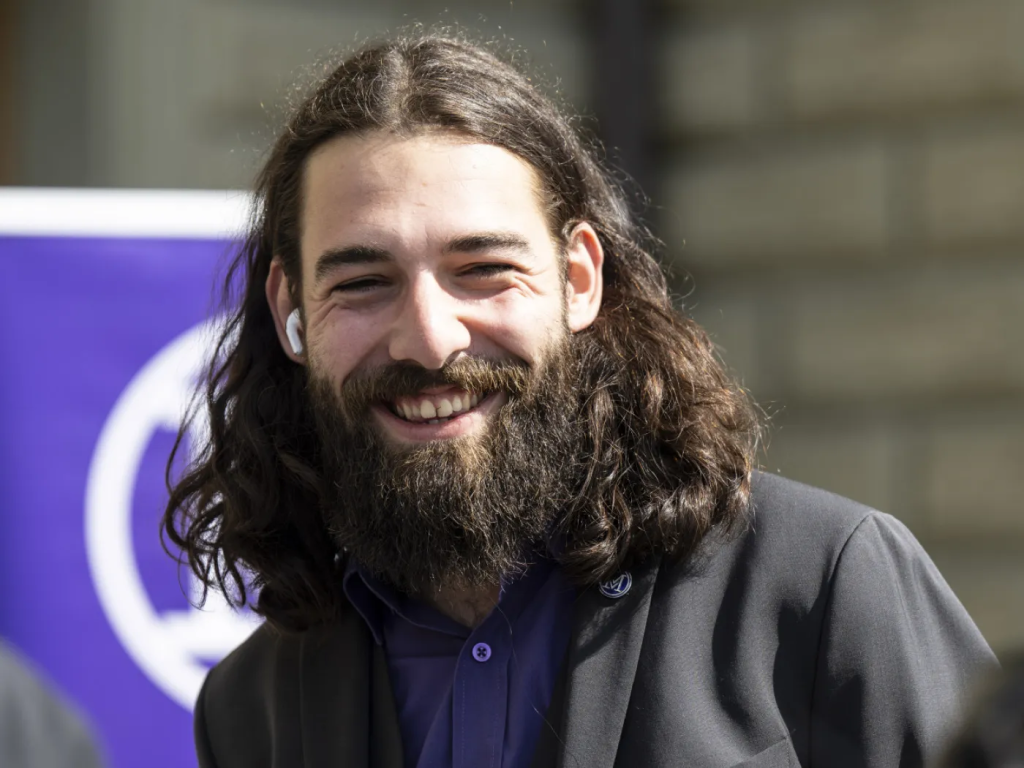
The legal proceedings against Sanija Ameti were not only initiated by the public prosecutor but also driven by private plaintiffs, notably the organization Mass‑Voll and the Young SVP. Mass‑Voll, led by Nicolas Rimoldi, filed an official complaint charging Ameti with disturbing freedom of religion and publicly framed her actions as a direct affront to Christian beliefs. Rimoldi and other representatives were present at the Zurich District Court trial, emphasizing their active role in holding her accountable. Similarly, the Young SVP supported the complaint, reinforcing that her act of shooting at an image of the Virgin Mary and baby Jesus was viewed as an attack on religious values. Their involvement highlighted the political and social weight of the case, showing that beyond public outrage, there were organized efforts to ensure legal consequences for disrespecting religion in Switzerland.
Even after the trial on 28 January 2026, the outcome was hardly effective. Ameti was fined CHF 500, with an additional conditional fine of CHF 3,000, which she would only have to pay if she committed a similar offense again. Many people now see Ameti’s PR skills at work, turning her actions into widespread publicity for a relatively small penalty.
Ah yes, only CHF 500 barely the price of a nice dinner! Clearly, a small “ticket” to disrespect an entire religion and shock thousands of faithful in Switzerland. Why bother with morality or consequences when a minor fine covers the cost of outrage?
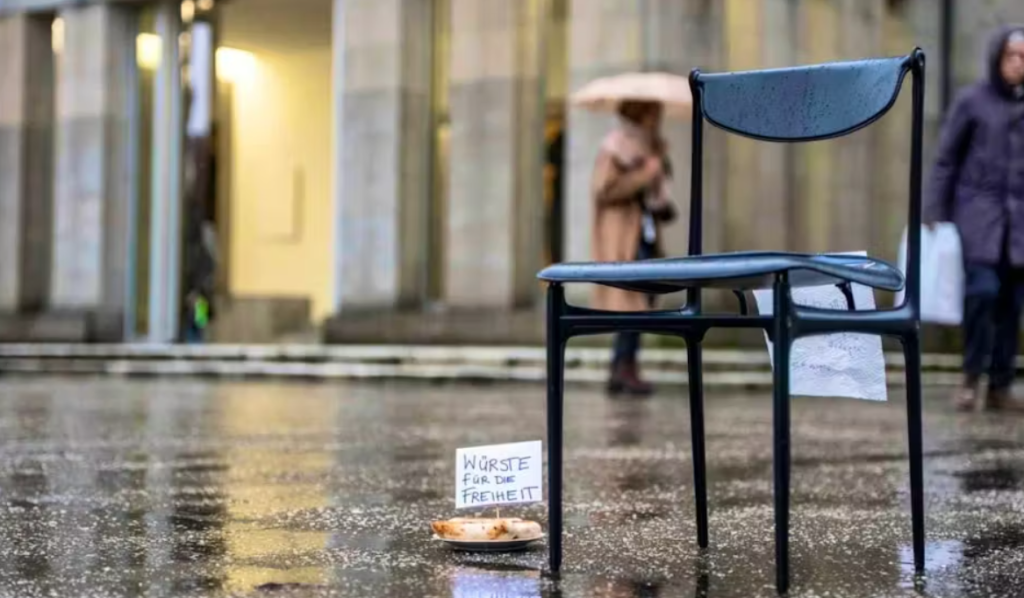
After her conviction, Ameti did not show up in person at the Kunsthaus in Zurich. Instead, she left an empty chair and a small display of sausages with a sign reading “Würste für die Freiheit” (“Sausages for Freedom”). The installation was a silent, provocative statement a symbolic protest on freedom and public attention designed to speak louder than her presence. She did not stay, the items were meant to be seen, interpreted, and reported, leaving the media and public to wonder at the meaning.
Helvilux interprets Ameti’s “sausage display” not as a protest on freedom and public attention, but as a provocative act of mockery toward the judiciary. By leaving an empty chair and sausages with the sign “Würste für die Freiheit” (“Sausages for Freedom”), she transformed a serious legal proceeding into a symbolic performance, subtly challenging the authority and effectiveness of the court. The installation spoke louder than her presence, leaving the media and public to ponder whether justice itself was being reduced to something as trivial as a plate of sausages.
When Controversy Becomes Recognition : Nomination on Swiss Press Photo Award
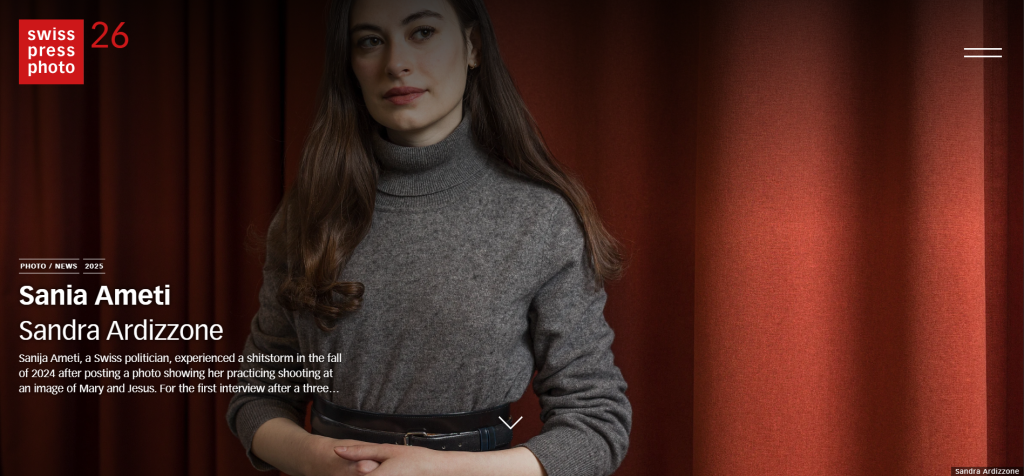
The Ameti case highlights a broader problem. When someone disrespects a religion in Switzerland, they can receive widespread media publicity while facing minimal consequences. In Ameti’s case, this extended beyond news coverage. Three months after the incident took place, Her portrait was taken by Swiss photographer Sandra Ardizzone and selected for nomination in the Swiss Press Photo Award, later published on SwissPressAward.ch with the caption “Sania Ameti, Schweiz am Wochenende.” Despite her act of shooting at an image of Baby Jesus, she gained not only attention but recognition in a prestigious media forum, underscoring both the judiciary’s failure to deliver meaningful accountability and the media’s role in amplifying controversial actions.
Not the First Time: A Pattern of Disrespect Toward Christian Sites in Switzerland
The Ameti case is not an isolated incident. Switzerland has witnessed multiple acts of disrespect and vandalism targeting Christian religious sites over the years:
Switzerland has seen a troubling series of anti-Christian incidents in recent years, highlighting that Ameti’s case is not an isolated event. In July 2019, the International Monument to the Protestant Reformation in Geneva was defaced with rainbow-colored paint, interpreted as vandalism linked to LGBT activism targeting Christian symbols. In August 2022, vandals stained the Liebfrauenkirche (Church of Our Lady) in Zurich with paint and wrote indecent texts on its walls, constituting damage and disrespect to the Catholic Church. 2024 saw repeated vandalism, threats, and arson attempts targeting Jehovah’s Witnesses’ Kingdom Halls, classified as hate crimes. During Summer 2024, in the Church of Soyhières (Jura Canton), a group of migrant youths desecrated the church, defecating under statues, urinating under pews, blackening altar cloths, breaking candles, burning religious photos, desecrating graveyards, and setting fire to a sheep shed with stolen church candles. In November 2024, a 17-year-old Afghan migrant at Einsiedeln Abbey (Schwyz Canton) ripped the clothes off a statue of the Virgin Mary, stole its crown, and paraded around the church, captured on video, causing widespread outrage. Earlier, in March 2020, the organ loft of a Catholic church was set on fire during the early COVID-19 period. Summer 2022 saw six churches in Basel targeted with smeared walls, small fires, and broken windows in a wave of disrespect toward sacred spaces. Between 2021 and 2023, U.S. State Department and OIDAC Europe reports noted a general increase in church vandalism, including graffiti and property damage, though details were often not publicized. Finally, in 2024–2025, media overviews reported isolated desecrations and graffiti similar to the Ameti incident, including defacement of religious images and symbols, though without large-scale arson or Bible burnings. Collectively, these incidents illustrate a pattern of disrespect toward Christian sites in Switzerland, showing that the issue extends beyond a single individual or event.
These examples show a recurring problem. Christian sites in Switzerland have repeatedly been subjected to disrespect, vandalism, and desecration, indicating that Ameti’s actions are part of a broader societal challenge rather than an isolated case.
Even after all these incidents, the fact that Ameti’s case has been treated so lightly raises questions in the minds of Swiss citizens: Is Switzerland waiting for a major problem to occur on its soil before taking meaningful action? Helvilux recalls activist Eric Westacott’s statement that Swiss authorities treat Swiss citizens as if they are guinea pigs in an experiment, while certain individuals reap undue benefits from its results.
Opposition to Article 261bis: Political Resistance and the Debate on Free Speech
Beyond public debate over individual cases, there has been political resistance in Switzerland toward Article 261 bis of the Criminal Code, which criminalises racial, ethnic and religious hate speech. Members of the Swiss People’s Party (SVP), especially figures like Oskar Freysinger, have repeatedly criticised the law and called for its revocation or revision, arguing that it creates “legal uncertainty” and restricts freedom of expression. Freysinger has specifically proposed abolishing Article 261 bis and opposed what he sees as political correctness enforced by the judiciary. In the past, motions by the SVP to scrap or narrow the scope of the anti‑racism provision were introduced in Parliament, and some right‑wing voices have characterised the law as counter‑productive or overly broad. At the same time, civil society groups that support broad anti‑discrimination protections such as the Swiss Federal Commission against Racism (FCR), the Service for Combating Racism (SCRA), and NGOs like the Foundation against Racism and Anti‑Semitism (GRA) argue for maintaining and applying Article 261 bis to protect vulnerable groups and uphold public dignity. There have also been calls from secularist organisations to refine parts of the law for example, removing blasphemy‑related provisions to balance freedom of expression with protection against discrimination.
What Are Swiss Institutions and Organizations Doing About Ameti Matter?
Accused politician Sanija Ameti accepted her mistake in media in 2024 but didnt shown any public apology in the court and also her action still shows different and Operation Libero have taken her side, portraying her as a victim even after she expressed her feelings and posted about the incident on her own social media. Operation Libero noted that on social media there is so much hate against her. But interesting that the same organisation can’t highlight how she herself sparked that reaction in people’s minds.
Regarding bullying and death threats, Helvilux unequivocally condemns such acts. Those who issued death threats bear significant responsibility for enabling Ameti to gain increased public sympathy. Instead of resorting to threats, if more individuals had relied on Switzerland’s rule of law and pursued legal prosecution, Ameti would have found it far more difficult to present herself as a victim. Physical violence and intimidation are never solutions. In fact, due to these threats, she was granted police protection funded by taxpayers.
In this context, Helvilux formally requested information from the Zurich Cantonal Police regarding the duration of police protection provided to Sania Ameti and the associated cost to taxpayers. Ultimately, this situation arose from Ameti’s own actions partially and remaning because of death threats from unknowns, and it is therefore reasonable to question whether she should bear at least part of the financial burden incurred by the state. This case highlights once again that abandoning lawful processes in favor of aggression only weakens justice and shifts accountability away from where it belongs.
In March 2024 nearly two-thirds of Swiss voters approved the proposal commonly referred to as the “Anti-Chaoten Initiative” which allows police deployment costs for unauthorized or disruptive demonstrations to be charged to those responsible rather than being borne by taxpayers. The core principle behind this initiative is simple, Those who trigger public disorder must also assume responsibility for the consequences. Applying the same logic, when an individual’s actions knowingly ignite public outrage and require police protection or security measures as in Ameti’s case the question naturally arises as to why the resulting costs should fall entirely on the public instead of being partially borne by the person whose actions set the chain of events in motion.
Looking at the chronological sequence of events, Ameti’s actions, behavior she herself called “stupid” in media after the incident led to increased hostility toward religious sentiment, Bosnian and muslim origin controversy, and refugee in Switzerland, disrupting societal peace. Ameti, being a migrant who applied for and received international protection in Switzerland, should have been aware of the potential consequences of her actions. Therefore, instead of framing her as a victim of social media hate or bullying, it would be more accurate to say that she ignited a wave of prejudice and racism in an otherwise peaceful Swiss society.
Helvilux contacted the institutions responsible for combating racism, as well as organizations claiming to fight racism, to understand what measures they took after the Ameti incident. From 2024 until now, what actions have these bodies undertaken against Ameti, or at least in coordination with Swiss authorities, to ensure that similar incidents do not occur in the future? Helvilux had to ask this because last year in July 2024 EKR published a manifesto in which they mentioned how the gap has been filed now but then the Ameti incident happened in September 2024 and Switzerland is again in the same position today.
It is noteworthy that Ameti, who caused public outrage through her actions, appeared in the media three months later expressing pain. Every action has a reaction and as a PR expert, she should have been fully aware of this.
Helvilux also reached out to the Federal Commission against Racism (EKR), the Service for Combating Racism (SCRA), and SHRI to understand what steps they implemented after Ameti’s actions to prevent future harm to religious faith and sentiments of peoples in Switzerland. Even if Ameti claims her act was a mistake, in reality, it spread hate within Swiss liberal society.
Unfortunately, Switzerland’s Human Rights Commission which took nearly 30 years to be established now fails even to respond in a timely manner after its formation. In many so-called third-world countries, at least there are National Human Rights Commissions with proper websites where individuals can submit complaints online and track their cases. Even when justice is not ultimately delivered, these institutions at least accept complaints and maintain structured online and offline systems for reporting human rights violations.
In contrast, in a country like Switzerland, known for providing top-class public services, SHRI—the national human rights body still does not have a properly designed platform where individuals can submit and track complaints related to human rights violations. Even more shameful is the fact that after repeated written communications over several months, there has been no response at all. Not a single other human rights organization has publicly raised concerns about this failure. Several human rights defenders who sought membership in SHRI with the intention of reforming and strengthening Switzerland’s human rights commission were rejected on baseless grounds. This raises serious concerns about transparency, inclusiveness, and the genuine willingness of the institution to improve. As a result, HELVILUX will soon publish a detailed report on SHRI, aimed at contributing constructively to the reform and strengthening of Switzerland’s national human rights body.
Ironically, when it comes to donations, human rights organizations (not SHRI as a commission but other NGO in Switzerland who work in Human rights) respond instantly newsletters arrive on time and fundraising emails are relentless. When real need is required, however, silence suddenly becomes the norm.
According to the EKR, in 2024, 17 percent of the resident population reported experiencing racial discrimination in the previous five years.
The Ameti incident, charged under Article 261bis of the Swiss Penal Code for disturbing religious peace, underscores the importance of handling religious sensitivities carefully in public discourse. While her actions (shooting at a Christian religious image, lighting a cigar from a Christmas tree candle, and posting it online) may not meet the threshold for racial discrimination under Article 261, they deeply offended many Christians. Some saw her actions as linked to her Muslim family background, potentially reinforcing harmful stereotypes and deepening divisions. This incident illustrates how provocative behavior, regardless of political affiliation, can fuel tensions and disrupt social cohesion. Swiss politicians must recognize the broader impact of their actions on interfaith relations, even if unintentional.
The ‘It Just Happened’ Excuse Needs to Stop”
Recently, Helvilux media published a troubling report highlighting the safety concerns for women and children in Switzerland and across Europe (Click here). The report revealed disturbing trends, where some asylum seekers or illegal migrants accused of sexual assault or rape defend themselves in court by saying, “It just happened, it was a mistake, forgive me, it was a cultural misunderstanding”. This alarming defense raises the question: How long will Switzerland continue to tolerate such excuses?
If a Swiss politician were to shoot a picture of the Baby Jesus and then go underground for three months, only to return to the media with the same defense, saying, “It just happened, forgive me,” and while attaining Trial showing arrogant attitude lauging as like no fear of Rule of Law and then putting sausage drama it would only expose the flaws in the Swiss judiciary system. Throughout her interview with Watson, it was evident that she had support from some who embraced a supporter, but is this support truly liberal?
What if tomorrow someone were to commit murder and then use the same defense: “It just happened, forgive me, while killing I had my deceased family member’s face on my mind”? Would that person too receive media attention and full support from certain groups? When will this pattern of excusing harmful actions end and when will Switzerland demand accountability from accused persons?
Ameti’s Threat to Swiss Citizenship
In Ameti’s case, her actions have sparked controversy and division, particularly among Christian and muslim communities in Switzerland. According to Article 63 of the Swiss Citizenship Act, the Swiss government has the authority to revoke citizenship from naturalized individuals who commit offenses that seriously threaten the Swiss state’s interests, such as undermining public safety, engaging in terrorism, or violating the fundamental principles of the Swiss Constitution.
Ameti’s actions, such as shooting at a Christian religious image and lighting a cigar from a Christmas tree candle, caused significant outrage, with many Christians perceiving it as an attack on their faith. Given Ameti’s Muslim Bosnian family background, her actions were perceived by some as linked to a broader conflict between Christian and Muslim communities in Switzerland. This incident, along with the subsequent rise in hate incidents such as anti-Muslim chants in Bern suggests that her actions may have contributed to an atmosphere of division and intolerance.
Considering these factors, there is a potential risk that Ameti’s actions, particularly if seen as inciting public unrest or violating the principles of social cohesion enshrined in the Swiss Constitution, could lead to the revocation of her Swiss citizenship.
Ameti Can Still Do Far Better for Swiss Society but obviously not with Guns
Left-wing Zurich politician Sanija Ameti can still do good things for Swiss society (obviously not with guns). After listening to her painful childhood story (interview with Watson) and her passion for doing betterment of the society it is evident that she should concentrate her knowledge and skills on improving society. She is already extremely fortunate and has been given many opportunities. As a lawyer, she could have achieved remarkable results for Switzerland, especially in addressing the broken judiciary system in the canton of Zurich.
There are many areas where she, as a migrant who settled in Switzerland, could contribute positively such as the KESB authority, Migration and Asylum authorities, Zivilstandsamt, and Zurich municipal council where corruption is often neatly hidden under multiple layers as a gift wrap. Taking those issues raising voice on council and then in court and then improving them could help Switzerland move toward more transparent and accountable governance.
Her legal background and expertise in cybersecurity could be a significant advantage. However, this can only happen if a liberal mindset genuinely aims to improve society, rather than merely highlighting its problems and always blaming the right wing. Real change comes from practical, ground-level efforts, not from acts such as shooting at an image of a mother and child or posting an image of lighting a cigare from a Christmas tree decoration candle.
Sanija Ameti lost her brother, and she is now over 33 years old. Instead of turning that pain into aggression against a particular regime, belief, country or mindset, she could channel that anger and suffering into meaningful work that benefits society. If used constructively, such pain can help build a future in which no other sister has to lose her brother. That is the true and responsible way to transform anger into positive change for society as a member of Zurich municipal council.
She also mentioned her pain that, even after integrating into Swiss society, she is still not fully accepted as Swiss. Many journalists have observed that she does not like being referred to as being of Bosnian origin. Instead of distancing herself from her background, she should set an example of how a Bosnian migrant in Switzerland can contribute positively to the betterment of Swiss society.
True Swiss identity has never been about seeking validation or certificates from others to prove one is Swiss. Real Swiss are not concerned with proving their “Swissness” to anyone; they live it through responsibility, neutrality, respect and contribution to Swiss society.
True Swiss identity is more than a name,
More than a passport or fleeting claim.
It is standing firm for justice and right,
With care for others, in day or night.
Neutral in conflict, yet guided by heart,
Living values that set them apart.
Through courage, respect and deeds that are just,
Swissness is earned in honor and trust.