
On the evening of 3 February, LSAP Member of Parliament Liz Braz experienced an incident that has reignited public discussion about women’s safety in Luxembourg. What happened to the 29-year-old politician was not, by her own account, a politically motivated attack but rather an act of street harassment that many women say reflects a broader and persistent problem.
A Disturbing Encounter in Esch-sur-Alzette
Braz was walking home in her residential area in Esch-sur-Alzette on a dark and extremely foggy night. The streets were largely empty. She has explained that, due to previous bad experiences, she is always alert when walking alone.

From a distance, she noticed a man in sweatpants and a hoodie approaching from the opposite side of the road. She described his gait as aggressive. When they crossed paths at a street corner, something happened that she did not anticipate.
“He walked just past me on the right and spat all over my leg. That was so disgusting,” she recalled.
When she reacted verbally, expressing her anger, the man turned around, insulted her and approached her in what she described as an aggressive manner. At that moment, Braz realised the situation could escalate.
“I was really in shock, my pulse was racing” she said.
She turned and ran toward her apartment. Only after unlocking her front door did she look back — and saw the man standing approximately ten metres away. Concerned that he now knew where she lived, she contacted the police.
Speaking Out Beyond the Personal Case
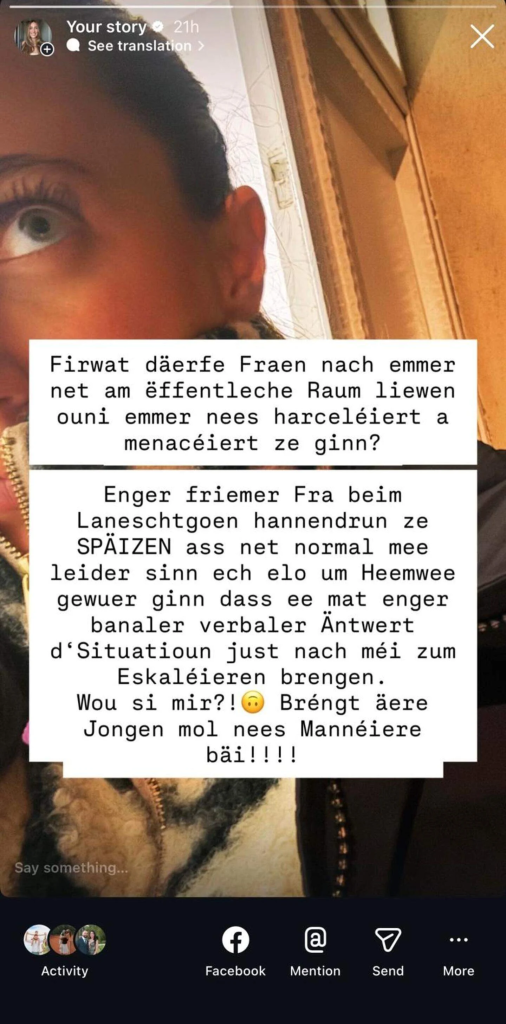
Shortly after the incident, Braz took to social media with a pointed question:
“Why can women still not live in public without being harassed and threatened?”
She later clarified that she does not believe the attack was politically motivated. She was dressed in sportswear and was not easily recognisable. Instead, she is convinced that she was targeted because she is a young woman.
“I’m sure that this guy wouldn’t have done that if a tall, strong 30-year-old man had been walking there,” she said.
For Braz, the incident is not only about what happened to her, but about the broader climate many women experience daily.
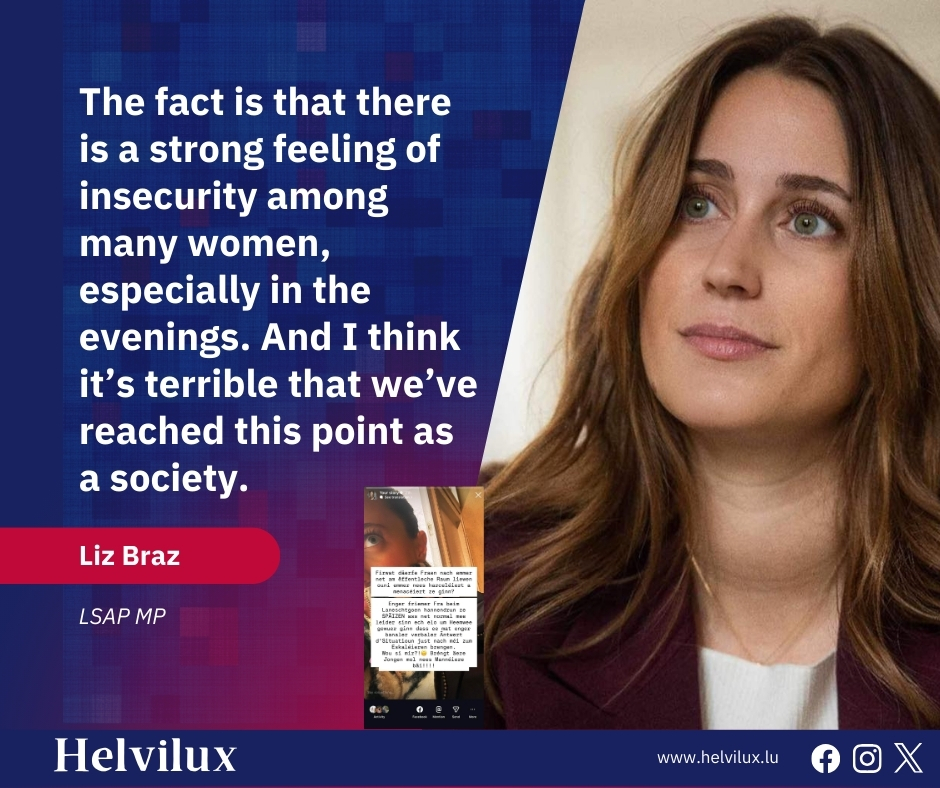
She has also highlighted what she sees as a growing culture of disrespect, partly fuelled by social media, where humiliating or aggressive behaviour can be trivialised or even celebrated online.
“When disrespect goes viral online, it also spreads to the streets,” Braz warned.
Wealth Does Not Equal Safety
Luxembourg is often cited as the richest country in Europe in terms of GDP per capita. It ranks highly in economic indicators and quality-of-life statistics. Yet incidents such as this once again expose a troubling reality: economic prosperity does not automatically guarantee that women feel safe in public spaces.
Despite strong institutions and progressive legislation, many women in Luxembourg continue to report feelings of insecurity, particularly at night or in isolated areas. Surveys and advocacy groups have repeatedly pointed out that a significant proportion of women experience harassment, intimidation, or various forms of violence often without reporting it.
The contradiction is striking: a nation with immense financial resources still grapples with ensuring basic safety and respect for women in everyday life.
Helvilux Calls for Preventive Integration Measures
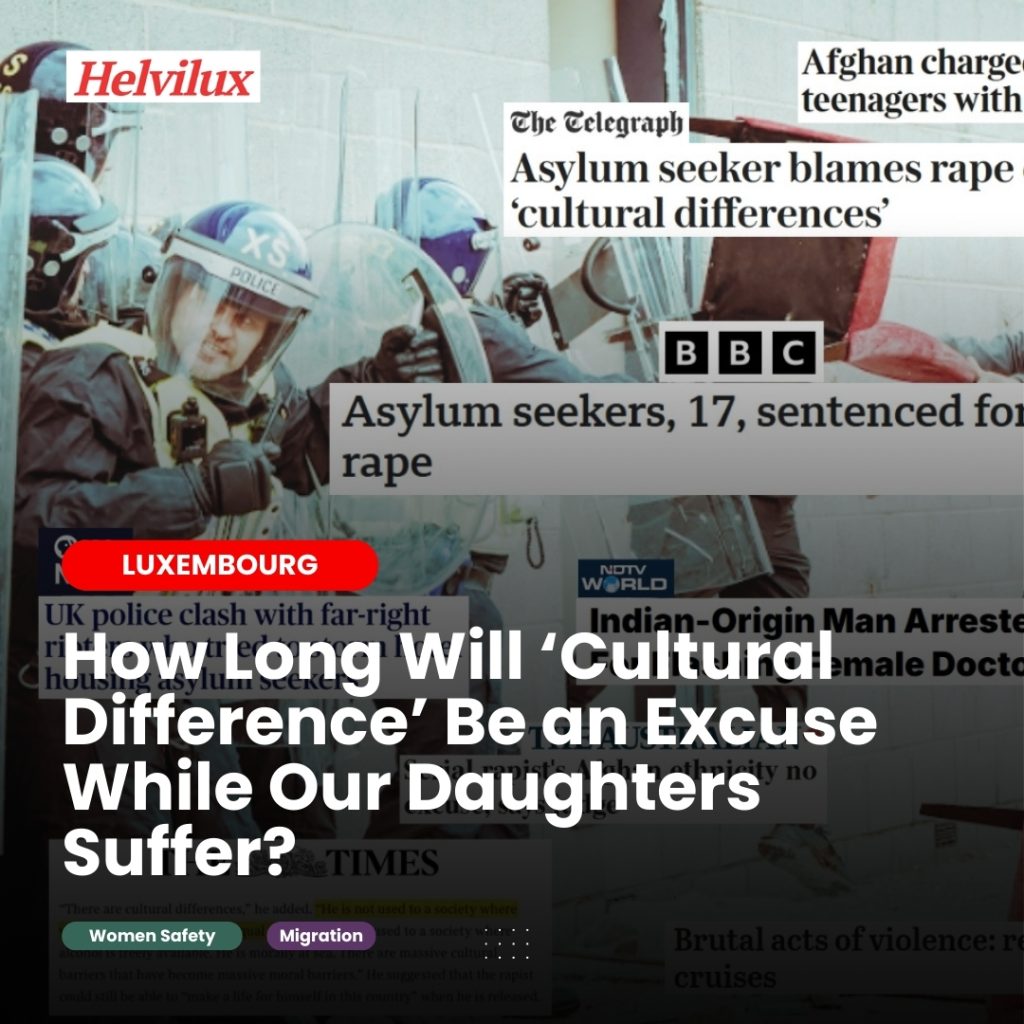
For several months, Helvilux Media and asbl has been following up with responsible authorities regarding preventive measures aimed at strengthening women’s and children’s safety in Luxembourg. In particular, discussions have focused on the role of integration and early orientation for newly arrived applicants for international protection.
On 15 December 2025, investigative reports by Helvilux published a detailed report about problems in Luxembourg and Switzerland concerning women’s safety and the careless attitude of the responsible authorities. Click to read.
Helvilux has formally approached Minister Max Hahn, whose ministry oversees the Office national de l’accueil (ONA), proposing the introduction of a structured integration module specifically addressing respectful behaviour toward women and minors.
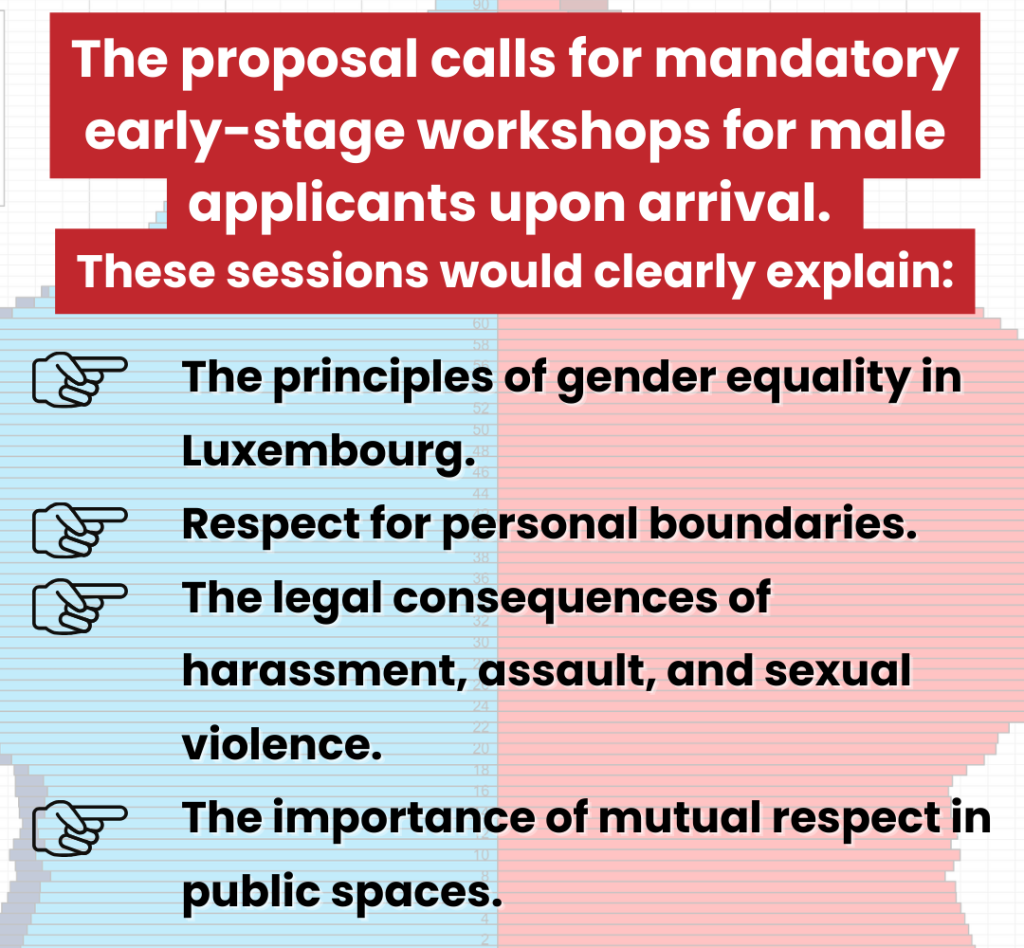
The objective, according to Helvilux, is prevention ensuring that newcomers clearly understand Luxembourg’s legal and social framework from day one.
Helvilux asbl Vice President and Co-Founder Gabriela Lacerda expressed hope that the ministry will treat the proposal constructively.

She emphasised that the initiative is not about stigmatising any group, but about strengthening preventive education and reinforcing shared societal values. Clear expectations and transparent communication, she argues, benefit both residents and newcomers.
A Broader Societal Responsibility
The incident involving Liz Braz has become a powerful reminder that street harassment and intimidation are not abstract issues. They are lived realities. While this particular case involved a Luxembourgish-speaking local, Braz herself has cautioned against political instrumentalisation. The issue, she insists, is broader than nationality, it is about respect, accountability and social norms.
Ultimately, the debate goes beyond one night in Esch-sur-Alzette. It touches on how Luxembourg, despite its economic success, addresses the everyday safety of women. It raises questions about prevention, education, social responsibility, and the role of institutions in ensuring that public spaces are truly safe for everyone.
As discussions continue, one point remains clear: economic wealth alone cannot define progress. A society’s true strength is measured by how safe its women and children feel when simply walking home at night.
(This article is based on the original report by the Luxemburger Wort. It has been researched, expanded and written by Mahesh Kamath for Helvilux media to provide additional context and insights on the issue of women’s safety in Luxembourg.)